
Authentic Food Colour Trends
Consumers are increasingly interested in ‘authentic’ food and beverage experiences—they want food that is as close as possible to its original ingredients or source. This can include minimally processed foods, foods that taste, smell, and look traditional, or even foods resembling what can be found in nature.
But how does nature really look? What is the colour of authenticity? In this article we explore how natural colours can be used to create earthy to bold to pastel shades to achieve colours that can represent those authentic dishes.
Earthy and wholesome
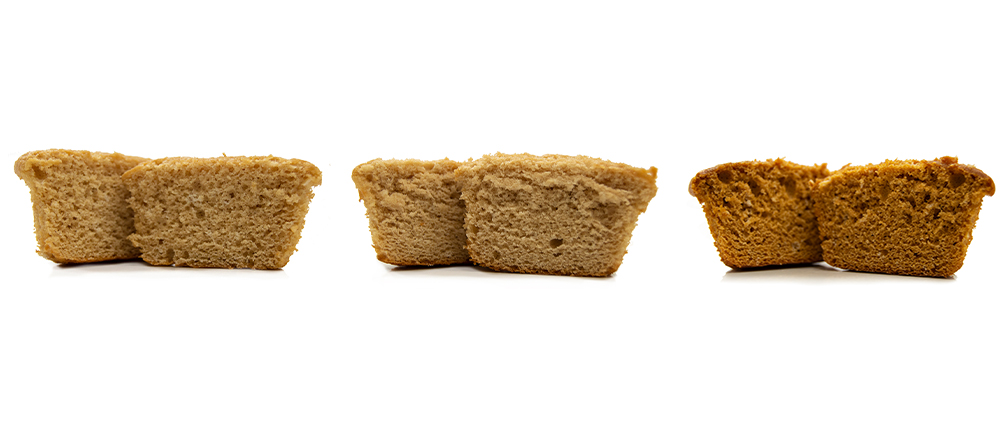
On one hand, ‘authentic’ could refer to simplicity in nature. Think whole-grain foods like cereal, nuts, and seeds, unrefined flours, brown sugar, cooked meat and poultry, etc. This beige to brown palette is made up of muted shades that hint at wholesomeness and even artisan craftsmanship. It leads the path to health and wellness food developments, but also ready meals and savoury dishes and sauces.
These earthy tones are easily achieved using tried and true caramel colours, burnt sugars, and Naturbrown® ingredients that have simple labels to match the ‘simplicity’ of the dish being created.
Vibrant kaleidoscope
On the other hand, ‘authentic’ could include the bright and bold. While some associate brightly coloured foods with synthetics, nature is full of vibrant colours that lend themselves to some of our favorite dishes!
Fruits, vegetables, and spices compete with ineffable vivacity for our attention: warm yellows and oranges, alarming reds, calming pinks and purples, and lots and lots of greenery. Even marine food sources like fish, mollusks and crustaceans enchant with their vivid oranges, reds, yellows, and purples.
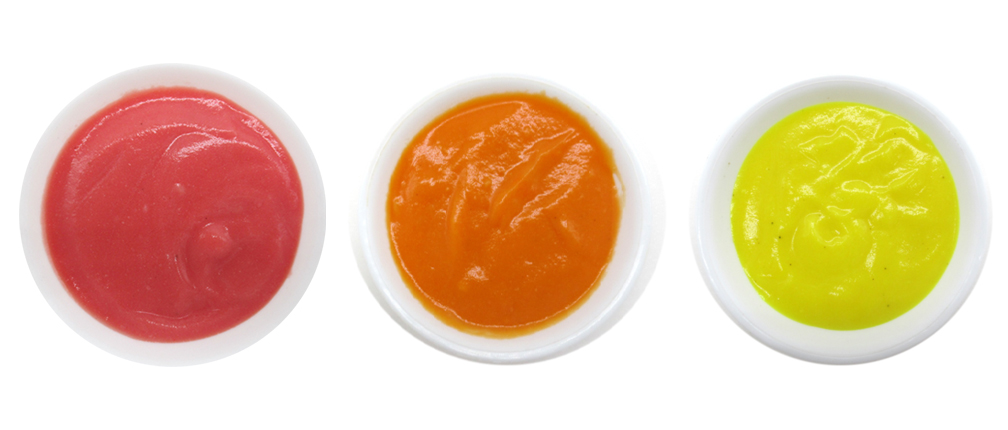
Would you want to eat a brownish strawberry jam, or curries devoid of their bright and alluring hues? In fact, there are evolutionary reasons for our liking of vividly coloured food; as hunter gatherers, our species relied heavily on vision to detect and assess nutritionally dense food sources: golden honey, ripe fruits, and fresh game meat. It’s not surprising that we’ve transferred these preferences to prepared foods as well.
This vibrancy can easily be celebrated and recreated with a range of natural pigments including anthocyanins, carotenoids, betalains and chlorophyllins.
Dreamy pastels
A third ongoing trend in ‘authentic’ food preferences are pastel colours. It is especially noticeable in sweet categories like confectionery, dairy desserts, and pastries, and has a strong positioning among children, teens and young adults.
While pastels make some consumers think of simplicity or naturalness, pastel palettes are also reminiscent of a dreamy, imaginary world and are often associated with emotions and feelings like serenity, sweetness, and nostalgia, and lend themselves well to creative fantasy flavours.
Indulge in the whimsical dreamscape of pastel fantasy colours from Everzure® Spirulina, or colouring juices like our Vegebrite® line, over your preferred white or creamy base.
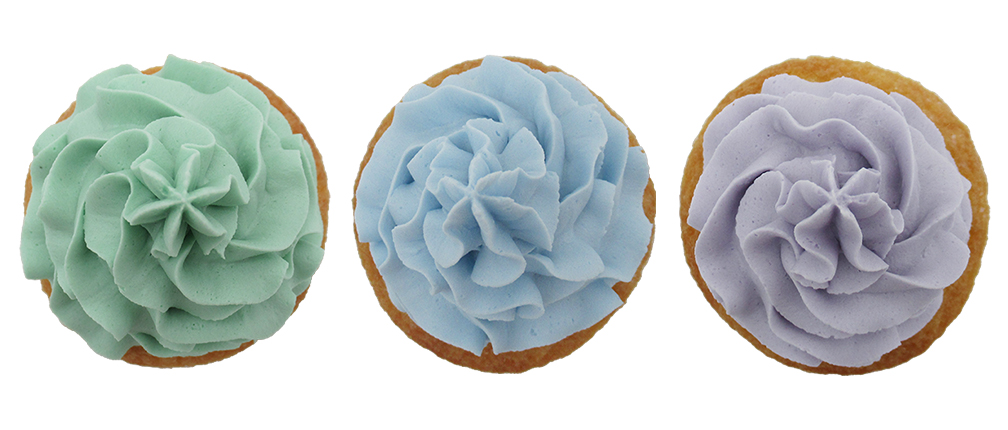
The interesting outcome is that no matter consumer preference or which food category we look at, all these colour trends can be addressed through the diverse palette of natural colours.
Contact our colour scientists to get expert guidance in choosing the best performing natural colour for your target application, and inspiration to design a consistent and appealing visual experience to delight your consumers.
Colours: See, Feel, Eat!
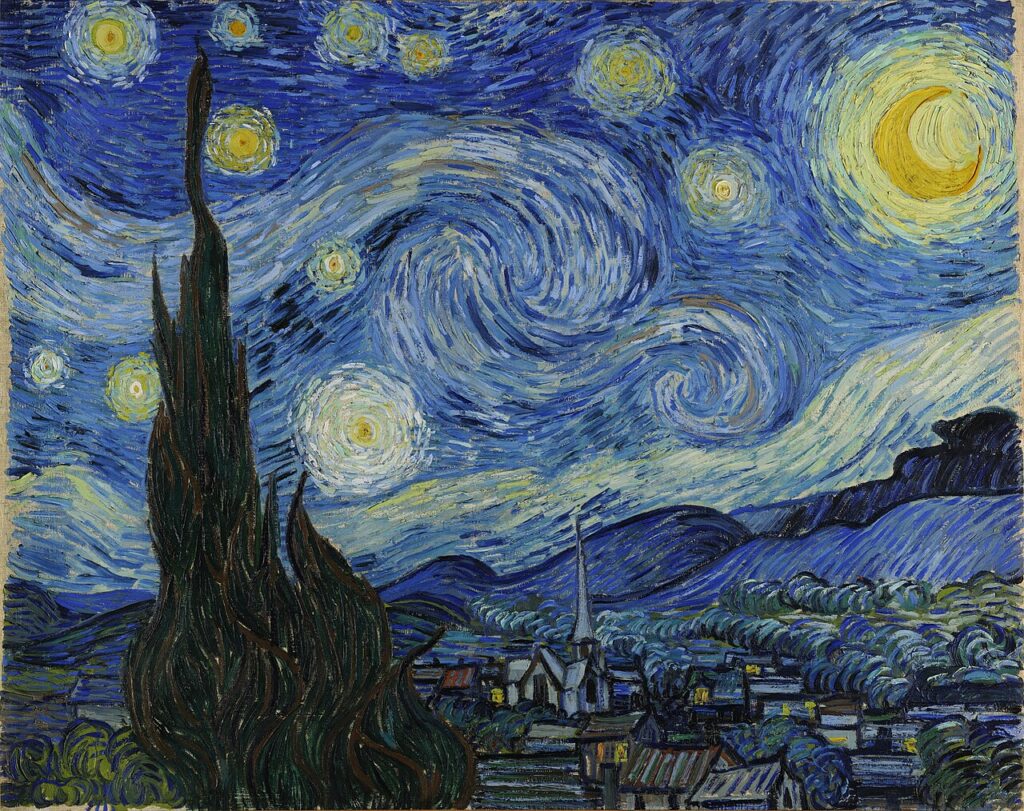
Take a look at Van Gogh’s Starry Night below. Observe it. Immerse yourself in it. How does it make you feel?
Post-impressionist artists, like Van Gogh, Matisse, or Gauguin used colour, not to show nature or reality as it is, but as they felt it. They strived to capture the emotional input from a scene, exploring its subjective reality. In other words, colour was employed as an emotional vessel of meaning, beyond the realistic depiction of perception. And this can be applied to more than just the world of art.
In this article we’ll explore the relationship between colours and emotions and how it plays an important role in food product design.
The connection between colours and emotions
Colours are strongly connected to emotions in ways that even pervade our language: we can feel ‘blue’ when sad, ‘green’ with envy, or ‘see red’ when mad. And similar metaphors are found in other languages: in Polish one gets ‘biała gorączka’, or ‘white fever’, when angry; in Swedish, someone is ‘svartsjuk’, or ‘black-sick’, when they are jealous, and in Spanish one turns ‘morado de la vergüenza’, or ‘purple with shame’.
Background influences on colours and emotions
But since colour psychology is a relatively new science, there is still debate about the universality of colour symbolism and whether emotions elicited by colours are ingrained in our biology, or if they are based instead on social and cultural constructs.
Examples of strong cultural biases include the use of white for mourning in parts of Asia, contrasting with the western association of black to funerals and death. And purple was used for millennia as the royal colour in Mediterranean and European cultures, while yellow was regarded as the regal colour in China, only used by emperors.
Widespread colour associations
However, there are some subjective associations that seem to be a bit more widespread – appearing in cross cultural contexts. In general, warm colours like red, orange, and yellow are correlated to high energy emotions, while cool colours, like blue, green or purple are perceived as more calm and subdued. And thus, some semi universal concepts linking colour and emotions are used in marketing, fashion and decoration, and more.
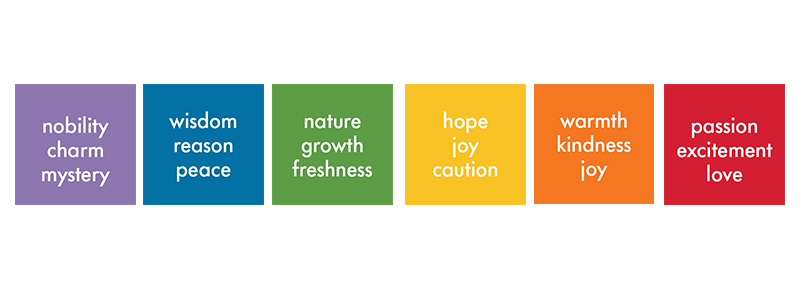
Colour and emotions in food product design
So why is this important in the context of food design? Because as colours influence moods, they also signal to action. In 90% of our buying decisions, our brains rely highly on emotions and feelings, including decisions on what to purchase and what to eat.
Colour is an important factor, not just in perceiving the flavor of a product, bur also for emotional branding – how consumers establish long term bonds with products that have a strong emotional connection with them.
Understanding moods and emotions can also help food product developers select the colour that will resonate most with their target market.
For example, in our 2023 European moods & emotions survey, we found that the colour that would maximize the association with Energizing benefit in energy drinks is vibrant orange in Italy and the UK, while a light blue shade resonates more in Germany.
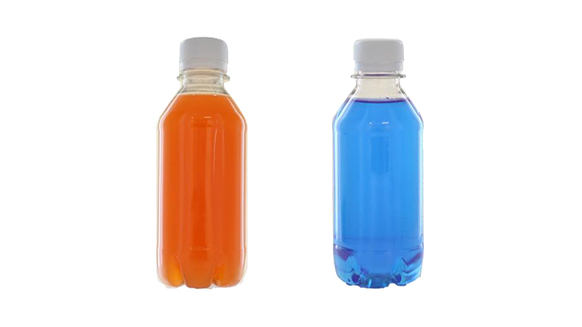
Considering age and gender is also important in the design of foods and beverages. In a similar North American study, when looking at shades of blue and purple younger adults associate darker and bluer shades with a feeling of relaxation and calm, while middle aged adults associate these feelings with more purple shades.
Conclusion
If we connect back to our original example from van Gogh, let’s say you have a Starry Night buttercream cake in front of you. What part would you decide to eat? A slice of the joyous yellow moon? The azure peaceful sky? Regardless of our background, age, and gender, it’s clear that there are strong associations between the colour of our foods and beverages and what we feel when we consume them.
Interested in learning more about how the colour of our foods and beverages can impact our moods and emotions? Download our white paper below.
Colouring Foodstuffs
Food that Colours Your Food
Most people are already familiar with the concept of natural colours. In most cases, these are typically considered food additives. However, you’ve probably also heard or read about a type of natural coloring called ‘colouring foodstuffs’, or just ‘colouring foods’. But what are colouring foods exactly, and why are they so attractive in food product development? In this article we’ll take you through what are colouring foods and some considerations for use.
Colouring Foods: The Target Market is Key
The first thing to understand is that the regulatory standpoint pertaining to colouring foods is not universal. This designation exists mostly in the European Union and a few other countries including the UK and Canada. But their popularity has been increasing because they provide familiar labeling options for consumers. According to Mintel between 2019 and 2022, 20% of new product launches containing colour in the EU and UK used colouring foods!
Other countries or regions are actively evaluating the use of foods and food ingredients added for the primary purpose of imparting colour. So, if you’re interested in using these types of colours, it’s important to have an adequate and thorough regulatory assessment for your target market to understand labeling and to make sure that the ingredient in question has a recognized history of use as foodstuff there.
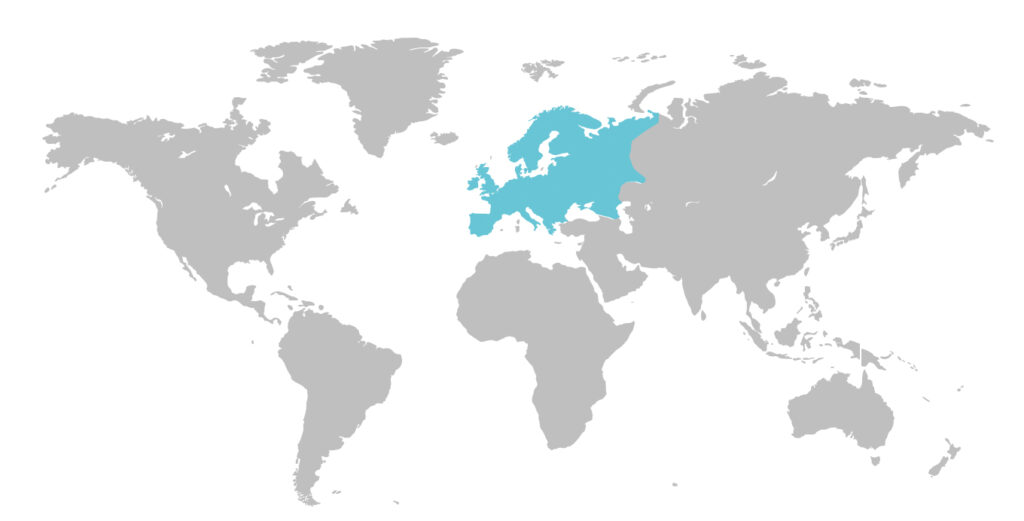
But What are Colouring Foods?
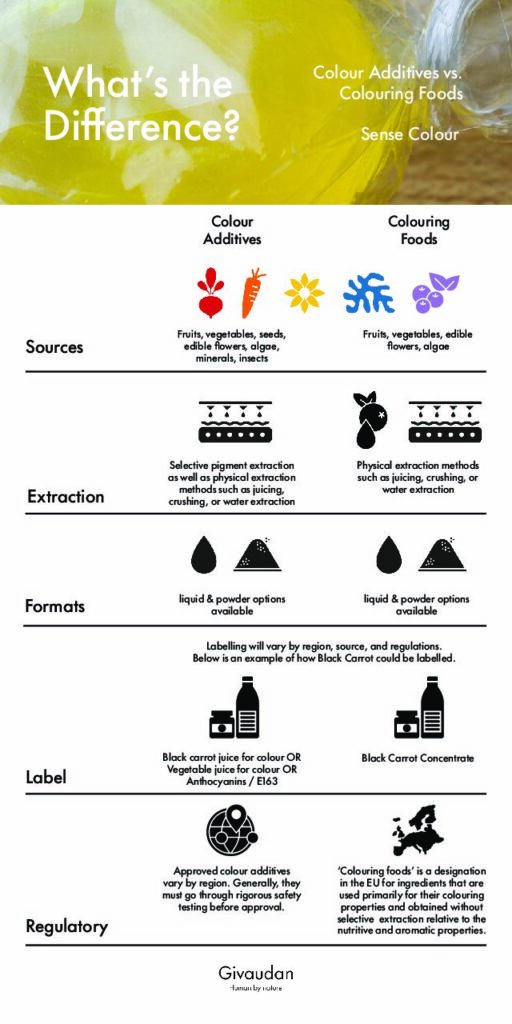
Colouring foods are preparations or ingredients, like juices, purees, or powders, that are used in foods to impart colour while maintaining the nutritive, aromatic, or sapid properties of the source material. In other words, they are used because they look great colour-wise and are still ‘regular’ food ingredients or some sort of minimally processed form of them. What differentiates them from color additives is that from the EU perspective, they do not undergo “selective extraction”.
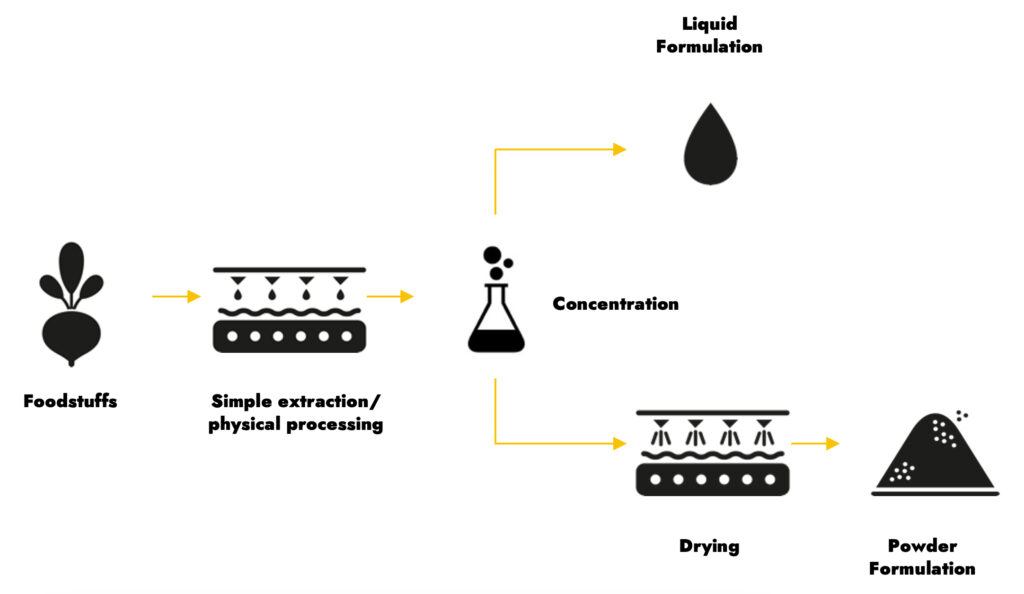
Selective Extraction
Selective extraction is when the resulting material contains primarily pigments from the natural colour source, excluding flavours or nutritive elements. European regulation (EC) No 1333/2008 states that preparations obtained from edible natural sources obtained by physical and/or chemical methods resulting in a selective extraction of the pigments are considered colour additives.
So, in order for a foodstuff to be exempted from being considered a colour additive, the ratio between the pigments and nutritional or flavoring constituents can’t be significantly different from that of the original raw material. If, for instance, we have a carrot juice and remove part of the water to make a concentrate, the ratio between the carotenes and the nutrients (sugars, minerals, etc.) needs to be very similar to that of the original matrix to be considered a colouring foodstuff. You can see the main differences between colouring foodstuffs and colour additives in the below infographic.
Functionality: How Do They Work?
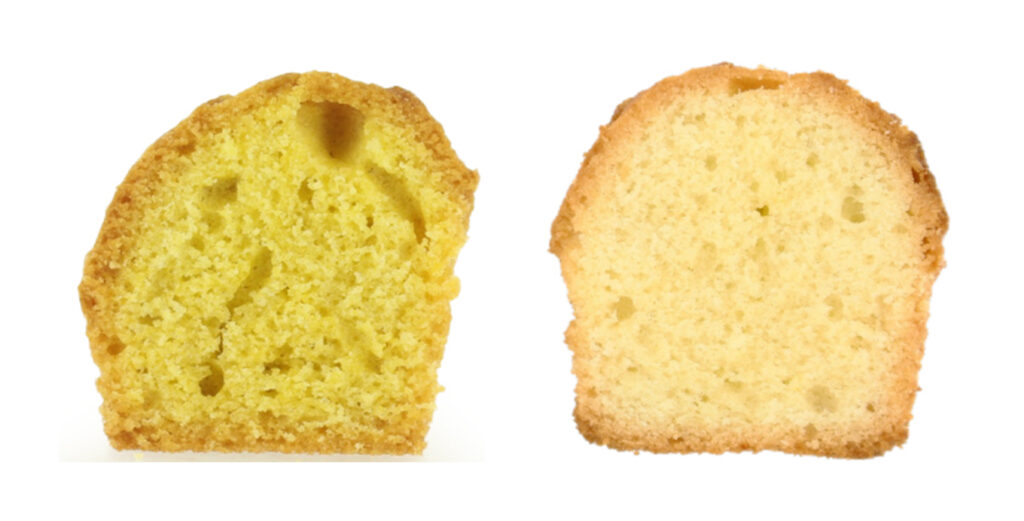
There are many instances where either a colour additive or a colouring food could be used, but there are some differences to consider. Colouring foodstuffs, in general, tend to be less colour concentrated (no selective extraction, right?), they have other sensory effects like taste and aroma, and they don’t have stabilizing additives like emulsifiers or extra antioxidants. You can see in the cupcakes below, that colours created through selective extraction tend to be more concentrated.
However, while these qualities can make some aspects of use more challenging, the results of using colouring foods can be quite satisfactory, especially where food designers and colour scientists join their expertise to co-create winning solutions.
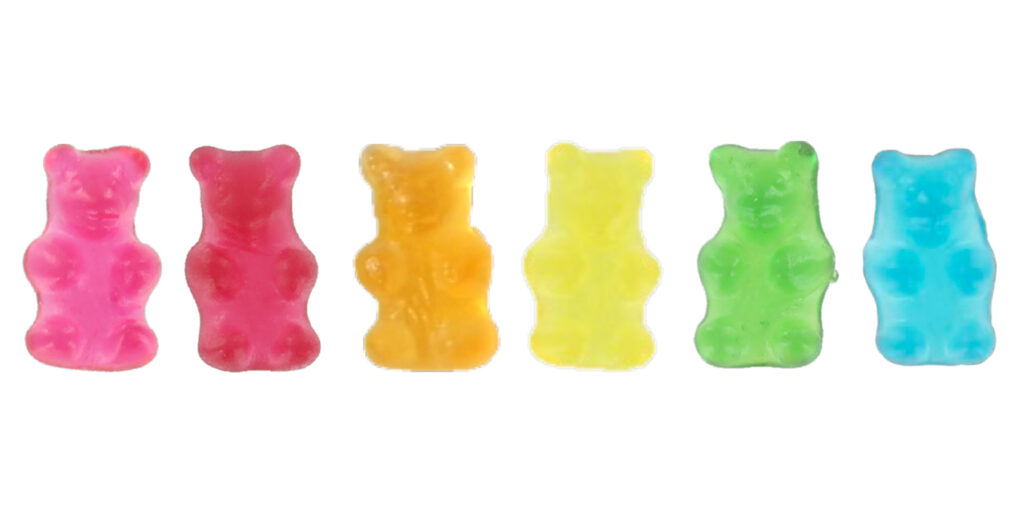
Our Vegebrite® line of colouring foods and our Everzure™ Spirulina offer a wide choice of brilliant shades made from fruit and vegetable concentrates, edible flowers, and algae: think of exciting reds or pinks, fun blues, purples or greens, happy yellows and warm oranges, like those seen in the gummies below. These coloring options have a simple label without E-numbers for consumers while still providing spectacular and authentic visual attractiveness to all sorts of foods and drinks.
Curious about our Vegebrite® or Everzure™ range of brilliant and versatile colouring foods? You can request a sample here, or you can contact for expert guidance from our team of colour scientists.
Interested in learning more about our Vegebrite® Black Carrot or Vegebrite® Orange Carrot solutions? Download the White Papers below!

Natural Colours for Citrus Beverages
Citrus colours: fresh and zesty
Citrus flavours stand out as timeless favorites for all sorts of foods but especially for drinks. Their tangy and refreshing profile not only enraptures taste buds but also creates a synesthetic experience that engages sight, taste, and smell, transporting us to moments that range from energy to relaxation to refreshment. Let’s take a look at how we can use natural colours for citrus beverages.
Crafting an atmosphere
To create an atmosphere that resonates with the emotionally loaded concepts that are usually linked to citrus profiles, like summer, freshness, excitement, and intensity, it’s essential to consider the visual appeal of citrus flavoured beverages.
And since visual appeal starts and ends with color design, we have to consider the actual pigments that citrus fruits produce. Oranges, mandarins, lemons, limes and grapefruits are all fruits called hesperidium (yes, like Hesperides’ garden from Greek mythology!) belonging to the same great family called Rutaceae. Their peel and pulp start out as green, with high contents of chlorophyll.
As they mature, the chlorophylls fade and they accumulate combinations of carotenoids like lutein, beta-carotene, lycopene, violoxanthin or zeaxanthin, among others. Some even produce anthocyanins, the red pigment found in berries, like the bold and delicious blood orange. Depending on the state of maturation each citrus fruit develops a particular blend of these pigments that is responsible for its distinctive colour.
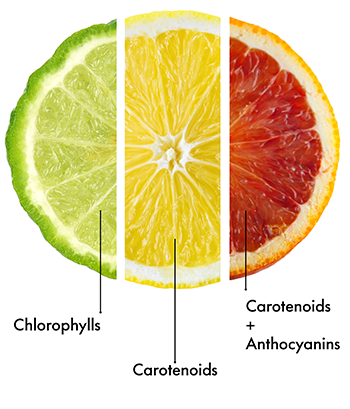
Choose from the citrus color wheel
Luckily, these pigments are also commonly used natural colours, so we can recreate the same precise visual imprint afforded by nature! Imagine capturing the vibrant green of limes by using copper chlorophyllin, or the sunny hue of lemons by using beta-carotene or safflower extract. And by utilizing blends of these same pigments, more nuanced citrus flavours are possible!
For example, the unique blend of citrus and herbal notes from Yuzu, can be replicated with emSeal® beta-carotene emulsions plus a hint of green from chlorophyllin.
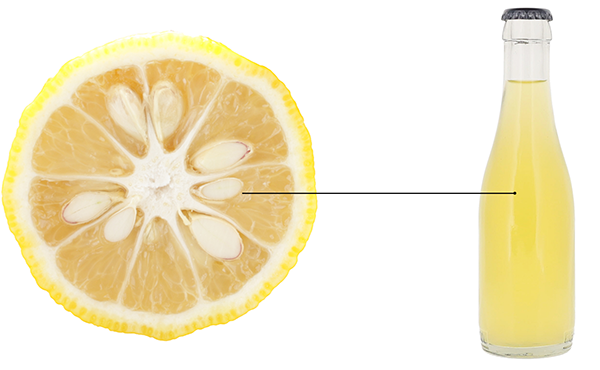
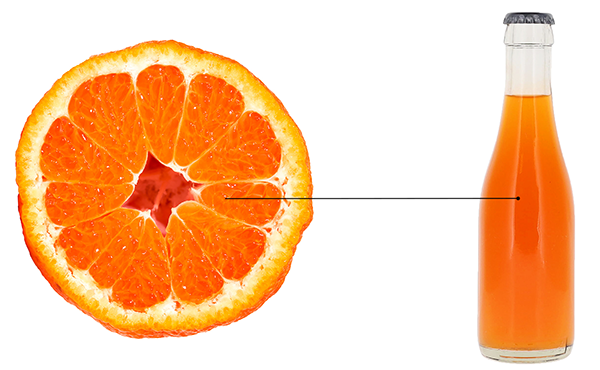
The ever-sought profile of orange juice or the fashionable profile of kumquats can be achieved with slightly orange tinted beta-carotene emulsions also from our emSeal® line, that can be designed with or without a cloudy appearance according to your liking. And the bright colours of mandarins, tangerines, or clementines can be achieved with emSeal® paprika emulsions that are deodorized to deliver all the colour without the pungency so the flavour can really shine.
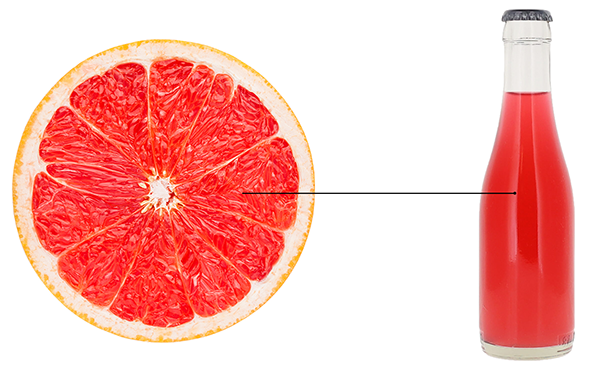
To capture the subtle pink tones of pomelos and grapefruits, either anthocyanin-based colour blends or lycopene emulsions can be employed. And finally, the same type or red anthocyanins can be employed to get the right shade of blood orange, hinting to that unique berry-like flavour of this trendy citrus variety.
Elevating citrus profiles with fruit blends
Citrus flavours on their own will always appeal to the consumer with their sweet and tangy charm. But innovative and delightful fusions with other fruits and herbs are also making a stand in the world of soft drinks and RTD beverages: raspberry lemonade, blueberry limeade or bold pairings like ginger and grapefruit…you name it! You can explore these expansions for flavourful profiles with an ever increasing range of our natural colour blends, all with unparalleled functionality and processing stability.
Treat your consumers with a captivating drinking experience that starts at first sight with vibrant natural colours that promise a taste adventure with every sip!
Looking for more information on how to create these refreshing colour inspirations? Download our Citrus Colour Palette below to see how we blended natural colours to match the wide variety citrusy shades. Or contact us to get started on a project.
Biotechnology and Natural Colours
Understanding biotechology: production, fermentation, and how it benefits the natural colours world.
Embark on a fascinating exploration of how biotechnology is reshaping the world of natural colour development. Join us as we delve into the art of creating colours through fermentation and microorganisms, showcasing innovations like acid-stable blues derived from extremophile microalgae. Discover the environmental advantages, technical precision, and future possibilities that biotechnology brings to the world of natural colours.
Speakers:
Raja Chouket, Ph.D Category Technical Leader, Givaudan Sense Colour
Markus Kaufmann, Research Investigator, Taste & Wellbeing
Kitchen Ingredients, Science & Technology
Want to learn more? You can listen to our other podcast episodes here.
Natural Blue from Spirulina and Galdieria
If you are familiar with the natural colours world, you probably know there are very few sources of true natural blue shades, at least from living organisms. Blueberries and bluish flowers get their colour from anthocyanins that, once extracted out of the cells and in low pH, show their true reddish-violet nature. And birds and butterflies get their blue colour not from pigments but from gill-like nanostructures in their feathers and wings.
So how do we get a true natural blue shade that we can use in foods and beverages? In this article, we’ll dive into two different sources of blue pigments and how they complement each other to provide blue shades for a full spectrum of food and beverage applications.
Finding a True Blue
Some photosynthesizing organisms produce pigments that work as antennas to catch portions of the light spectrum that chlorophyll can’t. These pigments are called phycobiliproteins. As their name suggests, they have an important portion comprised of a protein, and another smaller portion that gives them their characteristic colour. One of these phycobiliproteins produced by microalgae and cyanobacteria, are the beautiful, true blue phycocyanins(1).
Spirulina: from Ancient Oceans
You probably already know one source of phycocyanins: Spirulina platensis, a cyanobacteria; in the contest of really ancient species, cyanobacteria would likely win the prize. These tiny microscopic creatures have inhabited planet Earth since its early beginnings and are classed as Procaryotic, which among other things means that they lack a nucleus.
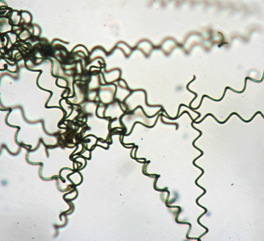
The type of phycocyanins extracted from spirulina, deliver an astonishingly beautiful blue color, that is water soluble, intense and sharp in hue. It resembles Brilliant Blue (FD&C Blue no. 1), and is excellent for neutral pH applications like ice cream, candy coating, frostings and icings, and protein beverage instant mixes.
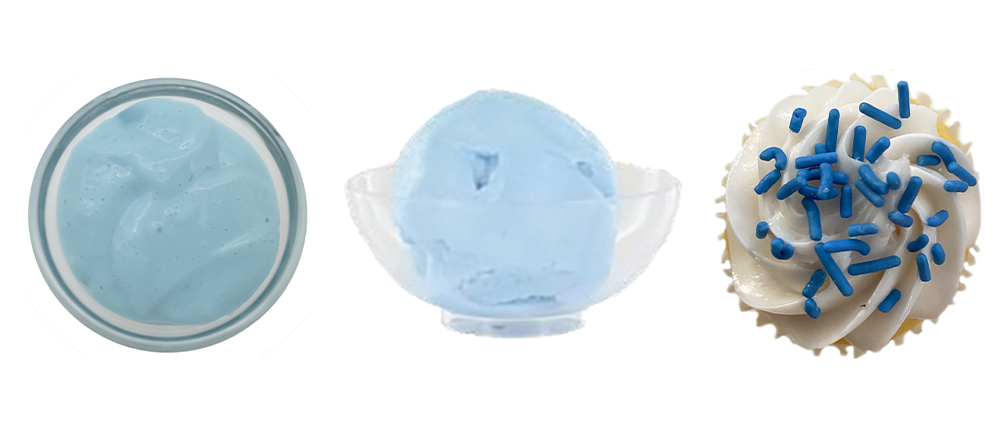
Gently water extracted at our Sense Colour facility in Avignon, our Everzure™ spirulina is formulated as a colour to fulfill all sorts of technological needs. Be it as a liquid format for ease of applicability and dosing, or as a readily dispersible powder, Everzure™ spirulina is crafted to perform in every suitable application.
It’s also formulated as a micronized suspension in oil, under our michroma™ brand, ensuring fabulous blues in fatty applications, like compound coatings, creams, and frostings, minimizing fat-to-fat colour bleeding.
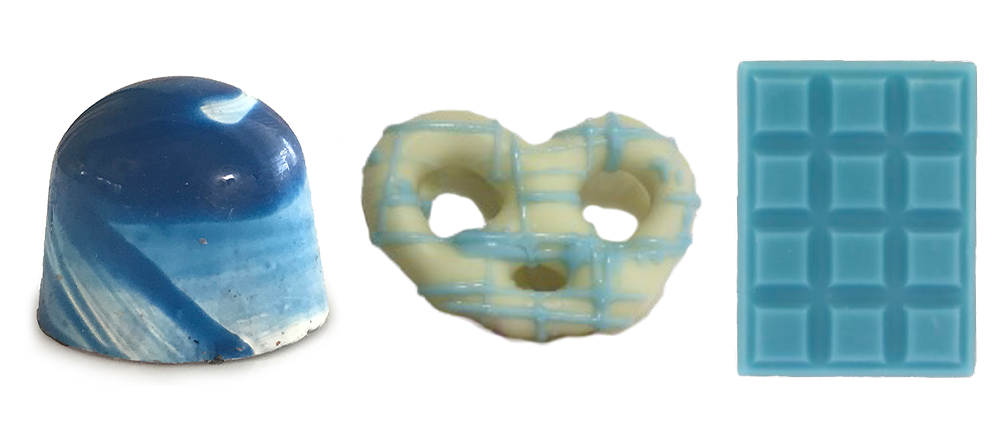
Galdieria: Adapt and Conquer
Another group of living organisms that produce phycocyanins to increase their photosynthetic capabilities are found among algae of the division Rhodophyta. One of these, Galdieria sulphuraria, is a genuine jewel in the quest for survival and is currently in the approval process to be added as natural colour option in the US and EU.
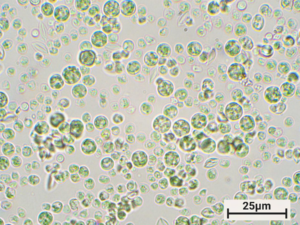
This red (yes, red!) microalga, is what biologists call an extremophile, meaning it is able to survive and thrive in the harshest environments. Its niche ecosystems are acidic hot springs and volcanic calderas, with temperatures above 40ºC and pH levels below 4.0.
When they don’t have enough light, they grow heterotrophically (getting their energy from nutrients, like carbohydrates). When there is enough light available, they photosynthesize their own energy sources with the help of chlorophyll and auxiliary pigments like phycocyanin(3)!
As part of the evolutionary strategies to survive the acidic conditions of their extreme environment, Galdieria produces a type of phycocyanin where the protein-based portion is slightly modified, giving it better acid stability(4) than other phycocyanins – it can withstand a pH as low as 2.8, while phycocyanin from Spirulina normally precipitates at pH 4.0.
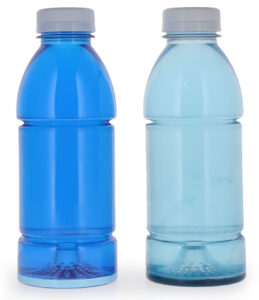
That makes our Everzure™ Galdieria an excellent source of blue for low pH applications like beverages and sugar confections. Gelatin and pectin gummies, acid chews, fruity syrups, frozen novelties and soft beverages of low pH now can get that wondrous hue of blue.
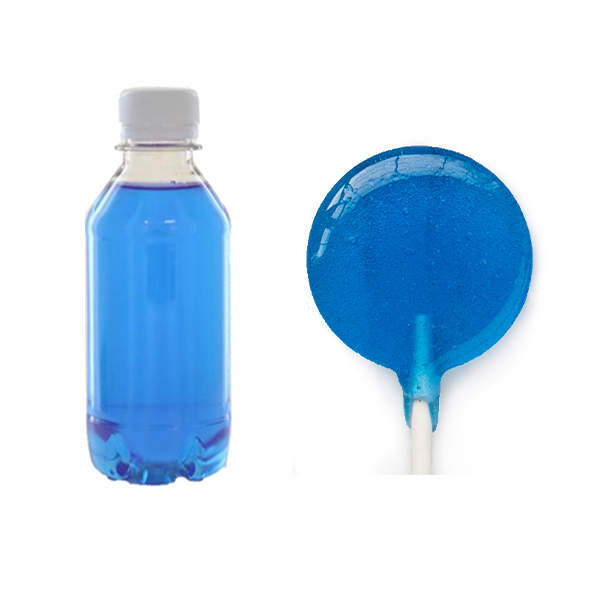
It’s worth celebrating that we will soon have two complementary natural blue color tools available to deliver brilliant results in almost the full spectrum of food and drink categories. And it gets even better…they open the door to vibrant green and luscious purple blends, for an elevated sensory design you envision in your products.
Interested in learning more about galdieria? Sign up for notifications as it moves through the approval process. Or click here to get started with a sample of spirulina.
References
| 1. Dagnino-Leone J, Figueroa CP, Castañeda ML, Youlton AD, Vallejos-Almirall A, Agurto-Muñoz A, et al. Phycobiliproteins: Structural aspects, functional characteristics, and biotechnological perspectives. Comput Struct Biotechnol J [Internet]. 2022;20:1506–27. Available from: http://dx.doi.org/10.1016/j.csbj.2022.02.016
|
| 2. Schirrmeister BE, Gugger M, Donoghue PCJ. Cyanobacteria and the Great Oxidation Event: evidence from genes and fossils. Palaeontology [Internet]. 2015;58(5):769–85. Available from: http://dx.doi.org/10.1111/pala.12178
|
| 3. Curien G, Lyska D, Guglielmino E, Westhoff P, Janetzko J, Tardif M, et al. Mixotrophic growth of the extremophile Galdieria sulphuraria reveals the flexibility of its carbon assimilation metabolism. New Phytol [Internet]. 2021;231(1):326–38. Available from: http://dx.doi.org/10.1111/nph.17359
|
| 4. Wan M, Zhao H, Guo J, Yan L, Zhang D, Bai W, et al. Comparison of C-phycocyanin from extremophilic Galdieria sulphuraria and Spirulina platensis on stability and antioxidant capacity. Algal Res [Internet]. 2021;58(102391):102391. Available from: http://dx.doi.org/10.1016/j.algal.2021.102391 |
Natural Alternatives to Synthetic Yellow
Take a stroll through the supermarket aisles and you’ll see tons of products in a range of yellow hues. It’s a popular shade in foods and drinks because many natural ingredients are already yellow. But it is also intentionally used because it has been shown to increase appetite and even induce impulse buying! When deciding the visual design of your yellow food or beverage, why not go through the natural path and skip the use of artificial colours? In this article we’ll take you through some of the natural alternatives to synthetic yellows that will help you meet consumer demand for simple labels while still providing a range of butter yellow to vibrant golden shades.
Vibrant as no other: Curcumin
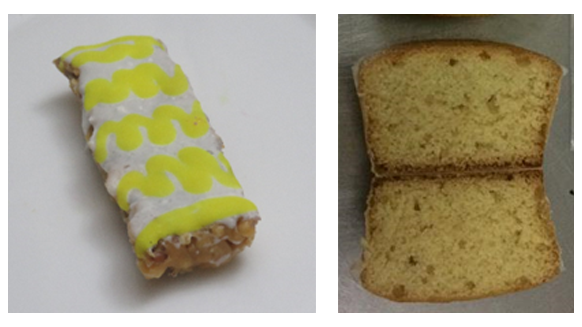
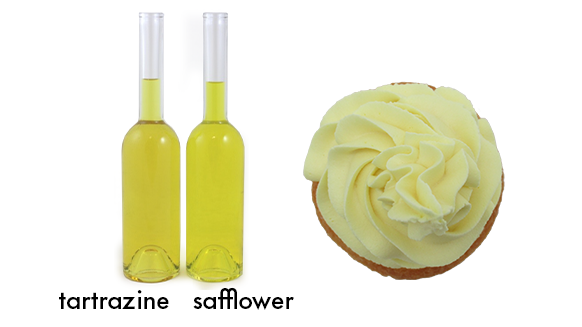
Nature provides plenty of yellow options to use in foods and drinks. One of these sources is curcumin, a flavonoid obtained from the turmeric rhizome. It delivers a super bright yellow colour that resembles tartrazine/yellow #5 very closely and has an attractive, almost fluorescent, hue in application. If you are looking for a lemon or pineapple identity, curcumin may be your go-to yellow!
And we have excellent news: this colour is highly stable towards heat processing and has good cost in use yields. The main consideration when formulating with curcumin is that it is light sensitive, so it’s best to opt for opaque packaging for your goods.
Another important aspect is that it shifts towards a dark orange or even red hue at high pH levels. Most foods are generally neutral or acidic, but high pH microenvironments can occur in the small bubbles formed in chemically leavened batters, especially where double effect leavening powders are used. Keep that in mind to avoid lemon cakes looking more like butterscotch.
From a flower, with love: safflower
Safflower concentrate is a colouring foodstuff obtained from the petals of the Carthamus tinctorius flower, a traditional ingredient with a cool yellow shade that is also a fit tartrazine/yellow #5 alternative. If you want a reference for its shade, think of limoncello, the delicious Italian liquor, reminiscent of Mediterranean summer evenings. Good heat and light stability make this ingredient an appropriate tool for plenty of foods and drinks.
But be sure to check if this ingredient is allowed in your market regulatory frame. While it is permitted as a colouring foodstuff in the EU, it is not permitted for use in the US.
Dressed in the warmth of the sun: Carotenoids
The most versatile source of yellow to golden hues are carotenoids – oil soluble pigments like beta carotene, annatto, lutein, and paprika. You can use them in their native oil soluble form to colour fatty foods like cakes and cookies or cream fillings.
But if you want to use them to colour aqueous matrices, you may prefer emulsified forms like our emSeal® line of effective and easy to use formulations that show outstanding performance and stability.
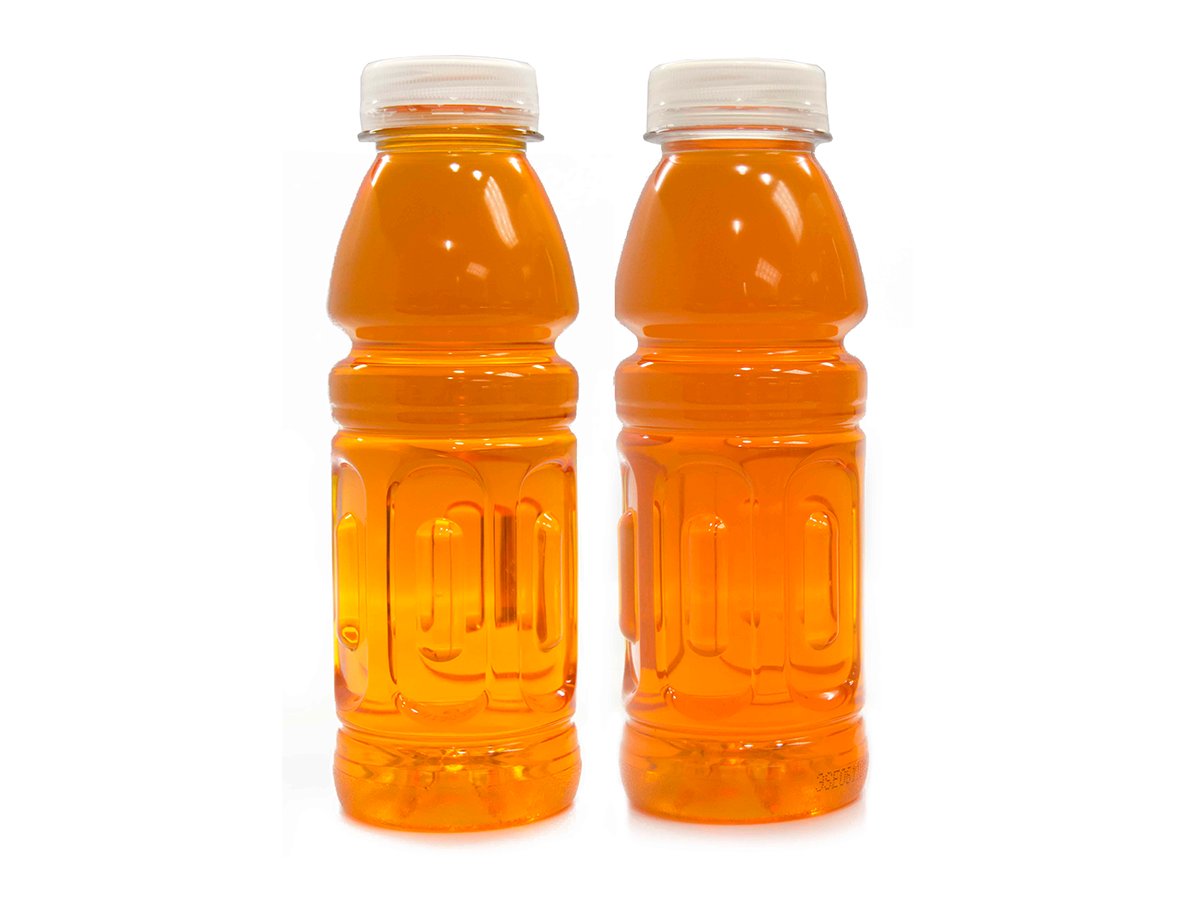
Although warmer than the yellow dispensed by tartrazine, some beta-carotene and lutein emulsions display a golden clarity that fits perfectly with citrus flavors in drinks and clear desserts.
Other carotene emulsions like lutein and annatto have a warmer hue, making them an excellent choice for egg or butter-based recipes, like custards, vanilla flavored creams, brioche buns, and yellow cakes.
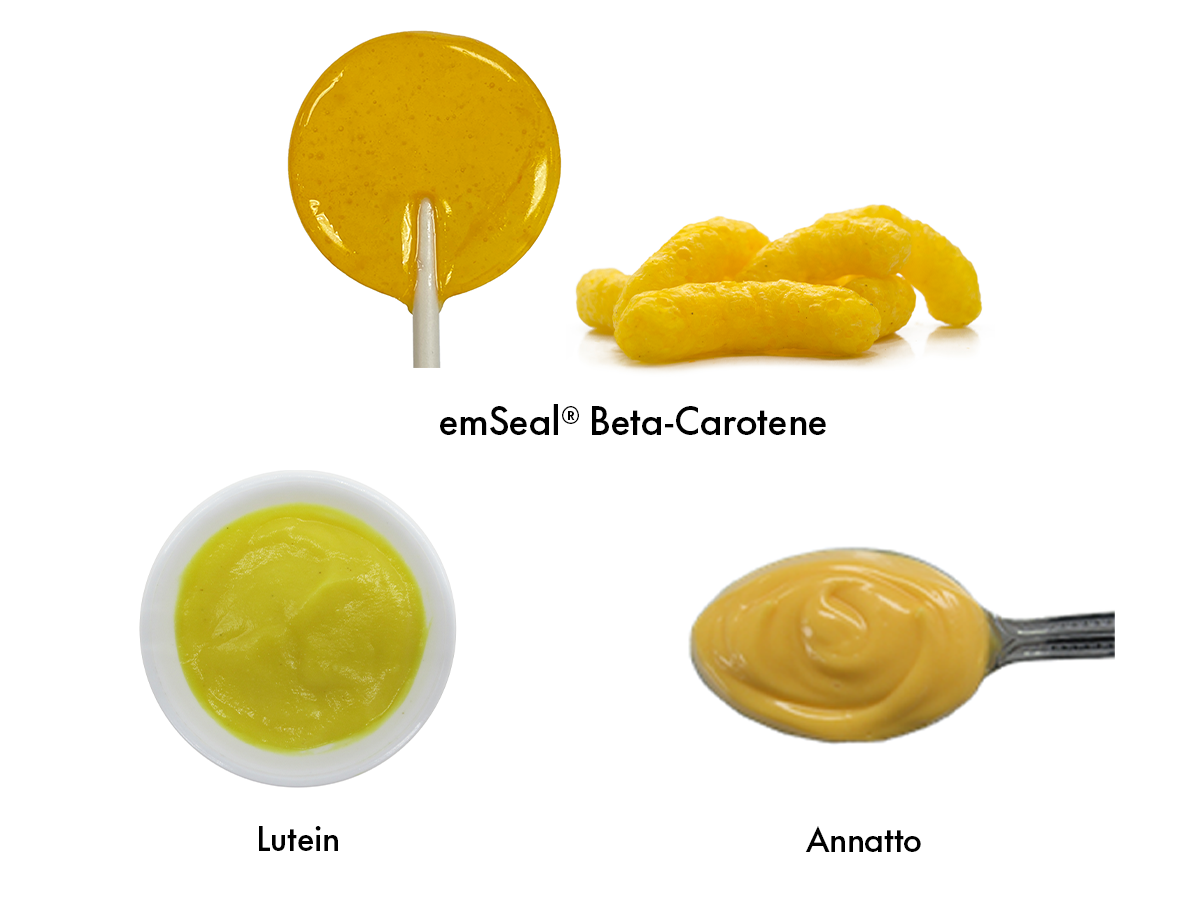
Paprika or Apocarotenal emulsions (depending on your regulatory frame and application) are good options to replace the vibrant orange quality of sunset yellow/yellow #6 – a nominatively yellow colour that leans towards the orange side of the spectrum. And since in most cases artificial yellows are mixed to match an intermediate hue, paprika and other natural yellow sources can be blended in situ, to evoke tropical fruity flavors or warm umami visual sensations.
Just Juice it! – Colouring Foodstuffs
For an even friendlier label, you can also rely on high concentration colouring foodstuffs like Vegebrite® Orange Carrot and Vegebrite® Golden Yellow. These are concentrated juices sourced from selected carrots with high carotene content. They look fantastic in baked goods delivering their golden hues with lower doses and better cost in use than regular yellow coloring foodstuffs on the market.
And for a specially catered formula aimed to the drinks space look for Vegebrite® Orange Carrot and Vegebrite® Golden yellow LWS PLUS, that enable attractive labels with good colour durability.
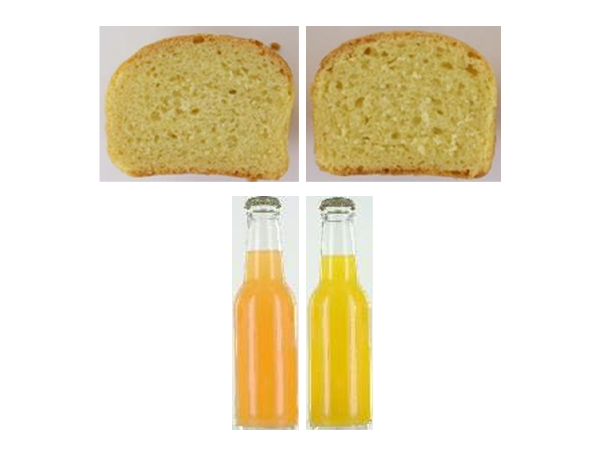
As you can see, there are plenty of natural alternatives to synthetic yellow for your new product development, and the choice is driven by technical criteria as well as market-oriented decisions. Ready to get started? Click here to request a sample of our yellow options or contact our Sense Colour team of experts to co-create lovely hues of yellow that will elevate the look of your food and beverage products and delight all the senses.
Webinar
Natural Colours for Beer & Low-ABV Beverages
Thirst Quenching Colours: Natural Colours for Beer & Low-ABV Beverages
The low alcohol movement is growing! Also known as ‘mindful drinking’, many consumers are turning to lower alcohol options to quench their thirst due to increasing awareness of the relationship between what they are eating & drinking and their overall health. However, they still crave unique and exciting experiences with low-alcohol options. Natural colours are the perfect solution to give consumers the vibrant and exciting drinking experiences they want while meeting the requirements of the ‘mindful drinking’ category. This webinar will give you an in-depth look at how to choose the right colour for your product and process.
In this webinar, you’ll learn:
• Mindful drinking trends
• The best natural colours for low-ABV beverages + how and when to add them
• Caramels that can take your beers to the next level
• How external factors impact colour performance in beer & low-ABV beverage
About the Presenters:
Andrew Kendrick
NPD Manager
Givaudan Sense Colour
Dr. Andrew Kendrick is an NPD Manager at Givaudan Sense Colour with more than 25 years of technical experience with natural colours. He has been working at the DDW natural colours manufacturing facility in Burton upon Trent, UK for the past 8 years, with former roles at Haarmann & Reimer, and Roche. He has a PhD in Microbial Biochemistry from the University of Hull. Andrew’s passion for working with natural colours has given him the opportunity to contribute multiple natural colour articles in trade journals and chapters in books, speak as a guest lecturer at universities, and sit on executive committees. In his spare time, he likes reading, running, and bouldering.
Glen Dreher
Senior Product Development Scientist
Givaudan Sense Colour
Dr. Glen Dreher is a Senior Product Development Scientist with over 20 years of technical experience in the food industry. He has been working at the DDW global headquarters in Louisville, KY for 14 years, with former roles at Jim Beam Brands. He has a PhD in Food Science from the University of Florida. In his free time, he enjoys woodworking, cooking, and hiking.