
Going Beyond Replacement
Sweet indulgent foods, like candies, bonbons, and cakes, are meant to be fun, delightful treats with no huge expectation for nutritional value or healthy properties. Consumers want sugary foods that offer delicious and memorable experiences because of preferred flavors and deep emotional connections with brands and formats.

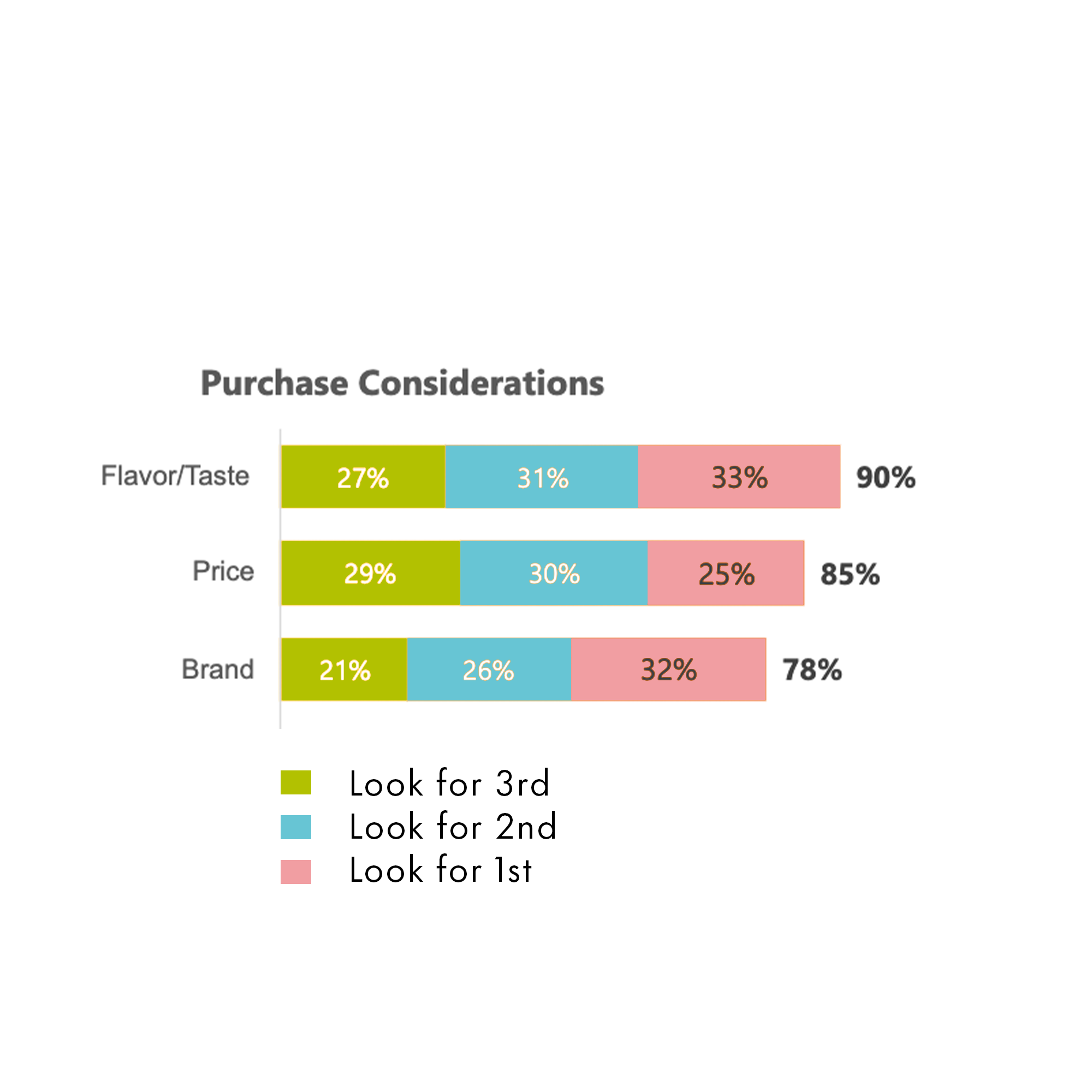
Our proprietary consumer survey on color preference in foods and beverages shows that the top three drivers for purchasing sweet treats are flavor, brand, and price. And while colors were not a primary driver, the visual attractiveness and the quality cues that a proper color provided played a part in the acceptability of products.
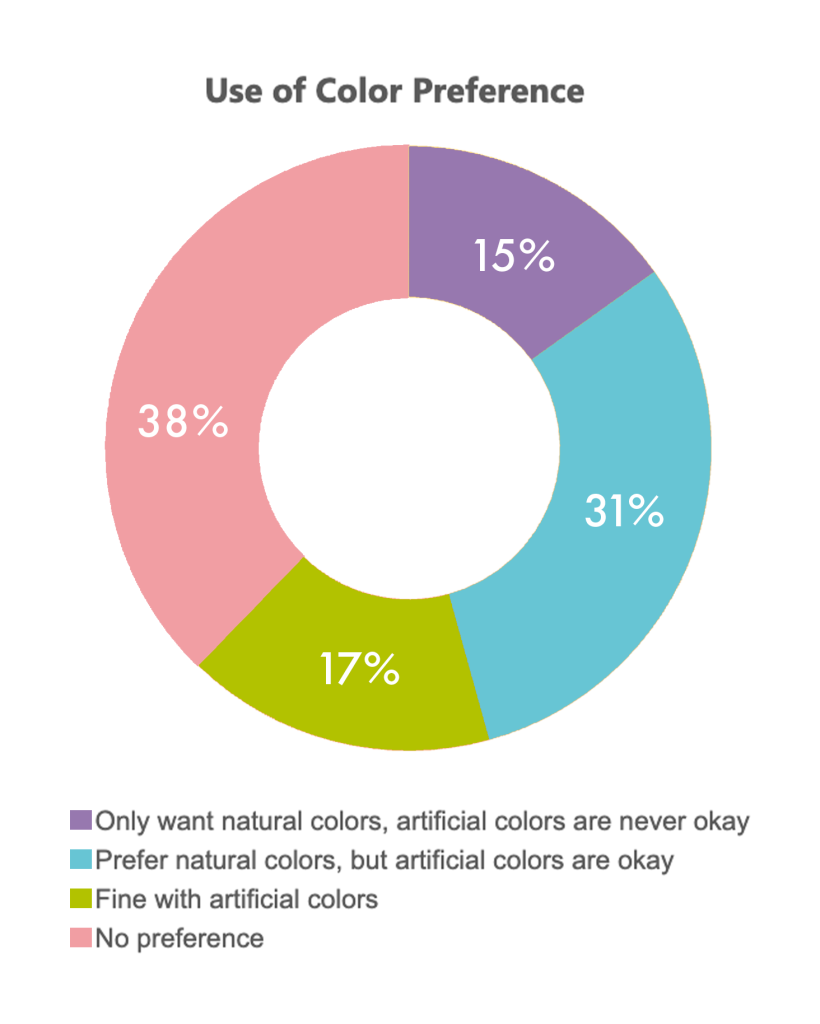
More than 2/3 of consumers demonstrated a preference for natural colors in their sweets. And when natural colors were used, consumers indicated that their purchase intent and consumption likelihood both increased.
In the end, the sense of sight is the first natural touchpoint a consumer has with any product, and color is a vital part of food’s emotional fingerprint.
Resetting the Context: FC&D Replacement
The drivers for a renewed interest to shift from synthetic FD&C colors to natural alternatives include regulatory landscape changes, like the recent FDA announcements encouraging phase-out, and a growing consumer demand for transparency.
So, what does it mean for brands that have traditionally relied on artificial colors to establish consumer loyalty and identification? What are the challenges faced when approaching a natural color alternative?
The good news is that in most cases color vibrancy or hue precision won’t be sacrificed. Excellent matches can be achieved in confectionery products and baked goods, using pigments like turmeric to replace FD&C yellow No. 5, paprika emulsions instead of Yellow No. 6, pelargonidin rich Anthocyanins like our Amaize® Orange-Red, to match Red No. 40, or phycocyanins sourced from Spirulina or Galdieria, like those under our Everzure® line.
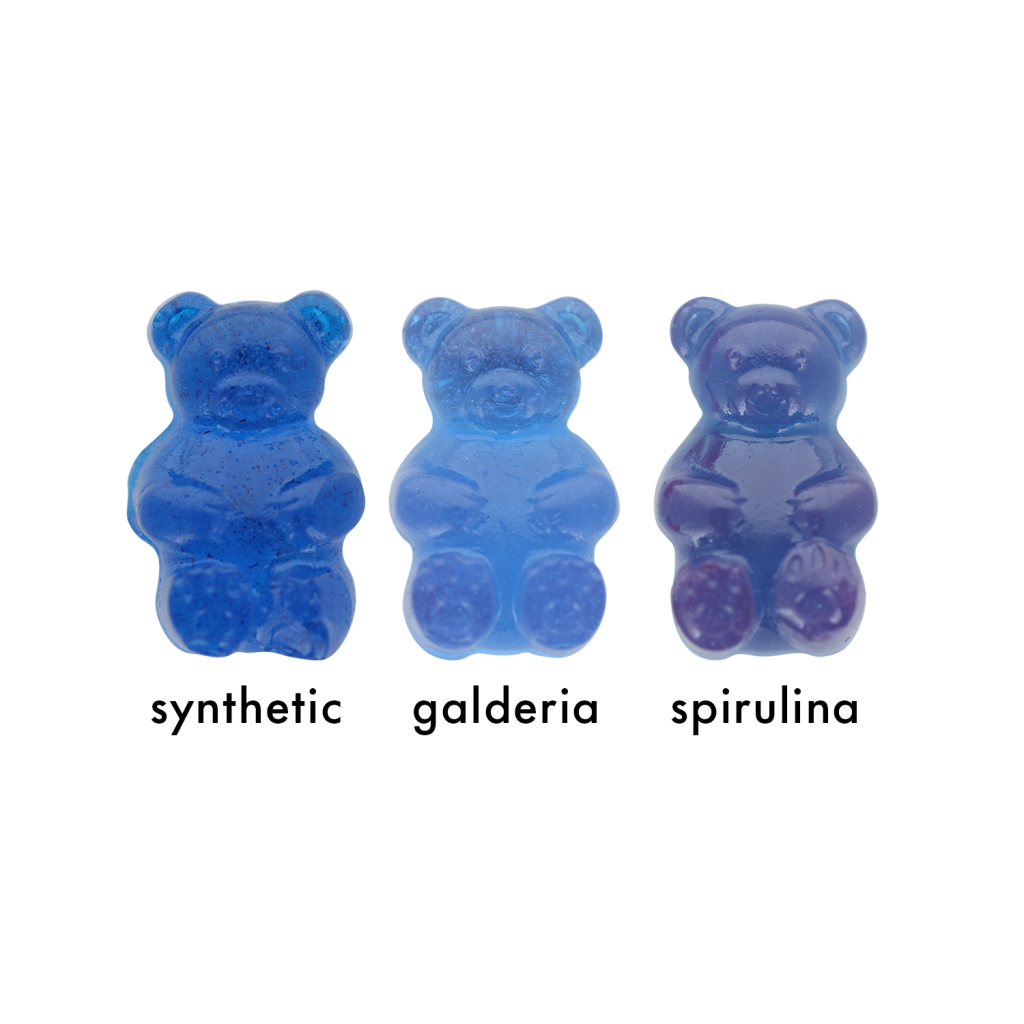
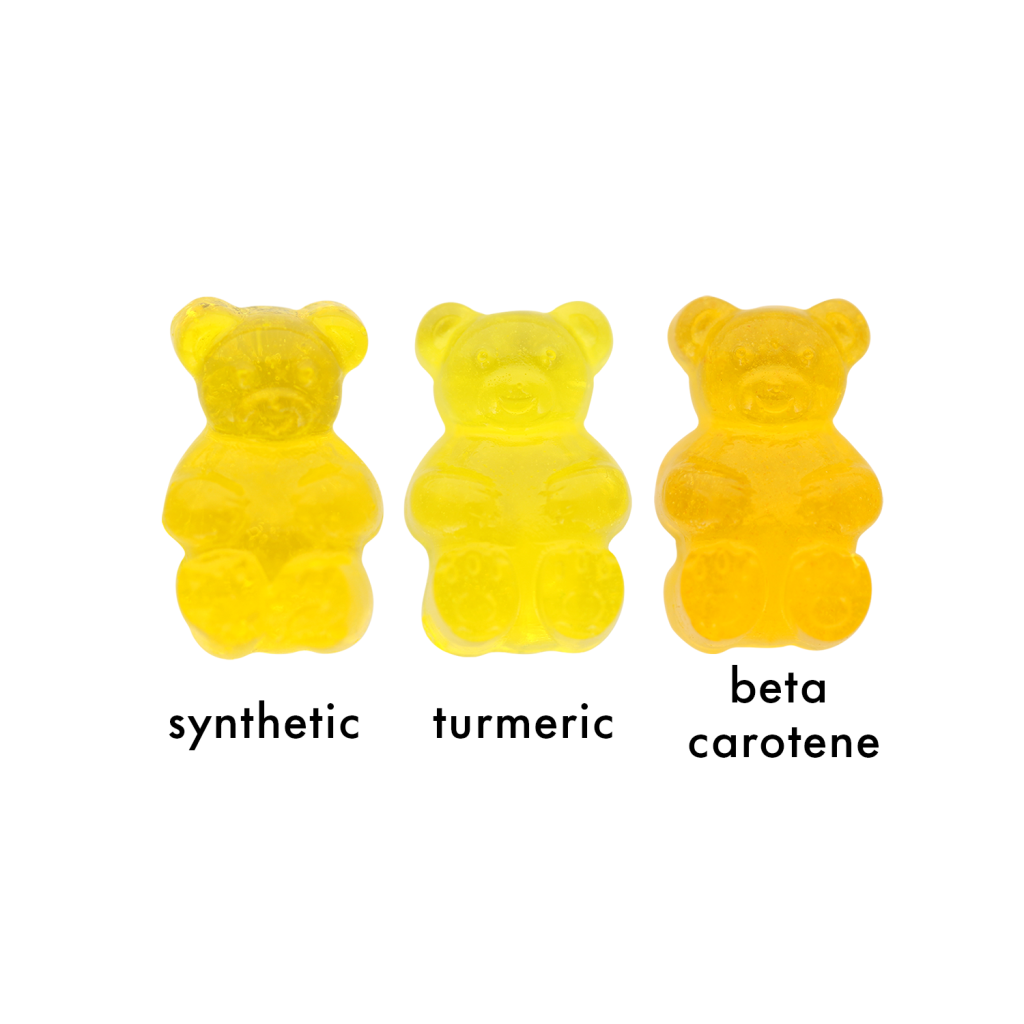
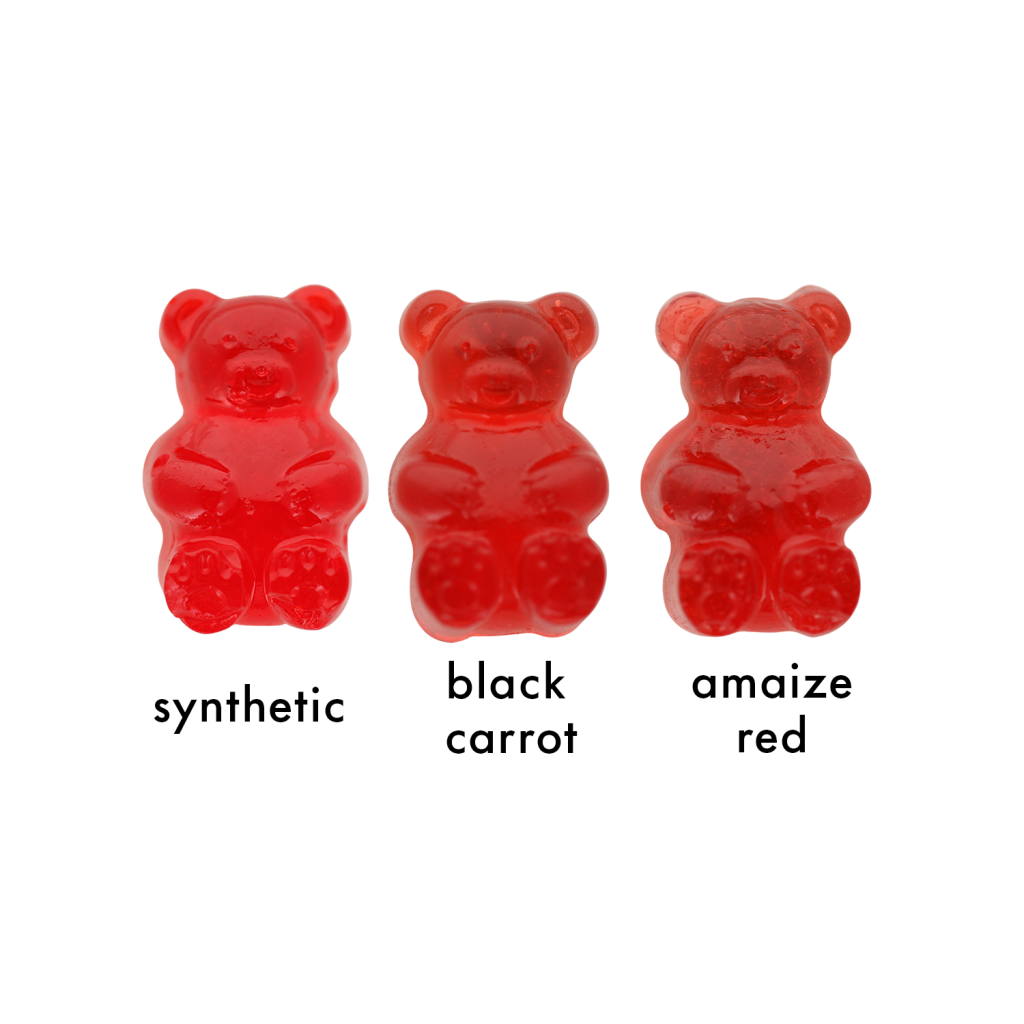

And in many cases, synthetic colors are used as blends, so that there is no need to find the exact match for each individual color. Sometimes a single natural option can replace an artificial blend.
For example, emSeal® beta-carotene emulsions can provide the intermediate yellow color of butter in brioche like buns, that is often achieved with blends of yellow 5 and 6. We really don’t need a “natural tween” for an artificial color.
Natural sourced color additives are perfect cues for popular flavors or ingredients, like strawberry red, ube purple, or lime green. And that is because natural colors are exactly what nature intended food to look like: authentic and familiar!

From Substituting to Reinventing
When you’re looking at switching from artificial colors, some things to keep in mind are:
SKUs:
As mentioned previously, going from artificial to natural colors shouldn’t be an imitation game. In other words, you don’t always need a one to one match for an artificial color in each of your products. It’s perfectly feasible to construct a brand new palette with basic colors that you can mix and match according to your current portfolio and development pipeline. You may find that you even reduce the number of SKUs!
Use Rates:
Natural colors will likely need higher dosages than artificial pigments, but the usage rate will remain very small, in relation to the total recipe (very rarely above 1%).
Cost:
While 1:1 price comparisons between artificial and natural colors might seem high, the switch should not impact the formula cost significantly, and much less the unit price paid by the consumer.
Stability
You may have also heard that natural pigments are less stable than artificial ones. But this myth is being challenged time and time again, as performance is dependent on the color formula design, and engineering decisions that can be addressed by the food manufacturers. Sweet goods are one of the food categories where the use of natural colors has shown a consistent history of successful use.
There will be, for sure, a an adjustment period as you become accostomed to all the ins and outs of natural colors, but Givaudan Sense Colour is ready to share our expertise to help you make a seamless and sustainable transition and win the minds and hearts of consumers that love sweet and colorful treats. To learn more about replacing artificial colors in sweet goods, visit our Synthetic Replacement Hub here.

Related posts
Podcast: History of Colours
Past and Present of Food ColoursYou have to know the past to understand the present Speakers: Catalina Ospina, technical marketing specialist and Katie Floyd, marketing specialist. With all of the news about food colour, we dive into the history of both

Healthy Indulgence: Colourful Goodies for Gen Alpha
The colour of healthy indulgence: BFY snacks Gen alpha ate! Figuratively and literally! Their ever-growing influence on household purchasing decisions is driving the development of adventurous sweet treats and confections. Digital experiences, visual appeal,

Podcast: Visual Flavour
Visual FlavourHow Colours Enhance Snack Experiences Speakers: Catalina Ospina, technical marketing specialist; Lora Sparks, digital marketing specialist; Scott Ondracek, senior regulatory specialist (and snack guru). In this podcast episode, we try several

Colouring Healthy Snacks
The colour of healthy indulgence: BFY snacks What is snacking for you? Is it any food that is consumed between the main meals? Or something to deter hunger + boost stamina when energy is dwindling mid-afternoon? Or maybe even a treat to relax and celebrate
Snack Trends of 2025
Colorful snacking trends to watch and enjoy Snacking is a universal habit, and yet, we all snack differently according to our demography, age, and cultural context. Terms like “empty calories” or “ultra processed foods” didn’t exist in the

Understanding ADI
Natural colours are considered food additives in the food and beverage world and are strictly regulated in terms of their identity, purity, the food categories in which they are allowed, and their usage rate. A recent example is the 2020 EFSA review of