
Natural Colours for Dairy-Free Cheese
Cheese substitutes, or plant-based cheese analogues, have been on the market since at least the 1970’s. But since 2018, dairy-free cheeses have risen in popularity with the increased consumer demand for plant-based foods.
They are achieved by substituting the dairy proteins in cheeses with plant-based ingredients like nuts, cereals, and pulses, with varied ratios of proteins, fats, and starches that provide different textural, nutritional, and cooking attributes. As with other plant based options, there are challenges in creating a product that not only looks like its traditional counterpart, but also has a similar flavor, texture, and functionality.
In this article, we’ll take you through some of the common challenges when making plant-based cheese and the colour solutions that can help you provide your consumers with an authentic dairy-free cheese experience.
A Challenging Cheese
The most common vegan cheese on the marketplace is the non-ripened processed cheese that comes in slices, grated, or block forms. These typically use a combination of water or plant milk, coconut oil, and starch, as well as salt, flavor, and color as required.
The challenge comes in when trying to mimic the way milk reacts when made into cheeses. Bases such as coconut, soy bean, or nuts that are rich in fats and protein such as cashews, almonds, or pine nuts are often used. The addition of starches provides an emulsification and stabilizing effect as well as adds a creamier mouth feel to the final vegan cheese.
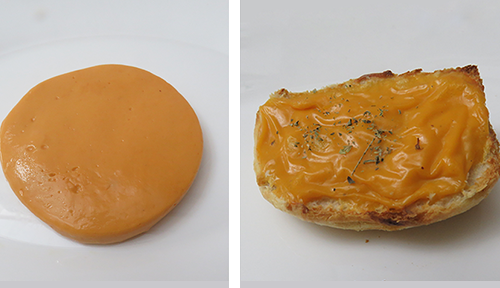
Vegan cheese made from nuts typically doesn’t melt, for example. However, using a base of coconut oil will give a vegan cheese that will mimic the melting properties of cheeses, as seen in the image below.
Controlling the ratio of the water, protein, starch and fat also allows for spreadable forms of cheese analogs, which can be flavored with herbs, spices, or even fruits to achieve distinctive sensory profiles.
As with parallel projects to remove sugar, salt, and fat from products there is no one ingredient that can replace milk within a cheese system to deliver an analogous effect and often a combination of ingredients is needed.
Including Color
For manufacturers producing a variety of plant-based cheese, it is often best to use to use an oil soluble color. The most commonly used option for plant-based cheese is oil soluble beta-carotene. This is because it not only has the right golden yellow cheese color, but also because of its consumer recognition as a natural colour, as well as widespread regulatory approval. It can easily be applied to the coconut oil before the addition of the water/milk and starch mix.
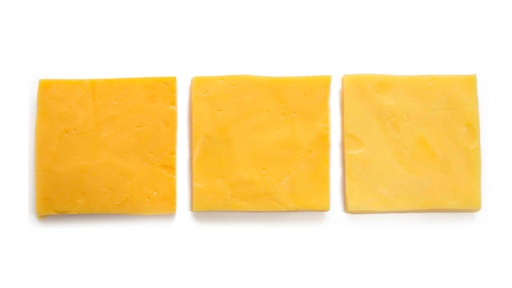
As seen in the image below, by adjusting the dosage of the carotene a variety of shades can be achieved – from cheddar yellows to a deeper orange similar to a Red Leicester.
Other common color options include oil-soluble annatto, paprika, or blends with curcumin (seen below) for customised shades. These colors all have excellent heat stability for consistent processes and no risk of off flavors that could impact the consumer experience. If you do need to use water soluble colors or emulsions, you can mix these into the water or milk component prior to combining with the remaining ingredients.
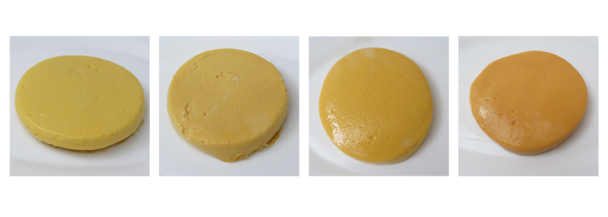
Vegetable juice colors like Vegebrite® orange carrot or golden yellow are good alternatives to get attractive labels for consumers and unique identities in cheese analogs. In this case, the dosage rate required to get the target hue may be larger when compared to beta-carotene or annatto. They would also have to be incorporated with a compatible emulsifying system since they are water dispersible formulas.
Despite what color you choose, the key to on-shelf product colour stability is the use of a synergistic cocktail of antioxidants, which will protect and retain the color through the manufacturing process and through the shelf life of the final product.
Spreadable or cream cheese analogs allow for a wider array of colors to match the flavor creation. Here imagination is the limit and the color can be incorporated as a uniform shade, as textured inclusions, or with a marbled effect: greens for herbal flavors, browns for umami profiles like mushroom or onion, bright oranges for spicy versions, and even red and purples for fruity sour-sweet spreads.
Whether your plant-based cheese is for a traditional cheese slice or block or meltable, hot preparation, natural colors play an important role adding up to the sensory experience of authenticity. Request a sample or contact us to get started on your plant-based cheese project.
Interested in natural colors for your next dairy-free cheese application? Request a sample or contact us to get started on a project.
Video: Light Stability Testing
It’s critical that a natural color remains vibrant throughout the shelf-life of a product – that’s why we conduct stability testing! In this video, we walk you through the two different ways – real time and accelerated – as we test the light stability of our natural colors to ensure they remain stable throughout the shelf life of a product.
Interested in learning more about how we test the stability of natural colors? Check out the full article here.
Need help testing color stability for your project? Contact us to get started.
Bixin and Norbixin: What’s the Difference?
Annatto: Bixin and Norbixin
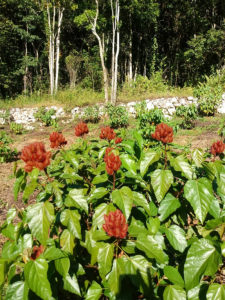
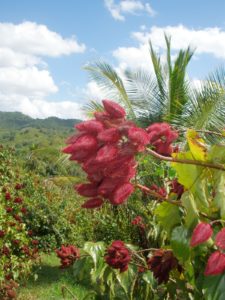
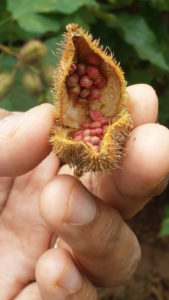
Annatto is a yellow to red-orange natural color that is extracted from the spiney seed pods of the Bixa orellana, or achiote, bush. It is native to tropical growing areas in Central and South America as well as Africa. In some countries like Brazil, the seeds are also used as a spice in cooking. In the coloring world, though, there are two different types of annatto that are used in the food industry: Bixin and Norbixin. But what’s the difference and when should you use bixin or norbixin?
In this article, we’ll take you through the differences between these two common colors.
Bixin
Bixin is the original form of annatto that is extracted from the seed coating and is naturally oil soluble. One method to extract bixin from the seed coat is using hot vegetable oil. However, bixin is only soluble in vegetable oil at low percentage rates. You can create stronger products by using bixin suspensions. This is done through repeat extractions of annatto seeds yielding bixin concentrations of 4% or greater. Oil soluble bixin is a yellow color, whereas suspensions of bixin are a deep, vivid red orange.
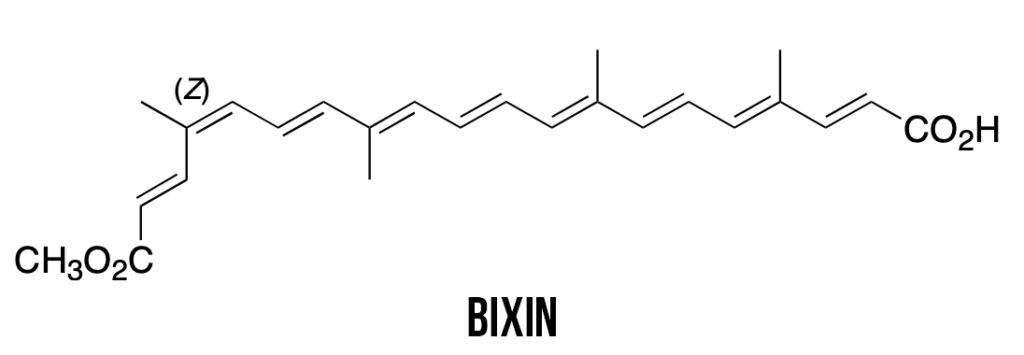
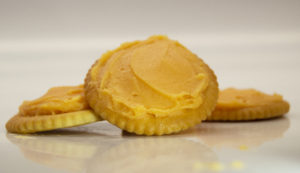
Bixin is a commonly used natural color in the food industry because it is an economical option for yellow to red-orange hues depending on the application and dosage rate. Since bixin is oil soluble, it is mostly used in oil-based food applications like process cheese, cheese sauces, and dairy spreads. It is also a popular choice in the snack food industry where it may be applied to oil-based slurries used to season extruded snacks.
Norbixin
Norbixin is the water-soluble pigment of annatto. To make it, we put bixin through a process called saponification. This cleaves the methyl ester of bixin, forming norbixin. Like bixin, norbixin varies in hue from yellow to orange depending on the usage rate and application.
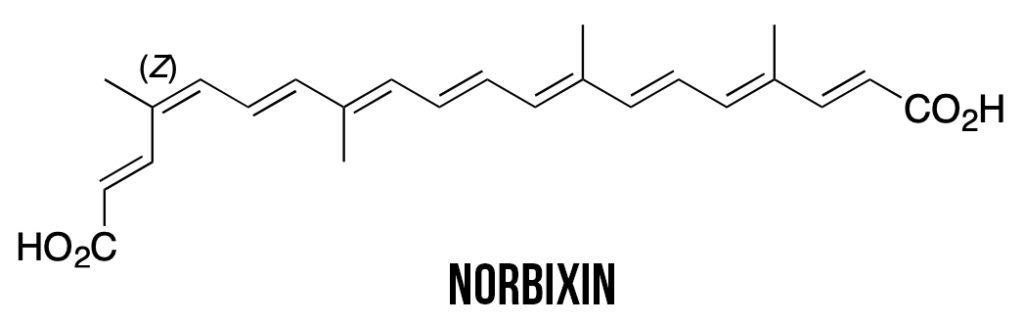
Norbixin is traditionally used to color dairy products like natural cheddar cheese, yogurt, dairy drinks, and ice cream where a water-soluble color works better. In cheese, norbixin binds to dairy proteins during cheese making, imparting excellent color and stability.
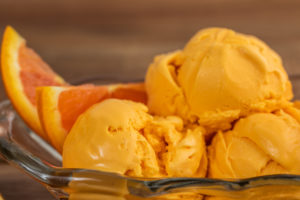
Another important food application for norbixin is ice cream where norbixin delivers the light-yellow hue of vanilla flavored ice cream at low use rates and bright orange to compliment mango or other tropical flavors at higher use rates. If you’re working with a more acidic application like beverages or low pH confections, however, you’ll want to use a norbixin product that has been protected by an emulsification system to avoid precipitation.
In summary, bixin is the oil-soluble pigment that is extracted from annatto and norbixin is the water-soluble form of the pigment. Both provide a range of yellow to red-orange colors in different applications.
Annatto is a versatile pigment since it may be used in oil or water-based foods. The range of pigment use may be expanded with the use of emulsifiers to include acidified food applications. Overall, annatto has very good stability in food applications and it’s an economical choice for a vibrant yellow to orange pigment.
If you’re in the EU, check out the expanded list of applications that can now use bixin and norbixin. Ready to get started with annatto? Request a sample here.
Opportunities for Annatto
Newly expanded applications and increased use rates create new potential for bixin & norbixin in the EU & UK
A welcome finale
The 18 pages of Regulation 2020/771 published in June 2020 were a welcome finale to an industry project that started 25 years ago. This new regulation extends the range of foods that annatto color can be used in and increases some of the permitted levels, creating new opportunities for annatto in the EU.
This is particularly good news for manufacturers of products such as confectionery, snacks, and soups which will now have another color option in the European market.
What is Annatto?
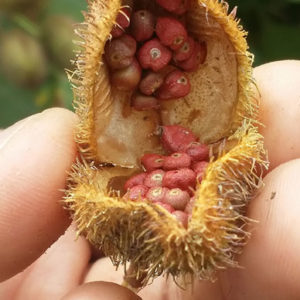
Annatto is a yellow/orange natural color that has been used for many years to standardize the color or give the characteristic color to cheeses like Red Leicester or Mimolette. It is extracted from the seeds of a tropical tree called bixa orellana. Annatto can be extracted as oil-soluble in the form of bixin, or in a water-soluble form called norbixin.
Because bixin has a higher acceptable daily intake (ADI) than norbixin, the new legislation splits these two types, allowing the bixin to be used at higher levels and in additional foods than the norbixin.
A Bit of History
Until the 1994 regulations came into force, annatto was generally used in most foods across the UK and EU. In fact, the UK’s 1993 Dietary Intake of Food Additives reported annatto as being used in products such as confectionery, soft drinks and sauces, all of which had to be reformulated soon afterwards.
As a result of the regulations, the Annatto Interest Group formed in 1995 to develop safety data to support more uses. Now, after 25 years of data collection and analysis, annatto can finally be used again in many applications.
The issue for annatto was never that it was unsafe, but more a case that the safety studies had been carried out on the low concentration extracts available in the 1970s. Based on the levels of annatto extract used, it was calculated that up to 2.5 mg of color per kg of bodyweight of annatto extract was safe to be consumed every day over a lifetime, or ADI, a level similar to other colors.
However, when the ADI was calculated back to the pigment itself it was only 0.065 mg/kg bodyweight/day. With such a low ADI, it was inevitable that the range of uses would need to be limited to ensure proper consumption levels.
The first of the new safety studies were completed and submitted to the FAO/ WHO Joint Expert Committee for Food Additives (JECFA) who reviewed them in 2003 and subdivided the products into 6 sub-categories. The ADIs of the popular products were increased significantly. Data was submitted again to the EU in 2008, 2011, and 2016.
Finally, in March 2019, EFSA published their opinion allocating an ADI for the new annatto sub-categories and a set of uses where “the level of exposure does not raise a health concern”. This led to the publication of the new regulations in June 2020.
So, what are the new permitted applications?
Dairy applications have always been important, but there are opportunities for annatto in a wide variety of other foods. The items that can newly contain either form of annatto or that have increased use levels can be found in the chart* below.
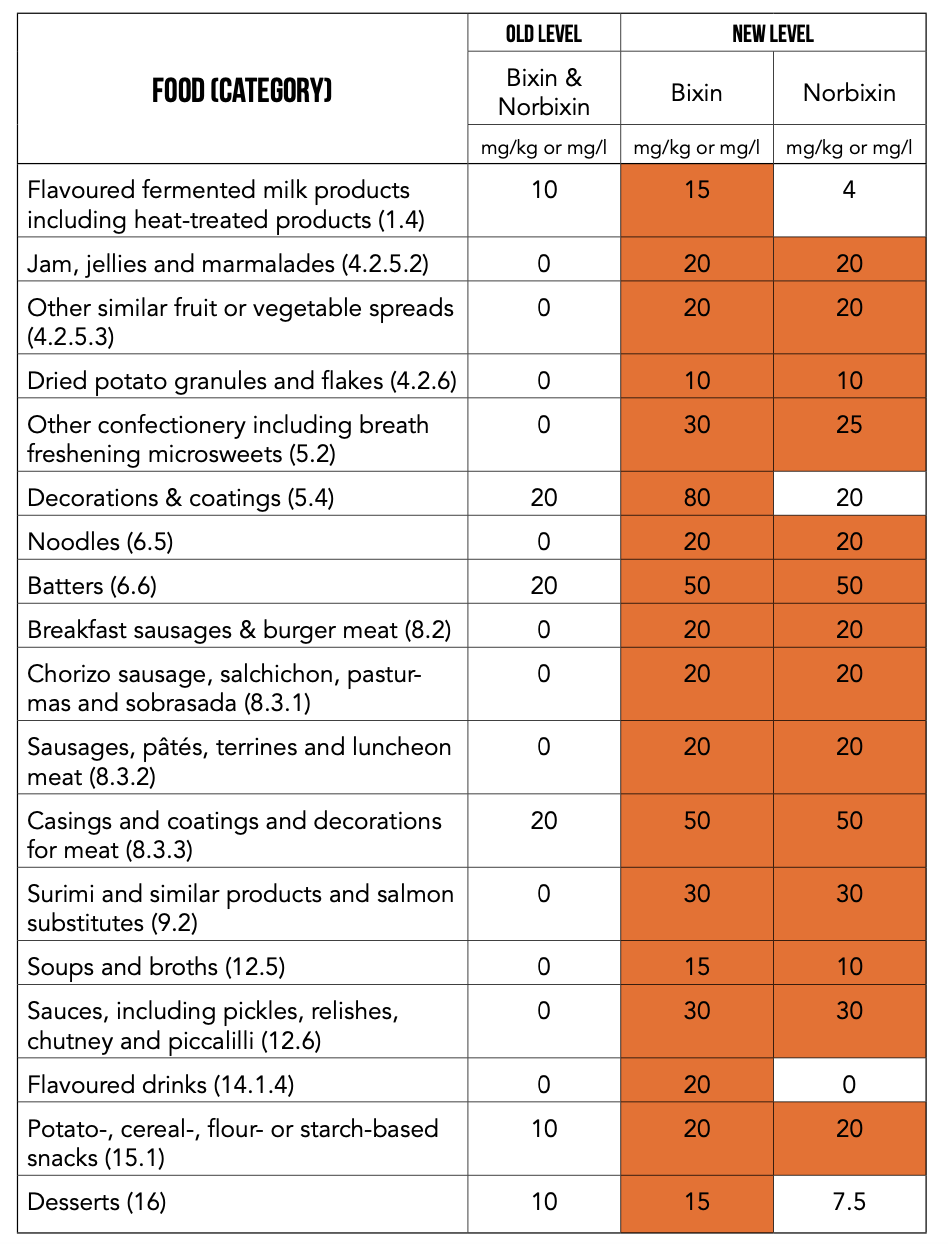
*This chart shows only applications with increased use levels of annatto. For a full list of changes, please see the full regulations.