
Natural Alternatives to Synthetic Yellow
Take a stroll through the supermarket aisles and you’ll see tons of products in a range of yellow hues. It’s a popular shade in foods and drinks because many natural ingredients are already yellow. But it is also intentionally used because it has been shown to increase appetite and even induce impulse buying! When deciding the visual design of your yellow food or beverage, why not go through the natural path and skip the use of artificial colours? In this article we’ll take you through some of the natural alternatives to synthetic yellows that will help you meet consumer demand for simple labels while still providing a range of butter yellow to vibrant golden shades.
Vibrant as no other: Curcumin
Nature provides plenty of yellow options to use in foods and drinks. One of these sources is curcumin, a flavonoid obtained from the turmeric rhizome. It delivers a super bright yellow colour that resembles tartrazine/yellow #5 very closely and has an attractive, almost fluorescent, hue in application. If you are looking for a lemon or pineapple identity, curcumin may be your go-to yellow!
And we have excellent news: this colour is highly stable towards heat processing and has good cost in use yields. The main consideration when formulating with curcumin is that it is light sensitive, so it’s best to opt for opaque packaging for your goods.
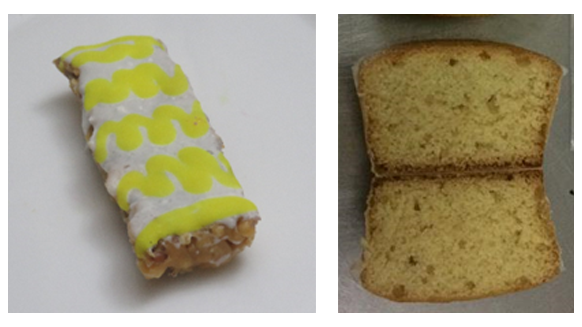
Another important aspect is that it shifts towards a dark orange or even red hue at high pH levels. Most foods are generally neutral or acidic, but high pH microenvironments can occur in the small bubbles formed in chemically leavened batters, especially where double effect leavening powders are used. Keep that in mind to avoid lemon cakes looking more like butterscotch.
From a flower, with love: safflower
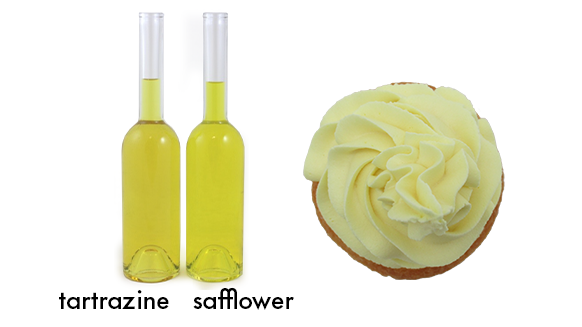
Safflower concentrate is a colouring foodstuff obtained from the petals of the Carthamus tinctorius flower, a traditional ingredient with a cool yellow shade that is also a fit tartrazine/yellow #5 alternative. If you want a reference for its shade, think of limoncello, the delicious Italian liquor, reminiscent of Mediterranean summer evenings. Good heat and light stability make this ingredient an appropriate tool for plenty of foods and drinks.
But be sure to check if this ingredient is allowed in your market regulatory frame. While it is permitted as a colouring foodstuff in the EU, it is not permitted for use in the US.
Dressed in the warmth of the sun: Carotenoids
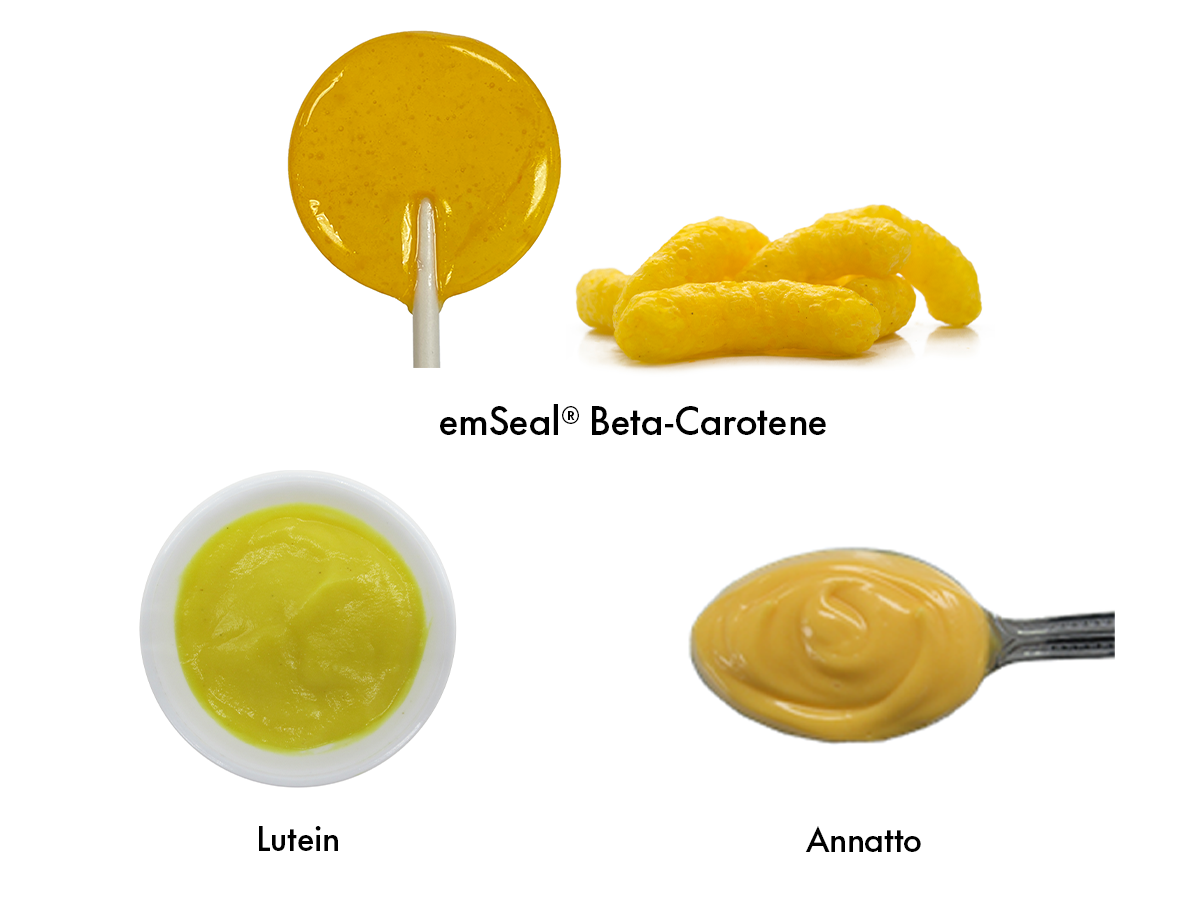
The most versatile source of yellow to golden hues are carotenoids – oil soluble pigments like beta carotene, annatto, lutein, and paprika. You can use them in their native oil soluble form to colour fatty foods like cakes and cookies or cream fillings.
But if you want to use them to colour aqueous matrices, you may prefer emulsified forms like our emSeal® line of effective and easy to use formulations that show outstanding performance and stability.
Although warmer than the yellow dispensed by tartrazine, some beta-carotene and lutein emulsions display a golden clarity that fits perfectly with citrus flavors in drinks and clear desserts.
Other carotene emulsions like lutein and annatto have a warmer hue, making them an excellent choice for egg or butter-based recipes, like custards, vanilla flavored creams, brioche buns, and yellow cakes.
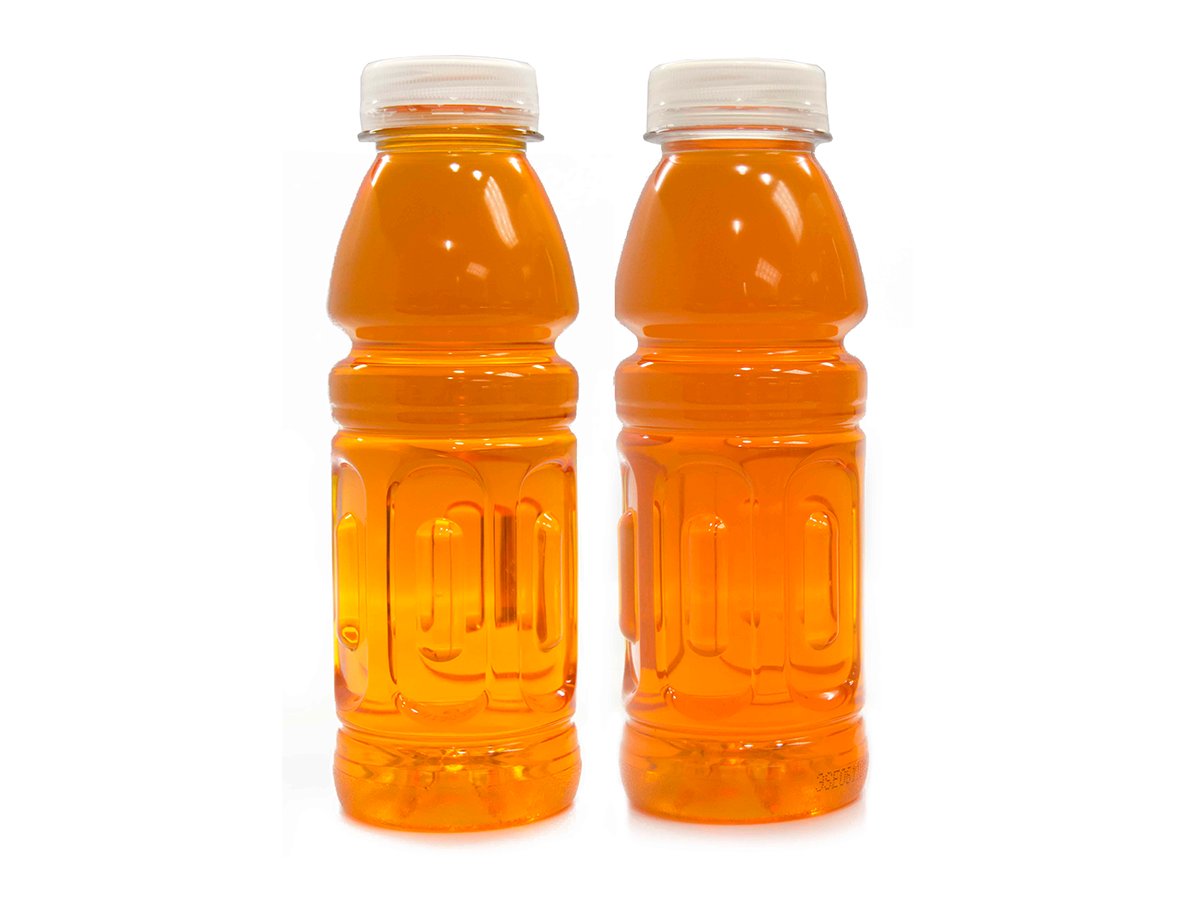
Paprika or Apocarotenal emulsions (depending on your regulatory frame and application) are good options to replace the vibrant orange quality of sunset yellow/yellow #6 – a nominatively yellow colour that leans towards the orange side of the spectrum. And since in most cases artificial yellows are mixed to match an intermediate hue, paprika and other natural yellow sources can be blended in situ, to evoke tropical fruity flavors or warm umami visual sensations.
Just Juice it! – Colouring Foodstuffs
For an even friendlier label, you can also rely on high concentration colouring foodstuffs like Vegebrite® Orange Carrot and Vegebrite® Golden Yellow. These are concentrated juices sourced from selected carrots with high carotene content. They look fantastic in baked goods delivering their golden hues with lower doses and better cost in use than regular yellow coloring foodstuffs on the market.
And for a specially catered formula aimed to the drinks space look for Vegebrite® Orange Carrot and Vegebrite® Golden yellow LWS PLUS, that enable attractive labels with good colour durability.
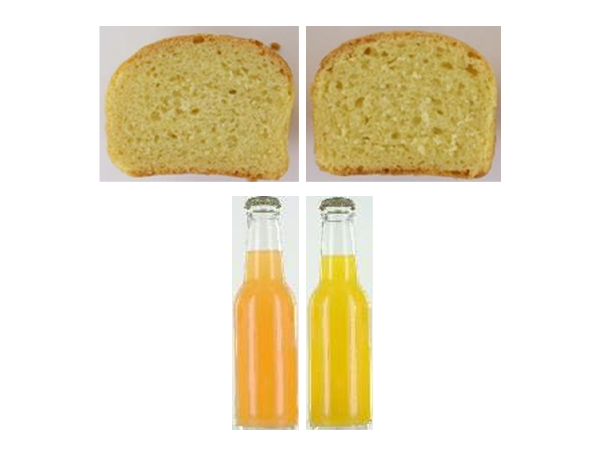
As you can see, there are plenty of natural alternatives to synthetic yellow for your new product development, and the choice is driven by technical criteria as well as market-oriented decisions. Ready to get started? Click here to request a sample of our yellow options or contact our Sense Colour team of experts to co-create lovely hues of yellow that will elevate the look of your food and beverage products and delight all the senses.
Do Natural Colours Have Nutritional Value?
Are natural colours healthy? Do natural colours impart nutritional value? Can we make functional claims when we use natural colours in our product? We get these types of questions often, especially with the increase in the “functional foods” market segment. In this article we’ll provide some clarity around this topic.
Do natural colors have nutritional value?
The short answer is no – most natural colours do not provide nutritional value to an end product. This is because the majority of natural colours used in food production are isolated pigments, meaning the colour has been selectively extracted from the raw material in order to create extremely concentrated colours for the sole purpose of colouring food and beverage applications.
Macro and Micronutrients
But you used vitamin C in the natural colour formulation. Doesn’t that provide a health benefit? The answer is still no. In order to make colours suitable for food or beverage applications they are often formulated with food additives and other ingredients.
Vitamins like vitamin C can be used to help stabilize some natural colours like carotenoids, and minerals like calcium or sodium can be used to stabilize others, providing them minor amounts of micronutrients. But the vitamin or mineral content is typically very low, and when considering the dosage range – usually around 0.1 – 1.0% in the final product – that means that the contribution of these nutrients to the finished product would be negligible.
Another example is when using an emulsifier to make an oil soluble colour suitable for water-based applications, or a carrier like maltodextrin to make a powder colour. In these cases, natural colours may contain macronutrients like carbohydrates, lipids, or proteins, with negligible contribution to the end product nutritional label.
Beyond Nutrition
But it’s also important to understand why consumers might think that natural colours have nutritional value or health benefits.
Pigments in their original environment in a raw material – like beets, berries, or turmeric root – have biological functions that came about as evolutionary advantages that are sometimes translated to functional properties. Here we’ll dive into a few of the most common ones, if only for the purpose of awing ourselves on the marvels of the interaction of living organisms through chemistry.
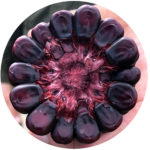
Anthocyanins – these wonderful tiny molecules are responsible for the colors of most berries and red, blue, and violet flowers. Some studies* suggest they may have protective effects by neutralizing free radicals, controlling inflammation and positively affecting the cardiovascular, endocrine and microcirculatory systems, besides modulating the gut microbiota.
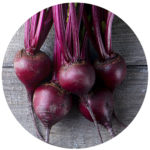
Beet roots – are rich in betalains (betacyanins and betaxanthis) and studies show* they exhibit antioxidant and anti-inflammatory activity. Some athletes use beet root extracts as food supplements with hopes to improve physical performance, muscle efficiency and reduce exercise caused fatigue
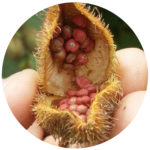
Carotenoids – Another group of powerful antioxidants that provide warm yellows, oranges, and reds. They are auxiliary pigments for the photosynthesis process and studies show* they may contribute to the protection of tissues – of both the plants and microorganisms that synthesize them as well as the animals that consume them.
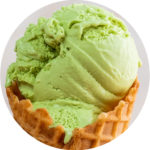
Chlorophyll – here we’ll mention a feature not very well known, but probably intuitive, from chlorophyll derivatives. Due to their affinity for other organic molecules, studies suggest* they can be used as internal deodorant, helping to neutralize body odors in colostomy patients and also by those that suffer trimethylaminuria. And we say intuitive, because who has not resorted to granny’s advice of chewing celery, parsley, or cilantro to control breath and BO?
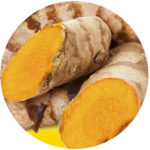
Curcumin – A bright and neon-like yellow pigment. This flavonoid is extracted from turmeric root, which is widely used in It has been studied* for its anti-inflammatory and anti-tumor properties and is one of the examples of bioactive substances that have successfully jumped from the table to the nutraceutical field.
To sum it up
Although there is no scientific evidence showing that natural colors have nutritional value as food additives with a direct correlation to health benefits, natural colors are made from natural sources that are well known by consumers. This confers a ‘wellness halo’ to foods and drinks that are naturally colored that may lead consumers to choose products colored with natural sources over other options.
While natural colours may not have nutritional benefits, they certainly do improve the consumer experience of foods and beverage. Click here to learn about our other experience-improving solutions, like flavours, textures, and fragrances!
*Check out the studies below for additional reading on these pigments.
Blesso, C. N. (2019). Dietary Anthocyanins and Human Health. Nutrients, 11(9), 2107. https://doi.org/10.3390/nu11092107
Espinosa-Moncada, J., Marín-Echeverri, C., Galvis-Pérez, Y., Ciro-Gómez, G., Aristizábal, J., Blesso, C., Fernandez, M., & Barona-Acevedo, J. (2018). Evaluation of Agraz Consumption on Adipocytokines, Inflammation, and Oxidative Stress Markers in Women with Metabolic Syndrome. Nutrients, 10(11), 1639. https://doi.org/10.3390/nu10111639
Hair, R., Sakaki, J. R., & Chun, O. K. (2021). Anthocyanins, Microbiome and Health Benefits in Aging. Molecules, 26(3), 537. https://doi.org/10.3390/molecules26030537
Kilua, A., Nomata, R., Nagata, R., Fukuma, N., Shimada, K., Han, K. H., & Fukushima, M. (2019). Purple Sweet Potato Polyphenols Differentially Influence the Microbial Composition Depending on the Fermentability of Dietary Fiber in a Mixed Culture of Swine Fecal Bacteria. Nutrients, 11(7), 1495. https://doi.org/10.3390/nu11071495
Luna-Vital, D. A., & Gonzalez De Mejia, E. (2018). Anthocyanins from purple corn activate free fatty acid-receptor 1 and glucokinase enhancing in vitro insulin secretion and hepatic glucose uptake. PLOS ONE, 13(7), e0200449. https://doi.org/10.1371/journal.pone.0200449
Mozos, I., Flangea, C., Vlad, D. C., Gug, C., Mozos, C., Stoian, D., Luca, C. T., Horbańczuk, J. O., Horbańczuk, O. K., & Atanasov, A. G. (2021). Effects of Anthocyanins on Vascular Health. Biomolecules, 11(6), 811. https://doi.org/10.3390/biom11060811
Pei, R., Liu, J., Martin, D. A., Valdez, J. C., Jeffety, J., Barrett-Wilt, G. A., Liu, Z., & Bolling, B. W. (2019). Aronia Berry Supplementation Mitigates Inflammation in T Cell Transfer-Induced Colitis by Decreasing Oxidative Stress. Nutrients, 11(6), 1316. https://doi.org/10.3390/nu11061316
Abedimanesh, N., Asghari, S., Mohammadnejad, K., Daneshvar, Z., Rahmani, S., Shokoohi, S., Farzaneh, A. H., Hosseini, S. H., Jafari Anarkooli, I., Noubarani, M., Andalib, S., Eskandari, M. R., & Motlagh, B. (2021). The anti-diabetic effects of betanin in streptozotocin-induced diabetic rats through modulating AMPK/SIRT1/NF-κB signaling pathway. Nutrition & Metabolism, 18(1). https://doi.org/10.1186/s12986-021-00621-9
Belhadj Slimen, I., Najar, T., & Abderrabba, M. (2017). Chemical and Antioxidant Properties of Betalains. Journal of Agricultural and Food Chemistry, 65(4), 675–689. https://doi.org/10.1021/acs.jafc.6b04208
Chen, L., Zhu, Y., Hu, Z., Wu, S., & Jin, C. (2021). Beetroot as a functional food with huge health benefits: Antioxidant, antitumor, physical function, and chronic metabolomics activity. Food Science & Nutrition, 9(11), 6406–6420. https://doi.org/10.1002/fsn3.2577
Lechner, J. F., & Stoner, G. D. (2019). Red Beetroot and Betalains as Cancer Chemopreventative Agents. Molecules, 24(8), 1602. https://doi.org/10.3390/molecules24081602
Raish, M., Ahmad, A., Ansari, M. A., Alkharfy, K. M., Ahad, A., Khan, A., Ali, N., Ganaie, M. A., & Hamidaddin, M. A. A. (2019). Beetroot juice alleviates isoproterenol-induced myocardial damage by reducing oxidative stress, inflammation, and apoptosis in rats. 3 Biotech, 9 (4). https://doi.org/10.1007/s13205-019-1677-9
Barros, M. P., Rodrigo, M. J., & Zacarias, L. (2018). Dietary Carotenoid Roles in Redox Homeostasis and Human Health. Journal of Agricultural and Food Chemistry, 66(23), 5733–5740. https://doi.org/10.1021/acs.jafc.8b00866
Coronel, J., Pinos, I., & Amengual, J. (2019). β-carotene in Obesity Research: Technical Considerations and Current Status of the Field. Nutrients, 11(4), 842. https://doi.org/10.3390/nu11040842
Frank, H. A., & Brudvig, G. W. (2004). Redox Functions of Carotenoids in Photosynthesis. Biochemistry, 43(27), 8607–8615. https://doi.org/10.1021/bi0492096
Kim, J. H., Lee, J., Choi, I. J., Kim, Y. I., Kwon, O., Kim, H., & Kim, J. (2018). Dietary Carotenoids Intake and the Risk of Gastric Cancer: A Case—Control Study in Korea. Nutrients, 10(8), 1031. https://doi.org/10.3390/nu10081031
Lucas, R., Mihály, J., Lowe, G., Graham, D., Szklenar, M., Szegedi, A., Töröcsik, D., & Rühl, R. (2018). Reduced Carotenoid and Retinoid Concentrations and Altered Lycopene Isomer Ratio in Plasma of Atopic Dermatitis Patients. Nutrients, 10(10), 1390. https://doi.org/10.3390/nu10101390
Lawler, T., Liu, Y., Christensen, K., Vajaranant, T. S., & Mares, J. (2019). Dietary Antioxidants, Macular Pigment, and Glaucomatous Neurodegeneration: A Review of the Evidence. Nutrients, 11(5), 1002. https://doi.org/10.3390/nu11051002
Chaturvedi,D. Singh,K., Singh, V.K. (2019) Therapeutic and pharmacological aspects of photodynamic product chlorophyllin. Eur. J. Biol. Res. 9(2), 64-76. http://dx.doi.org/10.5281/zenodo.2638869
Devi, D. M., & Banu, N. (2017). Anti-Proliferative activity of Chlorophyllin from Phyllanthus Emblica L. against MCF-7 and Vero Cell line. Research Journal of Pharmacy and Technology, 10(2), 516. https://doi.org/10.5958/0974-360x.2017.00103.2
Liu, Z., Xia, S., Wang, X., Lan, Q., Li, P., Xu, W., Wang, Q., Lu, L., & Jiang, S. (2020). Sodium Copper Chlorophyllin Is Highly Effective against Enterovirus (EV) A71 Infection by Blocking Its Entry into the Host Cell. ACS Infectious Diseases, 6(5), 882–890. https://doi.org/10.1021/acsinfecdis.0c00096
Rani, G. R., & Banu, N. (2017). Antibacterial activity of Sodium Copper Chlorophyllin (SCC) from Leucas aspera L. Research Journal of Pharmacy and Technology, 10(3), 792. https://doi.org/10.5958/0974-360x.2017.00149.4
Suparmi, S., Fasitasari, M., Martosupono, M., & Mangimbulude, J. C. (2016). Comparisons of Curative Effects of Chlorophyll from Sauropus androgynus(L) Merr Leaf Extract and Cu-Chlorophyllin on Sodium Nitrate-Induced Oxidative Stress in Rats. Journal of Toxicology, 2016, 1–7. https://doi.org/10.1155/2016/8515089
Fleenor, B. S., Carlini, N. A., & Campbell, M. S. (2019). Curcumin and arterial function in health and disease. Current Opinion in Clinical Nutrition & Metabolic Care, 22(6), 459–464. https://doi.org/10.1097/mco.0000000000000598
Giordano, & Tommonaro. (2019). Curcumin and Cancer. Nutrients, 11(10), 2376. https://doi.org/10.3390/nu11102376
Kim, Y., & Clifton, P. (2018). Curcumin, Cardiometabolic Health and Dementia. International Journal of Environmental Research and Public Health, 15(10), 2093. https://doi.org/10.3390/ijerph15102093
Varì, R., Scazzocchio, B., Silenzi, A., Giovannini, C., & Masella, R. (2021). Obesity-Associated Inflammation: Does Curcumin Exert a Beneficial Role? Nutrients, 13(3), 1021. https://doi.org/10.3390/nu13031021
Zhu, T., Chen, Z., Chen, G., Wang, D., Tang, S., Deng, H., Wang, J., Li, S., Lan, J., Tong, J., Li, H., Deng, X., Zhang, W., Sun, J., Tu, Y., Luo, W., & Li, C. (2019). Curcumin Attenuates Asthmatic Airway Inflammation and Mucus Hypersecretion Involving a PPARγ-Dependent NF-κB Signaling Pathway In Vivo and In Vitro. Mediators of Inflammation, 2019, 1–15. https://doi.org/10.1155/2019/4927430