
Natural Colours for Plant-Based Dairy
Cold & Colourful: Natural colours for plant-based dairy
As the plant-based market grows, so do the offerings! Traditional dairy products are being reimagined with plant-based ingredients, and new innovations are always hitting the shelves.
Natural colors are a great match for plant-based dairy applications, however, there are still important things to consider when choosing a natural color.This webinar will give you an in-depth look at how to choose the right natural colors for plant-based dairy projects.
To view the webinar, please fill out the form below.
About the Presenters:
Fran Gibson
Frances Gibson is an Applications Scientist at Givaudan Sense Colour. She originally got into food coloring by accident while looking for part–time employment that fit around family but enjoyed it so much, she has now worked in the field for over 20 years. She started her career as a sample technician but enjoyed the challenge of finding solutions to customer application queries. She has a background in microbiology and a BSc Honors degree in food science and technology. In her spare time, she enjoys walking in the Derbyshire Peak District, reading, and spending time with her family and friends.
Logan McConkey
Logan McConkey is an Associate Applications Scientist at Givaudan Sense Colour in Louisville, Kentucky and has been combining natural colors with creativity for almost 4 years. His favorite part about the job is problem solving for the customer and seeing the products that contain our colors in the grocery store. He has a BA in Chemistry from the University of Louisville, and in his free time, he enjoys watching American football with friends.
Natural Colours in the Ice Cream Matrix
How the Ice Cream Matrix or Formulation Affects Natural Color Performance
The matrix (alas…not the Matrix with Neo) – or the food ingredients and additives used in the recipe of your ice cream or frozen dessert – can affect the overall result of your product’s final colour. Whether it’s the base type, fat content, or processing, this article will take you through some of these factors so you can get the best result using natural colours in your ice cream matrix.
While we’ll focus mainly on base ingredients of the formula in this article, check out our article on Color Selection for Fermented Dairy to see how additional aspects, like pH (e.g. the presence of lactic acid in frozen yogurt), can also impact your colors selection for dairy products
Coloring the Base
The main ingredients used to create ice creams and frozen desserts – such as dairy milk & cream or plant-based milks – may seem neutral in color but usually have intrinsic undertones. These may come from the source itself or from the previous processing steps, such as UHT or pasteurization, which tend to brown the bases through caramelization and Maillard reactions.
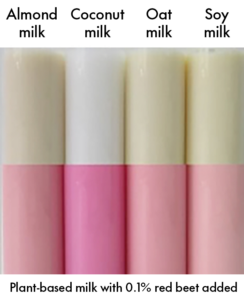
You can see in the image below that the background color of almond milk differs from that of a soy, coconut or oats beverages. The contributions of these undertones, can vary from yellow to tan or even to slightly grey-ish. So compensating for these may require the use of one or more natural colors with shades able to neutralize the undertone.
A yellowish undertone can often be neutralized by a bluish color, while a grey-ish undertone can be enhanced by the use of a warm hue. For example in the case of the grey undertones, you could utilize a blend of red beet plus a small amount of warm yellow/orange like beta-carotene or paprika to create a strawberry shade that would mask the grey tones of the original base.
The fat content
The source of the milk is not the only factor that affects color. Fat content, which is responsible not only for the decadent creamy texture and the flavor carrying properties in frozen desserts, is also a main determinant of base whiteness.
As the dairy or non-dairy fat content is increased, the base gets whiter. The size of the fat globules contributes to the whiteness of the base because the smaller fat globules reflect more light. So, the fat content and the particle size reduction (due to homogenization) mean two things when coloring frozen desserts:
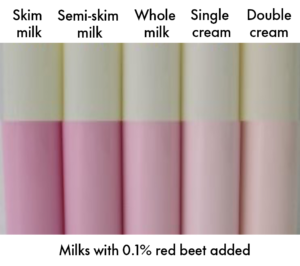
First, you will need to increase the dose of color to achieve the same color intensity, as white reflects a lot of light, diluting the perceived color. You can see this in action in the image below. As the fat content increases in the milk base, the color you see is lighter, even though it is used at the same dosage level in each type of base.
But at the same time the background whiteness allows for a cleaner and brighter coloring result, enhancing the identity of the hue you chose (the whiteness works as a compensating force for undesired undertones).
The Overrun and the Ice crystals
Sometimes taken for granted, one of the main ingredients in ice creams and frozen desserts is air. Air incorporation directly affects the density of the mix during the churning process and therefore modifies the perceived intensity of sensory attributes like flavor and sweetness, but especially color.
Additionally, small air cells reflect more light, contributing to the overall whiteness of the base. The same happens with ice crystals. The smaller the ice crystals (a desired attribute in ice creams), the greater the amount of light they reflect. The additives and ingredients used to control both crystal growth and aeration (sugars, gums, and emulsifiers) are therefore important factors to consider, as the expected overrun and the ice crystals size will affect the correct dosage of the color of your choice.
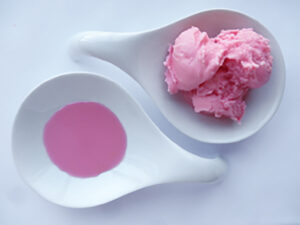
The image below shows an ice cream base prior to churning and freezing and after. The color appears brighter in the original base. You may have to overdose the color to account for this lightening in the final product.
As you can see, most of the ingredients in your frozen dessert or ice cream matrix, as well as the process, are impactful on color selection. But most can be solved with the right dosage and color selection. If you work from the early design stages with the definitive ingredients and keep the above variables consistent as you scale up, the end result will be beautiful and predictable, and your end customers will love the way your frozen dessert looks.
No matter what base you’re working with or frozen treat you’re creating, we can help you pick out the best color for your application. Get started by requesting a natural colors sample kit for ice cream or contact us with your color questions.
Top 5 Considerations When Coloring Dairy
With so many different types of natural colors, choosing the right one for your dairy application can feel overwhelming. Whether you’re creating yogurt, milk, process cheese, or ice cream there are some important factors to consider when choosing a natural color. We’ve broken down the top 5 considerations for coloring dairy to help make your decision easier.
1. Ingredient Interactions
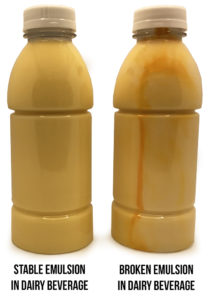
Before choosing a natural color for your dairy product, you’ll want to understand how ingredients in the formula might react with your chosen color. Certain ingredients in cultured dairy products, like yogurt or kefir, could interact with certain natural colors. Flavor ingredients can also impact which color(s) you choose. For example, the emulsification system for tropical flavors like mango and banana may be incompatible with color emulsions like beta-carotene or paprika colors, as seen in the below image. To avoid this, you can add these ingredients separately to prevent potential breaking of color emulsions.
What natural color format will work best in your formulation – oil or water soluble? Or would an emulsion be a better option? If you’re using annatto in yogurt or fruit prep, you’ll want to choose an emulsified format over a water-soluble version because these applications are below a pH 4.6, which can cause water-soluble annatto to precipitate. For process cheese, on the other hand, oil-soluble annatto is usually chosen to avoid pinking, which can occur with water-soluble annatto in this application.
Finally, you should consider if the natural color is compatible with the dairy base. Do you want a bold blue or vibrant purple shade for an ice cream? Some natural colors, like anthocyanins, are not stable at the neutral pH of ice cream and will fade from their original, vibrant color to a light purple or gray shade over time. For blues to purples that will maintain their vibrancy, opt for spirulina or a blend of spirulina and red beet.
2. Processing Time & Temperature
One of your first considerations will be the processing time and temperature of your dairy application. Dairy products often undergo a high temperature, short duration heat pasteurization process, so it’s critical to choose heat stable natural colors that can withstand this process. Annatto, Emulsitech® beta-carotene and paprika, and class I caramels are all colors that are well-suited for pasteurized dairy products.
However, care should be taken when using colors like red beet, especially in fruit preparations for products like fruit-on-the-bottom yogurt or ice cream swirls. In these cases, the ideal processing would be a short duration pasteurization followed by fast cooling through a heat exchanger to prevent color fade. If you’re your process utilizes slow cooling at an ambient temperature, anthocyanins like Amaize® red or purple carrot might be better red options.
3. Finished Product Characteristics
Matching a natural color to the intended flavor is important to consumers and can help create a point of differentiation for brands. For example, the target shade for your lemon-flavored ice cream might color a bright, bold turmeric, while a competitor might have a more pastel shade using beta-carotene. Many color blends can be made to achieve the perfect match for a particular flavor profile or to replace synthetics while still meeting customer flavor expectations.
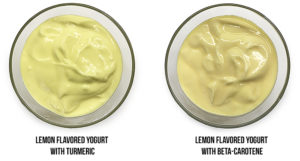
Another consideration is whether the processing conditions will affect the final look of the product. When ice cream is made, part of the process is whipping in air. Some novelty ice creams incorporate less air into the final product, so the color won’t lighten as much, while some of the more economically priced ice creams or frozen desserts, may have more aeration. The latter will often require you to overdose the color (or add more color than you need upfront) to account for fading due to the large volume of air that’s incorporated.
4. Regulatory Considerations
Knowing the country or region of final sale for your product can help narrow down the options when choosing a natural color. Countries may have different legal requirements or limitations on which colors can be used. For example, sodium copper chlorophyllin can be used in Canada to create mint chip ice cream colors but has a 300-ppm usage limit. In the US, it’s not approved for use in dairy so other color blends would be needed, such as spirulina and beta-carotene or turmeric.
Along with knowing the regulatory requirements, it is also important to know how each color will affect the customer’s finished product label. Although carmine may provide a nice red hue for a strawberry ice cream, it does not qualify for vegan, kosher, or halal status. In this case, you could blend red beet color with beta-carotene to allow for these claims.
5. Storage & Packaging
How will your snack product be packaged and stored? Choosing the correct packaging for your dairy product when using natural colors will also be a critical component. Some natural colors, such as turmeric, spirulina, and beet will fade when exposed to light, so opaque packaging is the best choice to prevent fading. If your product has transparent packaging or a clear window, you’ll need to choose colors that are more light-stable like beta-carotene.
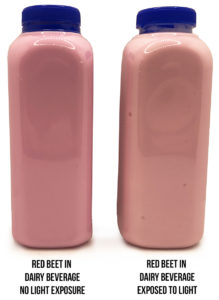
Figuring out how to choose the right natural color for your dairy application can be difficult, but when you choose the right one, your scrumptious dairy will crush the competition! Need some help deciding? Contact us with your questions or get started with an ice cream sample kit.
Bixin and Norbixin: What’s the Difference?
Annatto: Bixin and Norbixin
Annatto is a yellow to red-orange natural color that is extracted from the spiney seed pods of the Bixa orellana, or achiote, bush. It is native to tropical growing areas in Central and South America as well as Africa. In some countries like Brazil, the seeds are also used as a spice in cooking. In the coloring world, though, there are two different types of annatto that are used in the food industry: Bixin and Norbixin. But what’s the difference and when should you use bixin or norbixin?
In this article, we’ll take you through the differences between these two common colors.
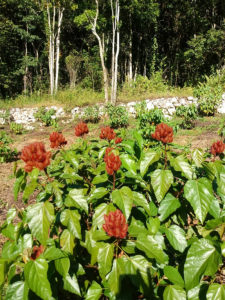
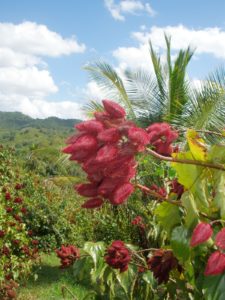
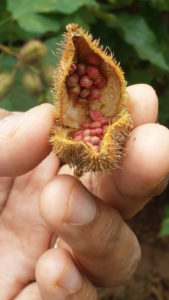
Bixin
Bixin is the original form of annatto that is extracted from the seed coating and is naturally oil soluble. One method to extract bixin from the seed coat is using hot vegetable oil. However, bixin is only soluble in vegetable oil at low percentage rates. You can create stronger products by using bixin suspensions. This is done through repeat extractions of annatto seeds yielding bixin concentrations of 4% or greater. Oil soluble bixin is a yellow color, whereas suspensions of bixin are a deep, vivid red orange.
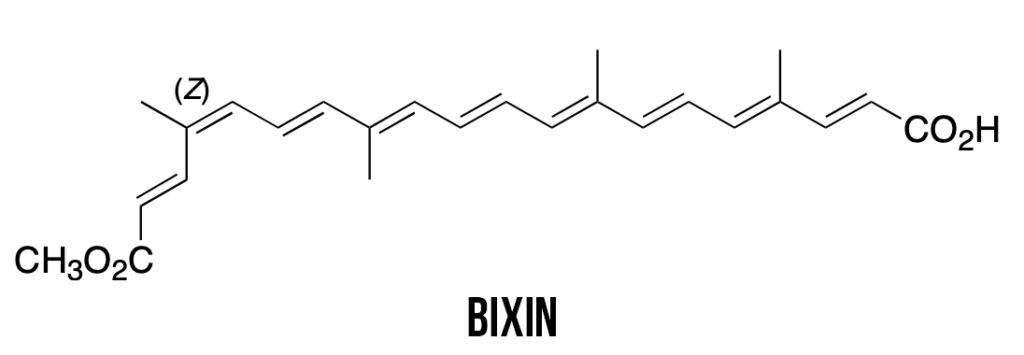
Bixin is a commonly used natural color in the food industry because it is an economical option for yellow to red-orange hues depending on the application and dosage rate. Since bixin is oil soluble, it is mostly used in oil-based food applications like process cheese, cheese sauces, and dairy spreads. It is also a popular choice in the snack food industry where it may be applied to oil-based slurries used to season extruded snacks.
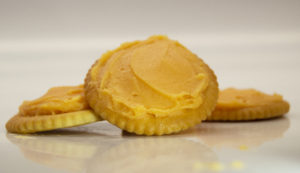
Norbixin
Norbixin is the water-soluble pigment of annatto. To make it, we put bixin through a process called saponification. This cleaves the methyl ester of bixin, forming norbixin. Like bixin, norbixin varies in hue from yellow to orange depending on the usage rate and application.
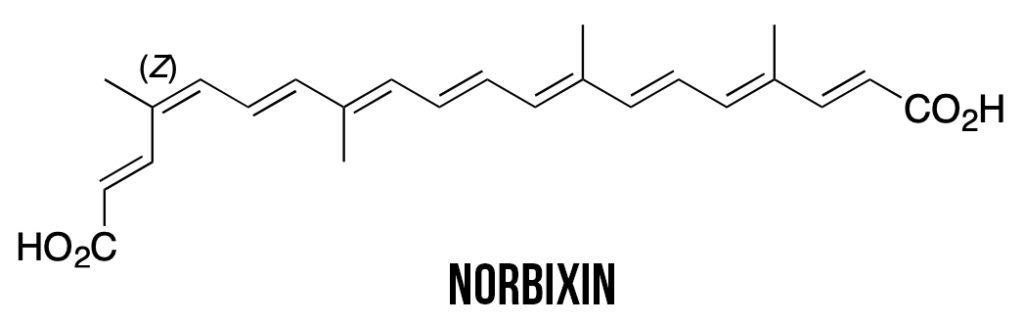
Norbixin is traditionally used to color dairy products like natural cheddar cheese, yogurt, dairy drinks, and ice cream where a water-soluble color works better. In cheese, norbixin binds to dairy proteins during cheese making, imparting excellent color and stability.
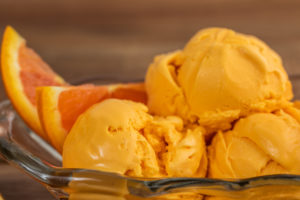
Another important food application for norbixin is ice cream where norbixin delivers the light-yellow hue of vanilla flavored ice cream at low use rates and bright orange to compliment mango or other tropical flavors at higher use rates. If you’re working with a more acidic application like beverages or low pH confections, however, you’ll want to use a norbixin product that has been protected by an emulsification system to avoid precipitation.
In summary, bixin is the oil-soluble pigment that is extracted from annatto and norbixin is the water-soluble form of the pigment. Both provide a range of yellow to red-orange colors in different applications.
Annatto is a versatile pigment since it may be used in oil or water-based foods. The range of pigment use may be expanded with the use of emulsifiers to include acidified food applications. Overall, annatto has very good stability in food applications and it’s an economical choice for a vibrant yellow to orange pigment.
If you’re in the EU, check out the expanded list of applications that can now use bixin and norbixin. Ready to get started with annatto? Request a sample here.