
Podcast: Sizzling Shades
Sizzling Shades
The Role of Colors in Fire Cooking
Speakers: Sara Diaz, Global Marketing Manager for Savory Taste for Givaudan, Katie Rountree, Regional Product Manager – Americas for Sense Colour, and Catalina Ospina, Technical Marketing Specialist for Sense Colour
Learn how Givaudan Sense Colour is innovating culinary experiences by harnessing the transformative power of fire in cooking. We’ll explore the significance of colour in fire and grill products and how it influences perception. Listen in as we discuss the range of hues selected for our “fire palette” and how they’re inspiring new fiery creations.
Hungry for s’more content? You can listen to our other podcast episodes here.
How Color Affects Perception: Moods and Flavours
Color and Moods
Speakers:
Catalina Ospina, Technical Marketing Specialist for Sense Colour
Jeremy Roque, Consumer & Sensory Insights Project Manager for Europe
Rojenia Jones, Sense Colour Product Manager for North America
Join us as we explore the language of color and its impact on our daily lives! In this episode, you’ll learn how color communicates emotions, influences consumer preferences, and shapes our perception of foods and beverages. You’ll gain a deeper understanding of the connection between color, flavor, and liking, as well as the cultural and emotional associations inherent to certain colors.
You can listen to our other podcast episodes here.
Top 5 Considerations for Colouring Culinary
Applications like seasonings, sauces, dressings, and other condiments, are key to creating culinary experiences both at home and in restaurants. Adding natural colours to these applications can enhance their look and support the new flavor and food experiences customers crave. However, there are some important factors to consider when selecting the best natural colour for these savory seasonings and sauces. To help make your decision easier, we’ve broken down the top 5 considerations for colouring culinary sauces, seasonings, and condiments.
1. Physical Base Characteristics
One of the first things to consider when colouring savoury applications is how the base colour of a sauce or seasoning will impact the final look of the coluor in your application. For example, a beta-carotene powder added to a pure white base is going to look more vibrant than when it’s added to a base that contains other underlying hues or ingredients, like a seasoning blend with various herbs and spices. You can see in the photo below that the herbs and spices in the seasoning blend already have an inherent colour so the beta-carotene colour is not as obvious in the spice blend and looks a lot darker than the salt or maltodextrin.
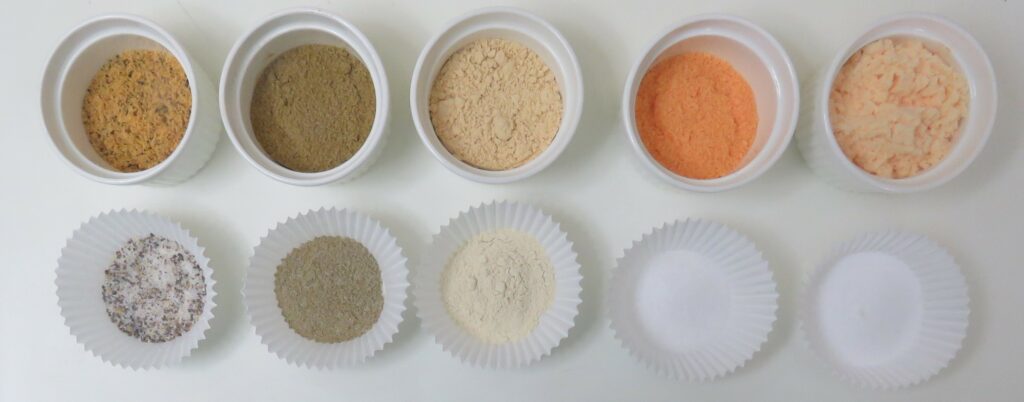
In addition to the base colour, the particle size of the base components will also be a determining factor in colour selection. Some products may have fine particles, some large particles, and others a mixture of both. Using the same weight to weight dose of colour for different densities will give different volumetric dilutions that are perceived as having more or less colour. Particle size can also have an impact on colour consistency in the final result. A smaller particle size could give the appearance of some colour variation or striation while a larger particle size could give an appearance of a more even colour application.
2. Base Chemistry
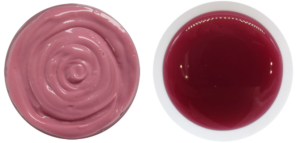
Another important factor when colouring culinary is the chemical characteristics of the base. Specifically, the pH and the solubility since the successful use of natural colours highly depend on these two factors. The pH can significantly affect natural colours, especially when using an anthocyanin, where lower more acidic pHs result in red/pink hues while higher pHs, particularly above 4.2, can result in purple/gray tones.
3. Thermal Processing
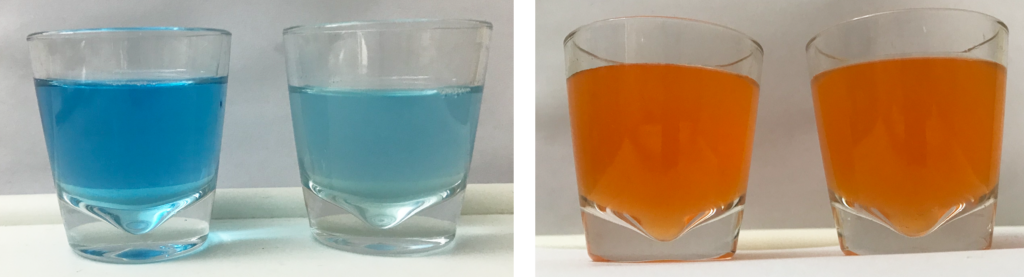
Knowing whether or not your product will undergo any sort of heat treatment is also important when working with natural colours since some colours will stand up to heat processing better than others. For example, adding spirulina to a sauce or dressing that will be retort processed will typically result in significant colour fading, as seen in the image below. Using a more heat stable pigment in this scenario, such as a carmine or paprika, would allow for the pigments to stay vibrant during the heat treatment process. Alternatively, increasing the initial colour dosage rate could help offset the amount of colour loss or browning experienced during heat treatments.
4. Light Exposure
The amount of light a product will be exposed to during its shelf life is another key factor in choosing the best colour for your culinary creation. This is often determined by the type of packaging used. Will the product be in a clear bottle or container, or will it be in some sort of opaque packaging like a can? For example, a product with turmeric might see some significant fading if exposed to light, since turmeric is not considered a light stable colour. However, certain forms of turmeric can be more stable to light than others. Micronized dispersions of turmeric have tightly packed curcumin molecules which allows for colour vibrancy while protecting the pigment more from light exposure. In controlled experiments, we have observed extended colour retention in a simulated supermarket lighting setting when compared to other forms of turmeric.
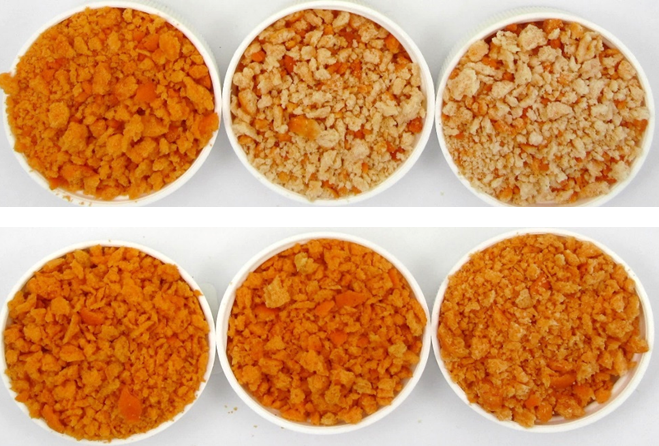
You could choose a natural colour that is more light stable, like beta-carotene or paprika. The addition of antioxidants, whether in the colour itself or in the product, can also help reduce colour fading over time. Certain colours, such as copper chlorophyll, red beet, and carotenoids typically benefit from the addition of around 250 ppm of ascorbic acid, seen in the image of paprika in breading below. Like with heat processing, increasing the initial colour dosage rate could help offset the projected color fade.
5. Flavor
And last, but certainly not least, making sure the colour of the product aligns with the flavor identity is crucial when bringing new products to the market. For example, it probably wouldn’t make sense to colour a hickory smoked, molasses barbecue sauce with a bright orange paprika colour. That wouldn’t match people’s expectations of that flavour description. Utilizing a rich caramel colour to deepen and enhance the natural brown colour of the base sauce would be a much better fit.
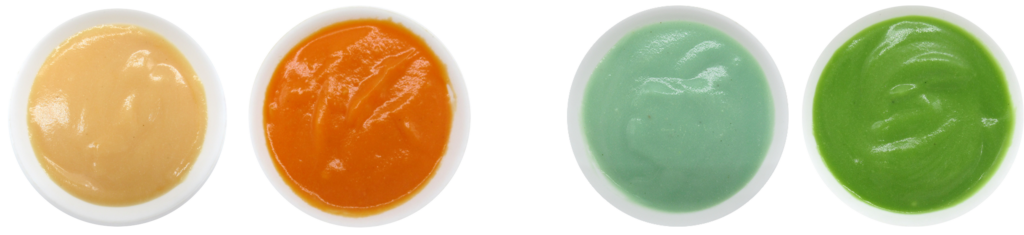
People often associate colour intensity with flavour intensity. A sauce or condiment with more colour might be perceived as having more flavour than a lighter, pastel-coloured sauce. In the photo below, the darker orange sauce made with our emSeal® Paprika colour could be perceived as having the intense flavour of a curry ketchup. The lighter orange sauce might be seen as having a lighter, less intense flavour like roasted red pepper mayo.
Figuring out which natural colour works best when colouring culinary applications can be tricky, but our experts are here to help you through the process. Need some help deciding? Contact us with your questions or request a natural colour sample to get started!
Browns in Savoury Applications
Savoury foods seem to be intrinsically linked with the colour brown. Think of any savoury dish, and chances are that it has warm tans, golden hues or deep brown shades. And there is reason for that! In this article we’ll explore this association and the available browns for savoury applications.
Brown: Delicious and Complex
Brown is a composite colour, rather than a spectral colour, so it is complex by definition. If we were to create it through a blend, we would need three primary colours. Just as an example of how hard it is to define, the Japanese language doesn’t have a specific word for it. Rather, they use descriptive names like “tea-colour” or “fallen-leaf.”

Brown Options for Savory
But browns are indeed ubiquitous in nature. They are found in all sorts of living creatures, mainly in the form of melanoid pigments. These are large molecules that absorb light strongly along most of the visible spectrum, that’s why they appear so dark and… ehm… brown!
And melanoid pigments are precisely the type of pigments that occur when we cook our savoury foods. A combination of Maillard and caramelization reactions is responsible not only for the attractive colour but for the more complex umami, and kokumi flavours in cooked and roasted foods.
We already know that visual imprinting predisposes our minds for flavour intensity and identity. Brown colours contribute to a complete and comprehensive sensory experience that enhances complex savoury flavors.
When faced with the challenge to choose the right brown to visually design your savoury food, you have plenty of options with a range of stability and shades to suit your particular need.
Caramel Color
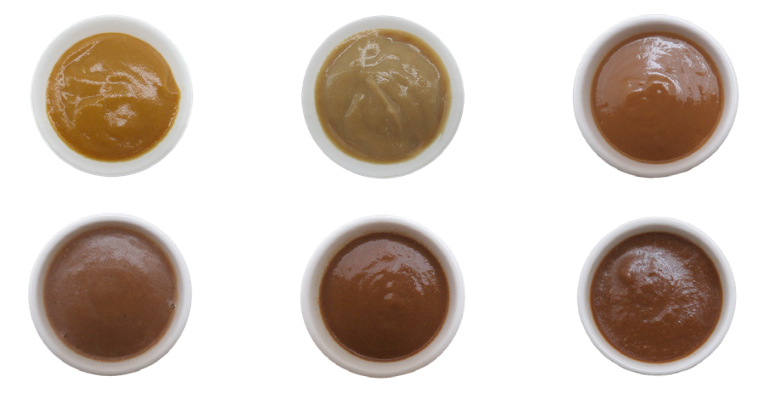
Caramel colours are great and economical candidates. They can be chosen based on pH, colloidal charge, and processing requirements (powders or liquids, etc).
Among them, caramel colour class I is widely favored by consumers because of its perceived naturalness and minimal processing. Traditionally associated with golden shades, innovations in its manufacturing have led to novel versions like Caramel Flex, featuring reddish tones and higher intensity that make them suitable replacements for classes III and some IV caramels. Another popular option is Specialty Dark caramels that allow for dose reductions when compared to the traditional Class I options, and are available as both liquid and powder forms.
Rich & Recognizable
Naturbrown® Ingredients
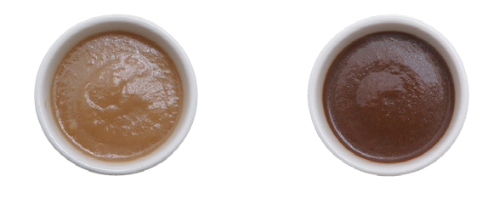
But if the goal is to provide consumers with labels that remind them of everyday pantry ingredients, you can explore the Naturbrown® line, which consists of caramelized juices of selected fruits and vegetables providing whole complex ingredients with rich brown colours that hint at the perfect umami/savoury flavor.
Within the Naturbrown® line of ingredients, you can also consider barley malt extracts, that are quite label-friendly, and provide a deep brown rich colour. The limitation lies in allergen labeling because this ingredient contains gluten so it may not be an appropriate option for your formulation needs.
Burnt Sugars
For the EU market, another alternative is burnt sugars. These options provide an optimal balance of complex flavor and incidental colours raging from light tan to medium brown, including rich golden hues, with a single ingredient and an attractive simple label for consumers.
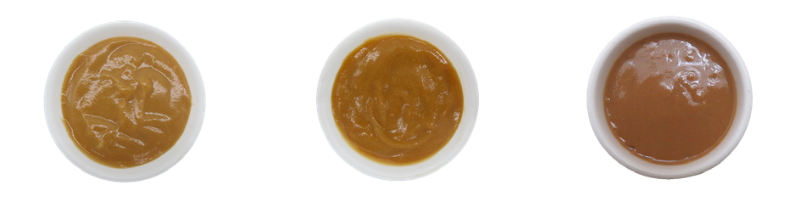
These solutions provide a broad palette of brown shades that have been tested and proven in challenging applications like those with high sodium content.
The outstanding stability and versatility of our line of simple-label browns will elevate the enjoyment experience of your savoury snacks, dishes, and sauces. Have questions? Contact us for support from our colour scientists and dare to experiment the rich and deep options of our simple-label browns. Ready to get started with one of the brown options mentioned above? Request a sample here.
Podcast: Beverage Bliss
Beverage Bliss
Enhancing the sensory experience with natural colours
Speakers: Diego Campos, Marketing Manager Regional Innovation in Europe and Jaime Pacheco, Sales Manager for Sense Colour
Join us as we explore several themes shaping the beverages market and the pivotal role that natural colours play in enhancing the sensory experience. From “Feel Good” beverages that bring comfort and positivity to “Does Good” offerings focused on health and sustainability, as well as the future-oriented “Imagine” theme, we’ll delve into how natural colours are being used to create vibrant and enticing drinks. You’ll also discover how the metaverse and AI are set to revolutionise the future of beverages, promising exciting co-creation experiences that engage consumers.
Thirsty for more content? You can listen to our other podcast episodes here.
Natural Colours in Better for You Snacks
Sensational Snacking: Differentiate ‘Better for you snacks’ with Natural colours
‘Better for you’ snacking is on the rise! As consumers seek ways to eat healthier without giving up their favorite snacks, new launches with claims like high protein, good fats, gluten-free, and keto are exploding in the ‘better for you’ snacks category. Natural colours are the perfect solution to give consumers vibrant food experiences while supporting the clean label requirements of the ‘better for you’ category. While there are many different natural colours and formats to choose from, don’t worry! This webinar will give you an in-depth look at how to choose the right colour for your product and process.
In this webinar, you’ll learn:
- How colour and flavour are connected
- How and when to add natural colours to snacks
- How a colour’s dosage rate is tied to your snack’s base ingredients
- How to get the best results from natural colours when using a thermal process
To view the webinar, please fill out the form below.
About the Presenters:
Catalina Ospina
Catalina Ospina is a Technical Marketing Specialist at Givaudan Sense Colour in Santiago, Chile. She has been bringing the joy of natural colours to foods and drinks for 15 years. She has a Master’s degree in Nutrition and Food from the Universidad de Chile, a BSc in Chemical Engineering and a postgraduate certificate in Food Science and Technology both from the Universidad Nacional de Colombia. But ultimately, she is a foodie at heart.
Kerry Ward-Rotherham
Kerry Ward-Rotherham is a Product Development Scientist at Givaudan Sense Colour. She has been working at the UK Overseal natural colours manufacturing facility for 16 years, with former roles in Quality Control and Project Development. She now manages the development team and has a degree in microbiology from the University of Nottingham. In her free time, she is an avid runner, karate student, tattoo connoisseur, keen gardener, and loving cat owner.
How and Why We See Colour
Color gives us loads of information about nature, beauty, other people, and even perils that surround us. We often take color for granted and we don’t imagine the immense amount of evolutionary effort involved in that capacity. But have you ever wondered, what is color, and why do we see in color? In this article, we’ll talk about some of the science behind how and why we see in color.
What is color?
Color is not an objective characteristic of the objects we see but is a combination of a perception and interpretation of the light that they reflect.
Light is the visible portion of the electromagnetic spectrum, and it sometimes acts as a wave and sometimes as a particle. Here we will explain color using the classic color theory that involves light behaving like a wave.
Think of light as a wave – as if it was a guitar string vibrating when it is strummed. The faster it vibrates, the shorter the waves. The distance from a crest of the wave to the next is what we call a wavelength. Visible light ranges from 400 to 700 nm (that is tiny!) and the brain interprets these different wavelengths as colors.
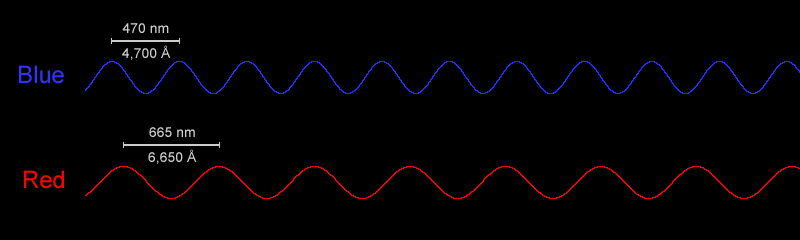
Now, let’s imagine the light is bumping into an object, like a lemon-yellow cupcake. There are molecules in the cake that absorb light selectively: meaning they only catch the light of certain wavelengths (we call them pigments, like beta-carotene) and they also reflect back a combination of unabsorbed wavelengths. That portion of light that is reflected is what we perceive as color.
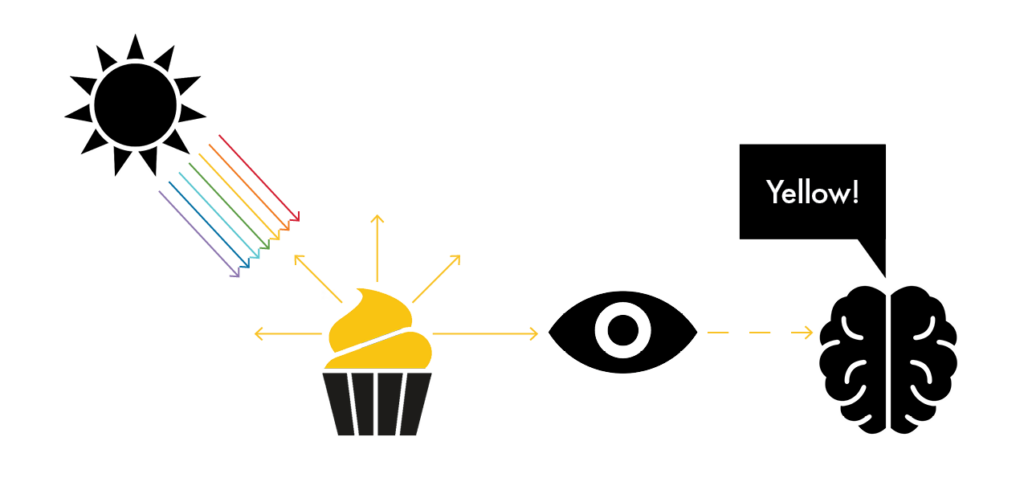
Certain wavelengths of light are preferentially absorbed by pigments, while some others are reflected. The light that is reflected is perceived by our eyes and interpreted by our brain as color.
Our sensors and processing center
So how do we perceive these colors? We have specialized cells in our retinas called rods and cones. The rods are capable of sensing light even when there is very little, like when we see an object’s shape in the dusk in shades of gray. Cones, on the other hand, have pigments that – like all pigments – have a preferential absorption of certain wavelengths. Humans have three types of cones specialized in a segment of the light spectrum. That is why it is said that we have a trichromatic vision. The S cones detect short wavelengths (violet to blue light), the M cones detect medium wavelengths (green light) and the L cones are in charge of long wavelengths (yellow to red light), with some significant overlapping between them as you can see in the diagram below.
The signals from these three receptors are compared with each other in a process called ‘cone opponency’ and then processed and interpreted by our visual cortex as color! As an analogy, think how screen monitors work with red, green and blue lights (RGB), or the way that printers can give you any color with combinations of magenta, cyan and yellow inks.

But why do we see in color?
However, not all animals see colors in the same way humans do. Most terrestrial mammals like dogs and cats are dichromatic. This means that they have only two types of cones and can’t see parts of the spectrum that we are able to see. Some species of birds, fishes or reptiles, on the other hand, have four types of cones: they are tetrachromatic. Some animals are even able to see in the ultraviolet range or the near infrared. How cool is that?!
Humans share trichromacy with other primates, which suggests an evolutionary process where our ability to distinguish colors allowed us to succeed as a species. One theory indicates that trichromacy is good for social interactions, because it permits us to properly distinguish our peer’s face features and how these express emotions and ideas, ultimately leading us to collaborate.
Another theory explains that color vision facilitates the optimal discrimination of our food sources: intensely colored fruits are a sign of maturity and energy density, while bright green young leaves are fresh, edible and good for us. It also permits us detect food that is potentially poisonous, especially if we have prior personal or cultural information about it, or reject rotten or contaminated food, that is often moldy green, blue, or black.
In that sense, color has become an essential part of the communication of quality and the appeal of foods of all sorts. Color information also leads the way for other sensory perceptions like flavor identity, flavor identification, aroma, and of course deliciousness!
Let’s take a look around us and appreciate our colorful world, and that awesome evolutionary ability that allows to enjoy – with our eyes first – that lemon-yellow cupcake that has been in your mind since we first mentioned it!
Podcast: Amaize® Red
Amaize® Red
From corn to color and beyond
Speakers: Jason Armao, SVP Science & Innovation and Karim Ben Hassan, Senior Research Development Scientist for Sense Colour
In this episode, we’ll be unveiling the power of Amaize® Red, a groundbreaking natural colour derived from purple corn. Discover why corn was chosen as a sustainable source and how we ensure full traceability. Gain insights into the agronomy behind optimising colour yield and the meticulous breeding process involved in developing a non-GMO hybrid. Learn about Amaize® Red’s functionality and versatility in various applications, and its minimal processing. Finally, we’ll conclude by exploring the future of colours from corn.
Thirsty for more content? You can listen to our other podcast episodes here.
Natural Colours for Plant-Based Dairy
Cold & Colourful: Natural colours for plant-based dairy
As the plant-based market grows, so do the offerings! Traditional dairy products are being reimagined with plant-based ingredients, and new innovations are always hitting the shelves.
Natural colors are a great match for plant-based dairy applications, however, there are still important things to consider when choosing a natural color.This webinar will give you an in-depth look at how to choose the right natural colors for plant-based dairy projects.
To view the webinar, please fill out the form below.
About the Presenters:
Fran Gibson
Frances Gibson is an Applications Scientist at Givaudan Sense Colour. She originally got into food coloring by accident while looking for part–time employment that fit around family but enjoyed it so much, she has now worked in the field for over 20 years. She started her career as a sample technician but enjoyed the challenge of finding solutions to customer application queries. She has a background in microbiology and a BSc Honors degree in food science and technology. In her spare time, she enjoys walking in the Derbyshire Peak District, reading, and spending time with her family and friends.
Logan McConkey
Logan McConkey is an Associate Applications Scientist at Givaudan Sense Colour in Louisville, Kentucky and has been combining natural colors with creativity for almost 4 years. His favorite part about the job is problem solving for the customer and seeing the products that contain our colors in the grocery store. He has a BA in Chemistry from the University of Louisville, and in his free time, he enjoys watching American football with friends.