
Browns in Savoury Applications
Savoury foods seem to be intrinsically linked with the colour brown. Think of any savoury dish, and chances are that it has warm tans, golden hues or deep brown shades. And there is reason for that! In this article we’ll explore this association and the available browns for savoury applications.
Brown: Delicious and Complex
Brown is a composite colour, rather than a spectral colour, so it is complex by definition. If we were to create it through a blend, we would need three primary colours. Just as an example of how hard it is to define, the Japanese language doesn’t have a specific word for it. Rather, they use descriptive names like “tea-colour” or “fallen-leaf.”

Brown Options for Savory
But browns are indeed ubiquitous in nature. They are found in all sorts of living creatures, mainly in the form of melanoid pigments. These are large molecules that absorb light strongly along most of the visible spectrum, that’s why they appear so dark and… ehm… brown!
And melanoid pigments are precisely the type of pigments that occur when we cook our savoury foods. A combination of Maillard and caramelization reactions is responsible not only for the attractive colour but for the more complex umami, and kokumi flavours in cooked and roasted foods.
We already know that visual imprinting predisposes our minds for flavour intensity and identity. Brown colours contribute to a complete and comprehensive sensory experience that enhances complex savoury flavors.
When faced with the challenge to choose the right brown to visually design your savoury food, you have plenty of options with a range of stability and shades to suit your particular need.
Caramel Color
Caramel colours are great and economical candidates. They can be chosen based on pH, colloidal charge, and processing requirements (powders or liquids, etc).
Among them, caramel colour class I is widely favored by consumers because of its perceived naturalness and minimal processing. Traditionally associated with golden shades, innovations in its manufacturing have led to novel versions like Caramel Flex, featuring reddish tones and higher intensity that make them suitable replacements for classes III and some IV caramels. Another popular option is Specialty Dark caramels that allow for dose reductions when compared to the traditional Class I options, and are available as both liquid and powder forms.
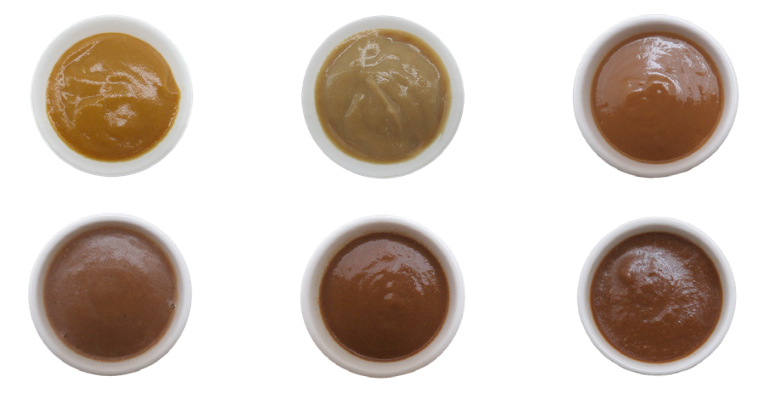
Rich & Recognizable
Naturbrown® Ingredients
But if the goal is to provide consumers with labels that remind them of everyday pantry ingredients, you can explore the Naturbrown® line, which consists of caramelized juices of selected fruits and vegetables providing whole complex ingredients with rich brown colours that hint at the perfect umami/savoury flavor.
Within the Naturbrown® line of ingredients, you can also consider barley malt extracts, that are quite label-friendly, and provide a deep brown rich colour. The limitation lies in allergen labeling because this ingredient contains gluten so it may not be an appropriate option for your formulation needs.
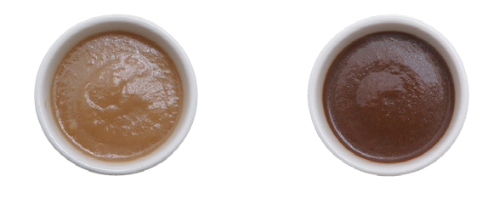
Burnt Sugars
For the EU market, another alternative is burnt sugars. These options provide an optimal balance of complex flavor and incidental colours raging from light tan to medium brown, including rich golden hues, with a single ingredient and an attractive simple label for consumers.
These solutions provide a broad palette of brown shades that have been tested and proven in challenging applications like those with high sodium content.
The outstanding stability and versatility of our line of simple-label browns will elevate the enjoyment experience of your savoury snacks, dishes, and sauces. Have questions? Contact us for support from our colour scientists and dare to experiment the rich and deep options of our simple-label browns. Ready to get started with one of the brown options mentioned above? Request a sample here.
Coloring Different Plant Bases
A myriad of colors for a bundle of veggie bases
Meat-free products come in a variety of formats and use a variety of base ingredients, all with their own specific requirements. Coloring different plant bases poses different challenges based on the chemical and physical properties of such bases and the desired end color.
The most popular products are general mince, burgers, and sausages that are sold as ‘raw’ products where the consumer cooks them at home with the expectation that they will cook like traditional meat.
Other popular meat-free products such as ready to eat deli slices (e.g. sandwich slices) and seitan are often sold as ‘pre-cooked’ and require longer processing times before they reach the consumer, which will impact the color choice.
In this article, we take you through how to select the best natural color for the base you are working with in your meat alternative product and how to get the best result for both ‘raw’ or ‘cooked’ products.
Considerations for color choice
The first step in choosing a color is understanding how natural colors will fit in with your production process and the desired effect.
Different colors have a varying degree of heat stability, so for a pre-cooked product it is better to select heat stable colors such as caramels or burnt sugars, naturbrown® apple, paprika, curcumin, carotenes, and iron oxides that can withstand the industrial heating process. In sandwich slices, which have a long heating process, iron oxides are often used (where permitted) due to their very good heat stability – red iron oxide is temperature-stable up to 1000ºC!
To compensate for any color loss during the heat process, you may need to overdose certain colors with limited heat stability to achieve the final hue desired.
Another factor that will affect your choice of pigments is pH level. Most meat free products are between pH 5.6 and 6.5. This will discount the use of some color pigments that are pH sensitive, such as anthocyanins.
If you are trying to achieve the raw-to-cooked product, the colors used will need to shift during the at-home cooking process. For this type of products, we typically suggest red beet, burnt sugars, and caramels or combinations of these, which will contribute to the initial red shade and the charred look of the finished product. When coloring different plant bases, the shade can be customized or used to show added flavor by blending in heat stable colors, such as paprika or annatto.
And now to the base
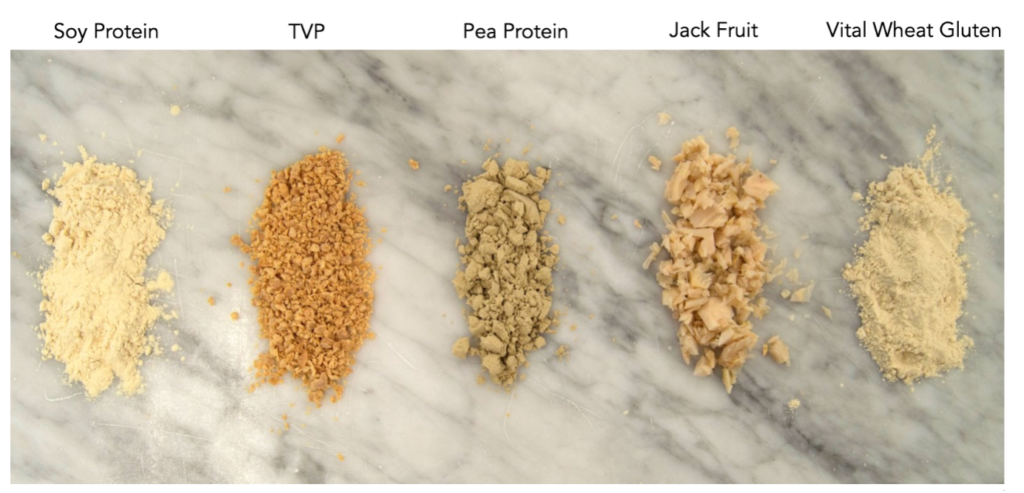
Commonly used base materials for meat free products include textured soy protein, soy isolate, vital wheat gluten, and pea protein, just to name a few. The inherent shade of the base material and their physicochemical properties can help determine the color format, dosage and can influence color selection. As you can see in the image below, some proteins are a neutral white or ivory shade, while others are dark tan or even greenish, both of which require different approaches when adding natural colors.
Tofu
One of the traditional bases used for meat free products is tofu. It is an ideal base for using natural colors because of its white or ivory shade. It can be easily colored either by marinading it whole or as minced granules. Because of its neutral color, it is easy to achieve your desired shade without having to overdose to overcome tan or brown undertones.
Texturized Soy Protein
Texturized Soy Protein comes in different grades from large pieces to granules and is usually a light tan color. To incorporate natural colors, you can add water soluble colors to the marinade used to hydrate and flavor TPV which picks up the liquid for a very realistic meat appearance.
Texturized protein usually has good affinity for both water soluble and oil soluble colors, so there are a lot of options available. Its tan shade may help when coloring the product brown for ‘pre-cooked’ products, but if you are trying to achieve a pink or red shade, you may need to add a bit more color than you would with a white base to overcome the brown undertones.
Soy Isolate/Pea Proteins
Soy isolate, pea proteins, and chickpea or lentil flour, have emulsifying properties and can be colored by using either water or oil-soluble colors, leaving it open for a wide range of color choices. Like other options, the color can be added in the marinade or in any oil used as an ingredient.
Like tofu, the soy protein is fairly neutral in color, so it is generally a great base ingredient to work with for natural colors. It can easily take up the color without additional undertones contributing to the final color.
Pea protein, on the other hand, is a much darker base with tan to green undertones. When adding natural colors, it may be difficult to get the same vibrant shades that are attainable with more neutral bases.
Vital Wheat Gluten
Vital Gluten which is a major fraction of the proteins found in wheat, is tan to light brown in color and is able to absorb both water and oils easily. Water soluble colors can be added to the hydration water, and oil soluble colors can be added with other fats, oily ingredients or condiments. As the strands in the gluten are developed by kneading, an interesting marbling effect can be achieved, caused by the differentiated affinity to color of the exposed surfaces.
Because of its natural tan undertones, you may need to overdose your color to achieve the right pink to red shade.
Color Format
Water and oil soluble colors, as well as emulsions, can be used to impart color to plant protein bases, and in general it is recommended to pre-mix liquid colors with the fluids that are included in the recipe to ensure for a homogeneous distribution. As the proteins hydrate, they will absorb the colors. If using powder colors, these can be dry mixed with the protein and other solid ingredients and will develop their full intensity as the blend hydrates and is mechanically processed (mixed, or kneaded).
Besides proteins, some plant based foods rely on the use of other ingredients to impart the texture or the aspect desired. Hydrocolloid gels are used frequently in seafood alternatives, and these can be colored via the hydration water. Fibrous materials, like Jackfruit, banana flowers, mushrooms, fungal mycelium, or palm hearts will pick up water soluble colors by immersion in a suitable marinade.
In summary, coloring different plant bases for your meat alternative will be a highly personal process. The composition of the base material, its original color, its chemical affinity, and your desired end result will all influence the how you incorporate color. Request a natural color sample kit to get started, or contact us and we can work with you directly to determine the best type of color formulation to be used.
Closing the Gap: Innovations in Class I Caramel Colour
Class I Caramel Innovations
Caramel colours are used to colour just about every kind of food product. And while you might think “brown is brown, why does it matter which class of caramel I use?” the technical properties vary widely between the three main classes – I, III, and IV.
Historically, class III, and IV caramels have demonstrated the best stability, cost-in-use, and darkest shades, but the trend toward minimal processing and simpler labels has created more interest in transitioning to class I caramel colour. That’s why recent innovations have focused on closing the gap between simplicity, darkness, and stability.
What does Success look like?
Success in application means good solubility, no turbidity, vibrancy throughout the shelf life of the product, the right shade, and a reasonable use-cost. Products like bread and candies are fairly straight forward to colour because issues like sedimentation and hazing don’t occur once the product is manufactured. But products like soy sauce and colas, on the other hand, require special consideration when choosing the right caramel due aspects such as high salt content or pH.
The challenge with using class I caramel colour in these applications has generally been use rate, shade, and stability differences in application. Below we’ll talk about some of the solutions we’ve developed to overcome some of these common hurdles.
Achieving Success with Class I’s
Use Rate & Darkness
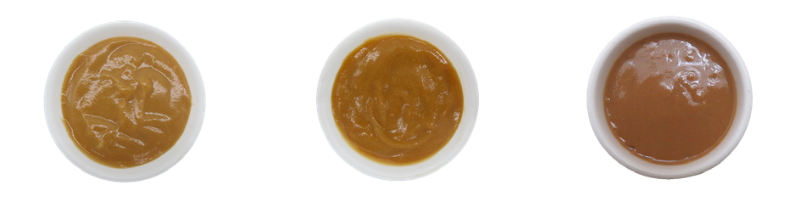
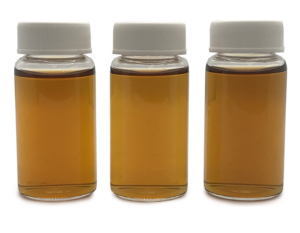
Because class III and IV caramels can be very dark in colour and require low usage rates, it can be difficult to switch to class I’s that often require double or triple the use rate, which is why – to make it easier for companies who don’t have that kind of room in their formulations, we developed specialty dark class I caramel. Using an innovative cooking method, we were able to create a simple class I caramel that has a colour intensity similar to a class III or single-strength class IV caramel. This means that companies can achieve similar shades at similar use rates using a class I, as can be seen in the image below.
Shade
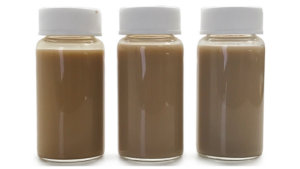
As you can see in the image below, standard class I caramels (left) tend to have a yellow tone to them, while many class III colours have more of a red tone to them (center). Because of this hue difference it can be difficult to find a class I that can match the shade when switching to simpler options. To overcome the hue hurdle, we created a class I caramel called Flex that can better bridge this gap (right), making it now possible to use class I caramels in applications like sauces where class IIIs are often favored.
Stability
Class IV caramels are generally the best options for sodas because they are incredibly stable at the low pH level of a concentrate (1.5-2.0). Class I caramels, on the other hand, are typically only stable above a pH of around 2.8. But because many soda companies are looking for simple label browns, we formulated our Flex caramel to be more acid stable, giving it the potential to be used in acidic soft drink applications. While a higher dose level is required to hit a similar shade to the class IV, it is a more acid stable option than other class I’s available.
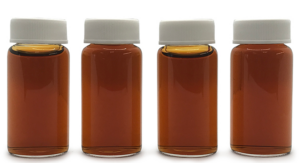
Salt stability is another challenge for class I caramels. Soy sauce and bouillon cubes, for example, can contain upwards of 20% salt. Class III offers the best salt stability of any of the caramels, making it the ideal choice since caramels that are not salt-stable will form a haze in in the sauce and precipitate out. But salt stable class I options can also be as an option for those companies whose consumers are looking for simple labels. Our class I Flex performs well in up to 10% salt solution, and our 552 (seen in the image below) performs well in up to 20% salt solution with no hazing or precipitation.
Continuing Innovation
While innovations in processing and formulation have narrowed the capability gaps between the classes, challenges remain. The higher costs to replace class III and IV caramels remains a challenge for some customers, while flavor impact and viscosity remain hurdles for others.
But don’t fear – there are ways to overcome many of these challenges. Since there are many properties to consider when switching classes of caramels, the best way to find the right class I for your application is to work directly with our application scientists who are experts in dialing in on the right solution for your product. Contact us to get started on your project.
How is Caramel Color Made?
How is Caramel Color Made?
In simple terms, caramel color is made by cooking carbohydrates. It is similar to how you would make caramel on a stovetop – you heat sugar until the color changes from white to dark brown. But in order to create large quantities that are stable and suitable for coloring foods and beverages a few more steps are required. Click on the infographic below for a step-by-step overview of how the most commonly used color in the world is made.
Want a more in-depth look? Read more about how caramel color is made here.
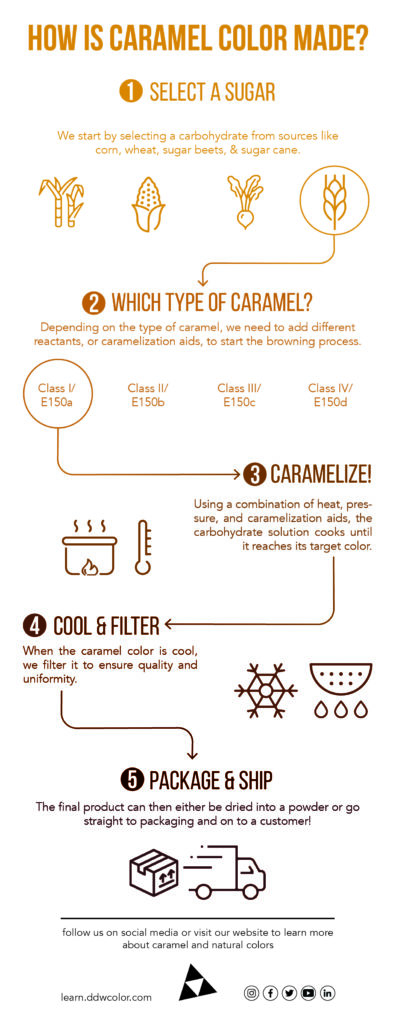
How is Caramel Color Made?
In simple terms, caramel color is made by cooking carbohydrates. It is similar to how you would make caramel on a stovetop – you heat sugar until the color changes from white to dark brown. But in order to create large quantities that are stable and suitable for coloring foods and beverages a few more steps are required. Watch the video below or read on for an in-depth look at how the most commonly used color in the world is made.
Need a quick overview? Check out the infographic!
1. Select your sugar
The first step in creating caramel color is to determine a carbohydrate source. There are many types of sugars that can be used to create caramel colors – sucrose, fructose, glucose, invert syrup – all derived from sources such as corn, wheat, sugar beets, and sugar cane. Some types of sugar are chosen because they work best for different classes of caramel, while other types may be chosen to meet certain certification requirements – such as non-GM or organic.
2. Determine your class of caramel
Next, the type of caramel is determined – there are four classes of caramel color, each with their own properties and requirements. Each class requires different reactants, or caramelization aides, such as food-grade acids, alkalis, and salts. Reactants help start the browning process, but also affect the stability, color intensity, and hue of the caramel color.
3. Cook the Sugar
Once the type of sugar and class of caramel is determined, the sugar is loaded into large cookers and a highly specific cooking process begins. For lower viscosity caramels, a system with high heat as well as pressure are used. These caramels are great for usability in manufacturing. For higher viscosity caramels, like class III caramels going into soy sauce, a non-pressurized system is used. While the sugars are heated, the reactants are added into the cookers at strategic times throughout the cook.
For the actual cooking process, caramel colors are created using either one or both of the following types of browning methods: 1) caramelization, or the browning of sugars, and 2) the Maillard reaction, the browning of sugars in the presence of amino acids or other ingredients with amine groups. While this may sound complex, the Maillard reaction is a normal browning process that occurs in the foods we enjoy every day – roasted coffee, seared steaks, and baked bread, for example.
Class I, or plain, caramel colors are created using solely caramelization to produce color. Class II, III, and IV caramel colors, on the other hand, use caramelization as well as Maillard browning reactions to achieve darker colors with increased stability. As the sugars brown, the reactants are cooked off and are not found in the final caramel color product.
After the sugar has finished cooking, the caramelized product is cooled and filtered to ensure product quality and uniformity. From here it can either be dried for use in powder form or moved onto packaging and shipping to customers.
Interested in learning more about caramel colors? Check out these resources:
Is Caramel Color Safe?
Is caramel color safe?
Is caramel color safe? The answer is yes – caramel colors have been deemed safe by all major global food regulatory bodies, including the US Food and Drug Administration (FDA), the Joint FAO/WHO Expert Committee for Food Additives (JECFA), Codex Alimentarius, the European Food Safety Authority (EFSA) and Health Canada. Here’s why:
Background
The question around the safety of caramel color arose when California added a chemical found in class III and IV caramel colors called 4-Methylimidizole, or 4-MEI, to their Prop-65 list. Adding it was based on a controversial study by the National Toxicology Program (NTP) from 2007. The 2-year study on mice showed an increased incidence of certain lung tumors when they consumed 4-MEI. However, the levels of 4-MEI given to the mice far exceeded the normal amount humans would be exposed to when consuming food or beverages – an amount equivalent to a human drinking thousands of cans of cola every single day throughout their life.
What is 4-MEI?
4-MEI is a chemical compound that naturally forms during the cooking of food and beverage items we consume on a regular basis: coffee, cooked meat, baked goods, etc. Since caramel colors are created by cooking sugars, 4-MEI is naturally formed during the manufacture of certain products – specifically class III and IV caramels. 4-MEI is not present in Class I and II caramels and 4-MEI itself is never added to foods or beverages.
4-MEI occurs in very low levels in caramel colors. And since caramel is often used at dosage rates of around 0.1%-2.0% in final products, the occurrence of 4-MEI from caramel color in finished goods is miniscule.
But since it was added to the Prop-65 list, in order to comply with California law, many caramel manufacturers (including us!) began to innovate new methods of cooking class III and IV caramel colors that resulted in even lower levels than already occur, called ‘low 4-MEI’ caramels, some of which have levels so low they can be difficult to detect in the caramel color, let alone the finished product.
Safety Studies
In order to ensure continued consumer safety, many studies on the safety of caramel color and the recommended daily intake levels on 4-MEI have been carried out since the controversial 2007 NTP study was published.
In a review of the scientific literature on 4-MEI, EFSA found that the highest exposure level to 4-MeI that could result from the consumption of foods containing class III and IV caramels “was not concerning.”
Interested in reading more about the safety of caramel color? Check out these resources:
What is Caramel Color?
Caramel Color: What is it?
Caramel color is the most widely used non-synthetic color in the food and beverage industry. It is created through the controlled heating of sugars from sources such as corn, wheat, and sugar beet and they can range in hue from golden to dark brown.
why are there four classes?
Approved food-grade reactants, such as alkalis, acids, or salts, are used to promote caramelization. Based on the type of reactant that is used, the caramel is divided into one of four different types, or classes. They are: Class I (E150a), Class II (E150b), Class III (E150c), and Class IV (E150d). Each class of caramel color has different specifications on color intensity and hue. And while they are all favored for certain application, caramel color generally has excellent heat, light, and acid stability and works in many different applications.
Class I Caramel Color, E150a
Class I caramel colors, also known as plain caramels, are created by cooking a carbohydrate, typically glucose or sucrose, with acids, bases, or salts – such as citric acid. They generally range in hue from yellow to red-brown and have a slight negative colloidal charge.
While most class I caramel colors are only stable above pH 3.0, some are stable down to pH 2.8. These options do not contain 4-MeI or sulfites and have the highest stability in alcohol compared to the other three classes. They can be used in most applications: from baking to confections to beverages. Recently, demand for class I caramel colors has increased due to consumers looking for products with simpler labels. That’s why innovations in class I’s have focused on creating colors that can reach similar shades or use rates to Class III and IV caramels. Learn more about these advancements here.
Class II Caramel Color, E150b
Class II caramel colors, or spirit caramels, are created by cooking a carbohydrate with the aid of food grade sulfites. The hues can range from very yellow to dark red-brown and most are stable above pH 3.0. Class II caramels have a negative colloidal charge.
Like class I caramels, this class does not contain 4-MeI. They exhibit good stability in alcohol and are most commonly used in cognac, sherry, and brandy, giving them the name “spirit caramels”. Despite their excellent alcohol stability, these caramels are not frequently used because similar results can be obtained with class I’s.
Class III Caramel Color, E150c
Class III caramel colors, also called ‘beer caramels’, are created through the controlled heating of carbohydrate sources with food grade ammonium compounds. The resulting color ranges from a light brown to dark red-brown.
Class III Caramel Colors do not contain sulfites and have a positive colloidal charge in most food applications. They are typically beer stable and salt stable, making them a favorite for brewers looking to standardize dark beers or soy sauce and bouillon manufacturers that require a color that will be stable in a 20% salt solution.
Class IV Caramel Color, E150d
Class IV caramel color is the most widely used and versatile of the caramel colors. It is created by cooking a carbohydrate with food grade ammonium and sulfite compounds. The color ranges from a light brown to deep black-browns. Class IV caramels exhibit a strong negative charge over a wide pH range, making them the most versatile caramel colors. They are widely used in the soft drink industry due to their low dosage requirements and acid stability. We offer a wide variety of class IV options, including single-strength, double-strength, and low 4-MEI. Because this class of color contains 4-MEI, some organizations have called into question the safety of caramel color. Learn more about the safety of caramel color and new innovations here.
Ready to try it? Request a sample here.
Interested in learning more about caramel colors? Check out these resources:
Choosing the right natural color
There are hundreds of different types of natural colors from dozens of different sources and figuring out how to choose the right natural color for your product can seem daunting. So, we’ve broken down the key factors to help you choose the right natural color option for your application. Need a quick overview? Check out the infographic here.
Heat
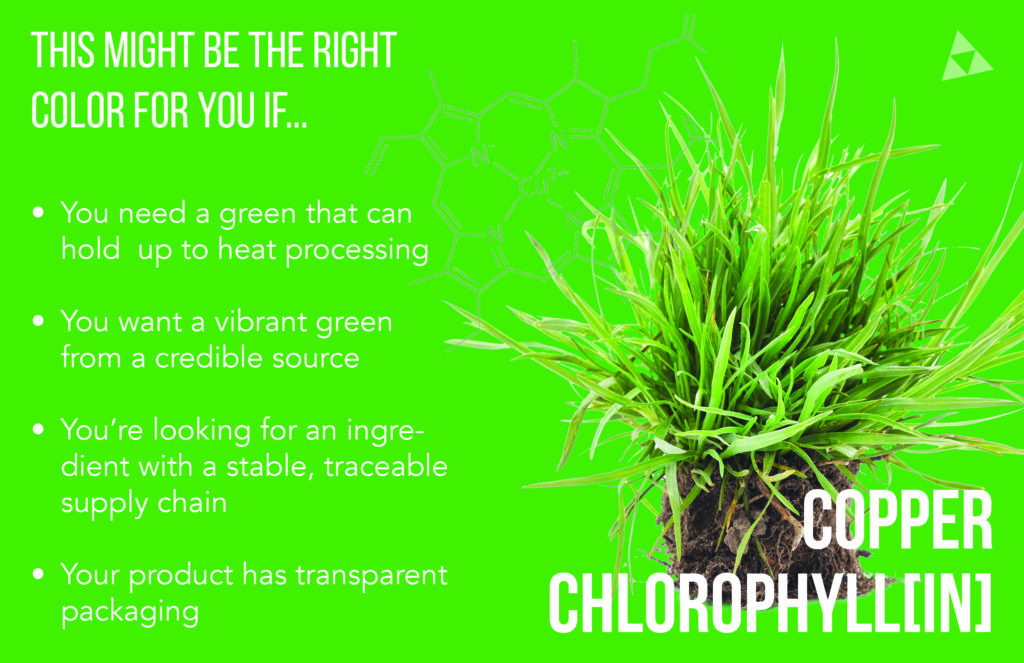
If your product undergoes heat treatment, like HTST, pasteurization, baking, or extrusion, you’ll want to choose a heat stable natural color. Fortunately, many natural colors can withstand some heat. These include anthocyanins, carmine, beta-carotene, annatto, turmeric, copper chlorophyll[in], and carbon black, as well as caramel colors, Naturbrown® ingredients, and burnt sugars.
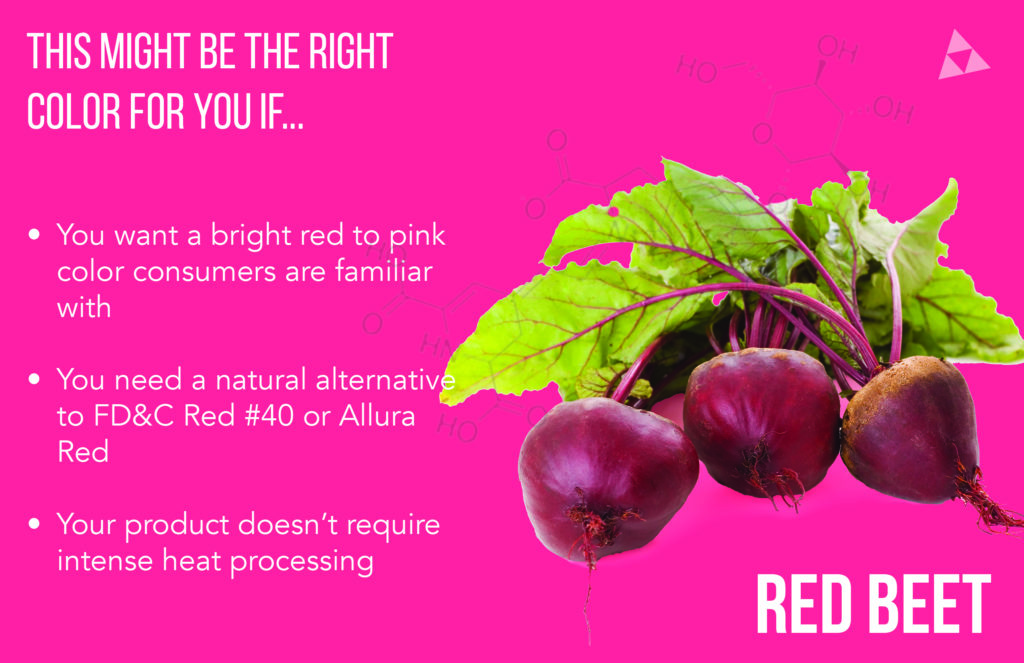
The natural colors that notoriously fade with heat are beet and spirulina. In the case of beet, overdosing (or adding more color than you need up front), may be enough to compensate for some fade, but in general, you’ll want to avoid both of them.
Light
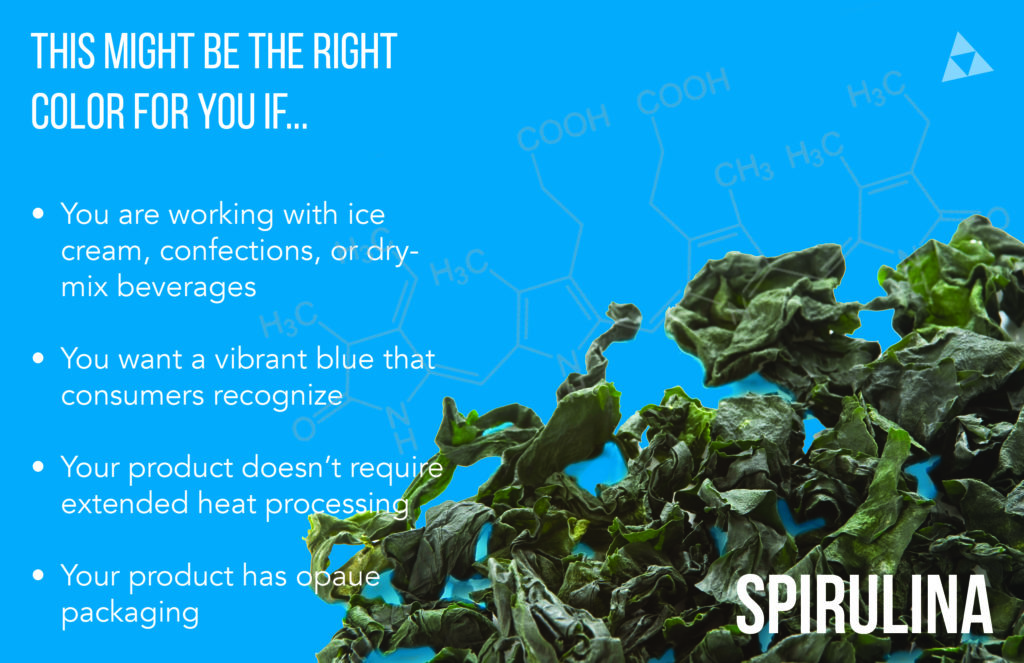
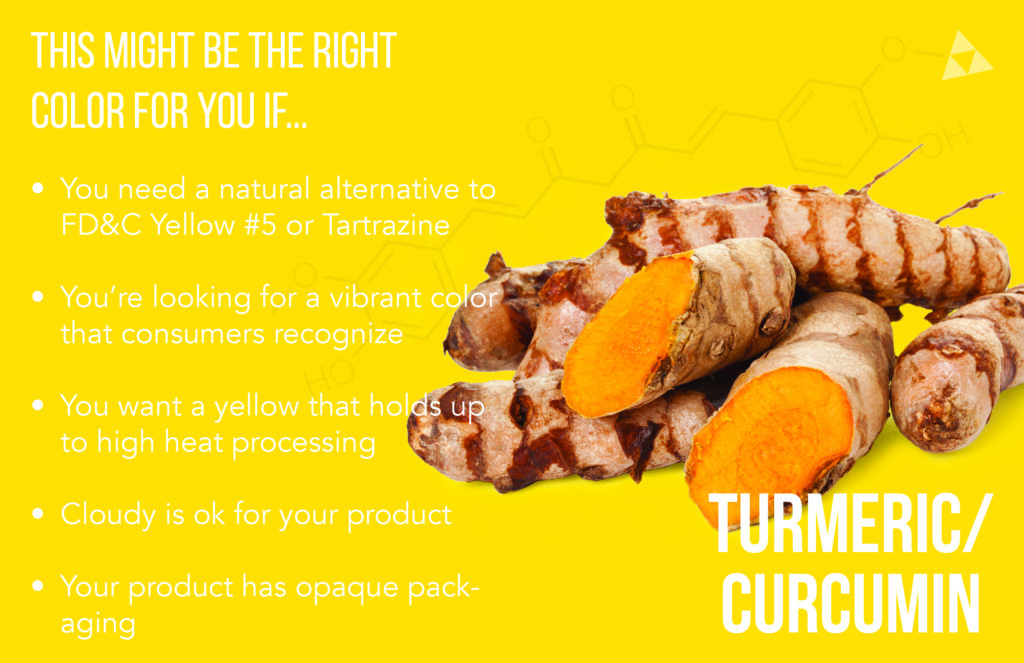
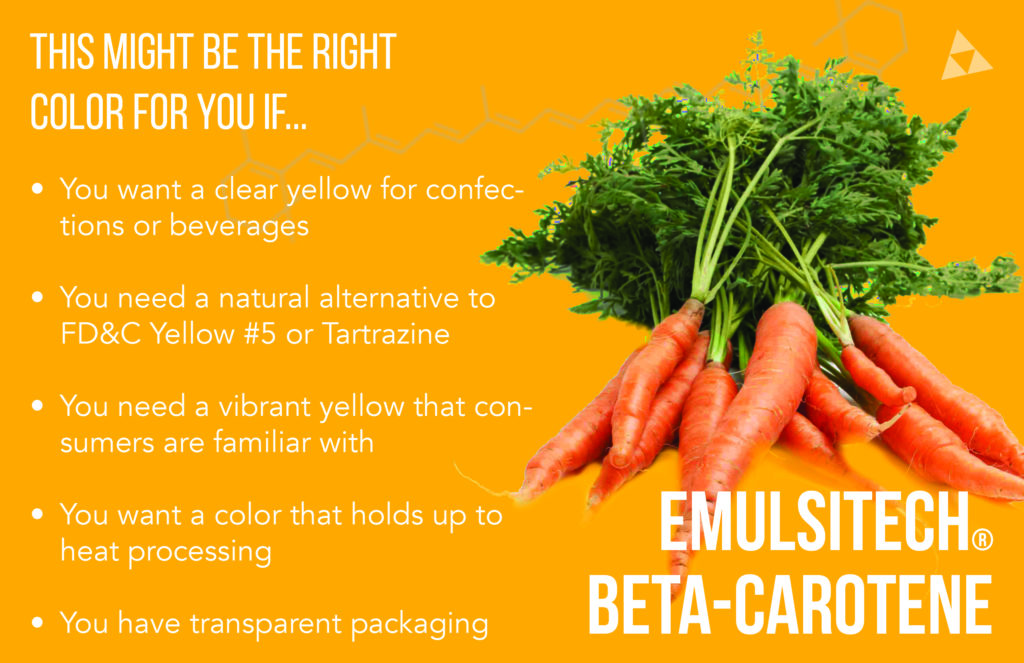
Just like with heat, some natural colors perform better with light exposure than others. If your packaging is clear or has a window, avoid turmeric and opt for beta-carotene, for example. Another natural color that doesn’t like light is spirulina.
If you are making a blue product, since this hue has limited options, you may want to use opaque packaging or eliminate the window to protect the integrity of the color.
pH
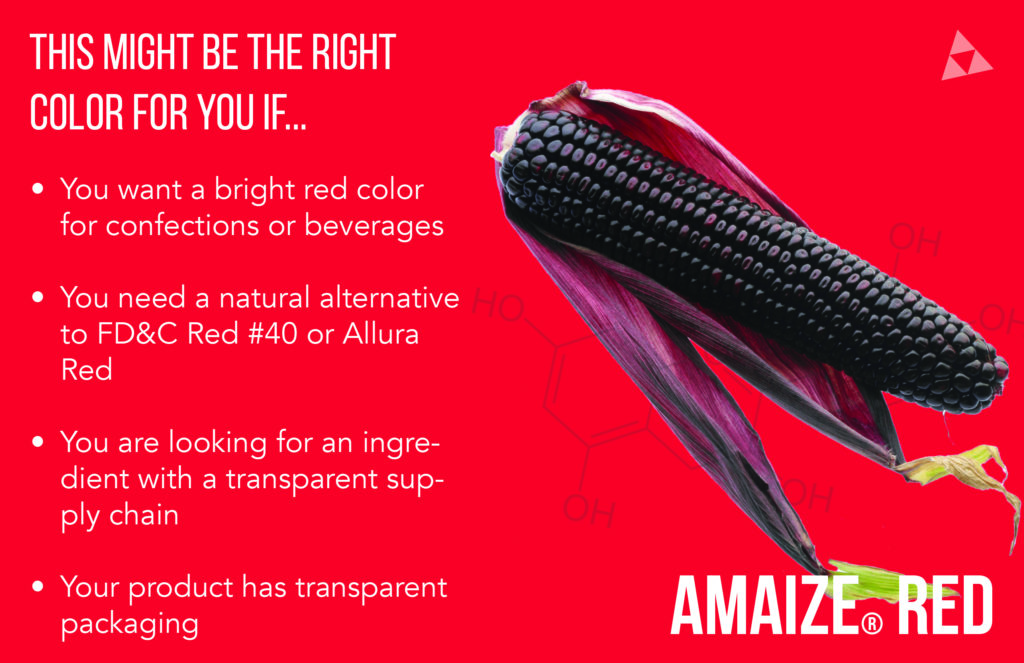
Anthocyanins, like Amaize® red, purple carrot, and elderberry, are pH sensitive colors. This means the hue will shift depending on the pH of the application they are in. So, if you are working with a beverage or a confection at a low pH it will appear red, but if you try to use it at a higher pH, it will turn purple-y blue. If you want to aheive a red hue at a higher pH, opt for non-anthocyanin sources like carmine or beet.
The other color that is sensitive to pH is spirulina (yes, again). It performs best between pH 4 and 7 and will precipitate out of solution if used outside these parameters.
Most other natural colors are fairly stable to a wider pH range but very few will work in a pH under 2, like for soda concentrates.
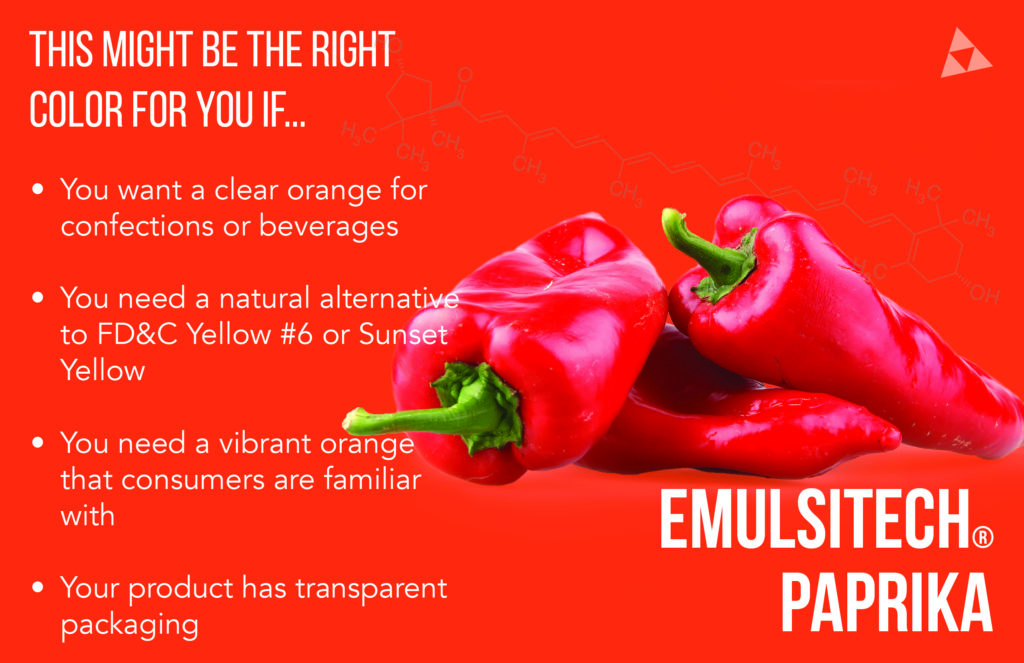
Check out the guides below to find out which natural color might be the right starting point for your product:

Salt
Most savory applications have 5% salt or less, so many natural colors can be used. But others, like soy sauce, contain up to 20% salt. To avoid precipitation/haze in high salt applications, be sure to use caramels specifically developed for salt stability. Natural colors will not work for applications like soy sauce.
Storage
Ambient? Refrigerated? Frozen? Certain storage conditions can cause fading while others prevent it. For ambient storage, go for robust colors like caramel, annatto, and beta-carotene.
Refrigerated or frozen products, like ice creams, and ready meals on the other hand, are great for preserving the vibrancy of natural colors, allowing for just about any natural color to be used.
Ingredient Interactions
The natural colors you have to be most careful with in terms of ingredient interactions are natural color emulsions. If your product contains an emulsifier, be sure to check that the emulsifier used in the natural color formulation is compatible with the other ingredients that make up your formulation. Otherwise, you may end up with a broken emulsion.
Other ingredients to be aware of are vitamins and minerals, which can cause natural colors to fade in the final product.
Flavor
Your flavor will also help guide what natural color to choose. For example, If you are going for a lemon flavor, turmeric and safflower are generally your best yellows for the job because they can provide very bright, almost neon yellow colors. But if you are going for a pineapple or mango flavor, beta-carotene or annatto may be better options because they can provide more golden or orange-y yellows that consumers more closely associate with these flavors.
It’s important to note that many manufacturers need blends to achieve the right color for their flavor. Not only does this help create more options to get the shade just right, but it also allows for differentiation, so no two flavors look the same.
Country
Every country has regulatory requirements so it important to know where you will be selling your product as this can impact natural color selection. For example, safflower is a great bright yellow option for confections in the EU, but it is not permitted as a color in the US and you’ll have to go for turmeric instead.
Greens and blacks are also difficult to create on a global scale. Chlorophylls are widely used in the EU and Latam but are not permitted in the US outside of dry mix beverages. Similarly, carbon black is permitted in Canada, the EU, and certain Latin American countries but not the US and other Latin American countries. Be sure to check the regulations for your specific region before picking out your color.
As you can see, figuring out how to choose the right natural color for your application can be difficult, but when you get the right color, your application will go unrivaled! Want some help? Contact us with your questions.
Choosing the best caramel colour for soy sauce
Soy sauce represents a huge customer sector for caramel color – in Asia, the demand for caramel color for use in soy sauce exceeds that for beverages. The primary purpose of adding caramel to soy sauce is to enhance the color shade. However, it offers additional benefits to soy sauce: it can reduce batch-to-batch variation, improve color adhesion to meat and noodles, and contribute to viscosity and mouthfeel. There are a variety of caramels, each with different hues and viscosities, to suit the needs of each manufacturer.
Color
The two main reasons for adding color to soy sauce are to improve the hue and to create batch-to-batch consistency. Because red-brown hues are typically preferred for soy sauce, choose a red-toned caramel over one that has a yellow-brown tone.
When adding color to improve batch-to-batch consistency rather than improve color tone, go with a caramel that is as close to your target color as possible so you have flexibility with dosage levels depending on the color of the batch. This ensures that consumers always receive a consistent, high quality product
Adhesion
Color adhesion to protein and noodles is extremely important as it allows consumers cooking at home to achieve a bright red-brown savory color in their meals. While class III caramel colors are the most commonly used to color soy sauce due to their red–brown color and salt stability, they are not the best options if the goal is to improve the staining for meat or noodles.
Red-toned class I and IV caramel colors developed specifically for salt stability are generally better options as they can help soy sauce adhere better to protein and noodles.
Viscosity & Mouthfeel
Depending on the region of use, caramel color can also be used to increase the viscosity and improve the mouthfeel of the final product. Some manufacturers add up to 20-30% caramel color to get the right consistency. If this is the main goal, be sure to select a high-viscosity class III caramel color for the best results.
Stability
While color, viscosity, and mouthfeel are all important reasons for coloring soy sauce, they main requirement of a caramel color for soy sauce is that it must be stable in 20% salt solution to even be considered. Caramel colors that are not salt-stable will form a haze in in the sauce and precipitate out. If a soy sauce is highly concentrated (above 20% salt solution), it is best to add the caramel color after the sauce is diluted in order to prevent the color from falling out of suspension.
Ready to get started? Request a sample here.