
All About Extrusion
Extrusion, the versatile food processing technology that mixes, cooks, shapes and texturizes food ingredients, is in principle inspired by Archimedes’ screw pump. But little would he have imagined that the fruits of his design would manifest in our breakfast bowls, the kibble our pets eat, the snacks we munch at midafternoon, or the plant-based meat substitutes on our dinner plate.
In this article we’ll explore this extraordinary food processing method along with factors to consider when using natural colours, to maximize their results and sensory enjoyment.
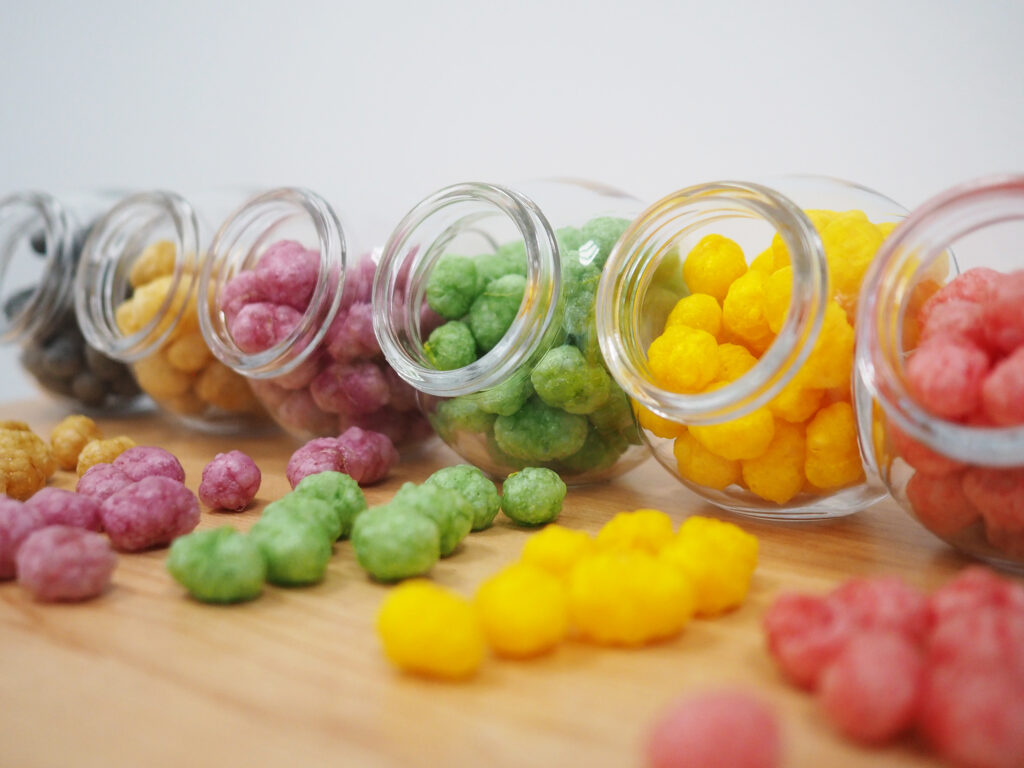
What is extrusion?
Extrusion is a food processing method that pushes or forces a food mixture through a die to create a specific shape. During extrusion, starches, proteins, and fibers, along with flavourings, functional ingredients, oils, water, and colours are minutely combined by the high shearing forces of a screw, heated by the self-generated friction or through the addition of steam, and optionally expanded and texturized when the dough is driven through a die outlet.
Extrusion is truly a science since so many variables can play into the overall appearance of the finished good. When selecting a natural colour for use in extruded goods, the main factors you’ll want to consider are inherent base colour, thermal stability, and the colour format.
All about that base
The intrinsic hue of the base ingredients can greatly impact the colour results in the final product. Lighter, refined grain based doughs usually require a lower colour dose, versus dark fibers, or coloured proteins from pea or animal sources, that need more pigment to overcome the dark hues.
You can see in the snack images below, the same amount of annatto in a corn base appeared much brighter than the same dosage of annatto in a chickpea base.
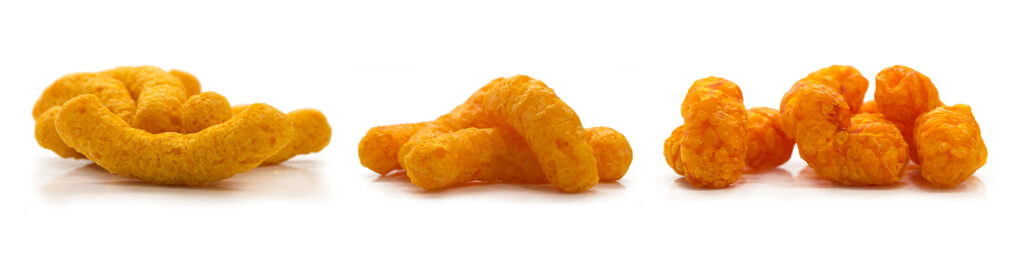
The matrix’s pH level in extruded goods is typically neutral, which narrows the selection of natural colors since options like anthocyanins typically perform better at lower pH levels; there are, however, ways to successfully use anthocyanins—for example, if you overdose the colour and/or if the dough is acidified. Be sure to assess the taste and texture to get the best sensory profile and to accurately cue for the desired flavour perception.
Hot, Hot, Hot!
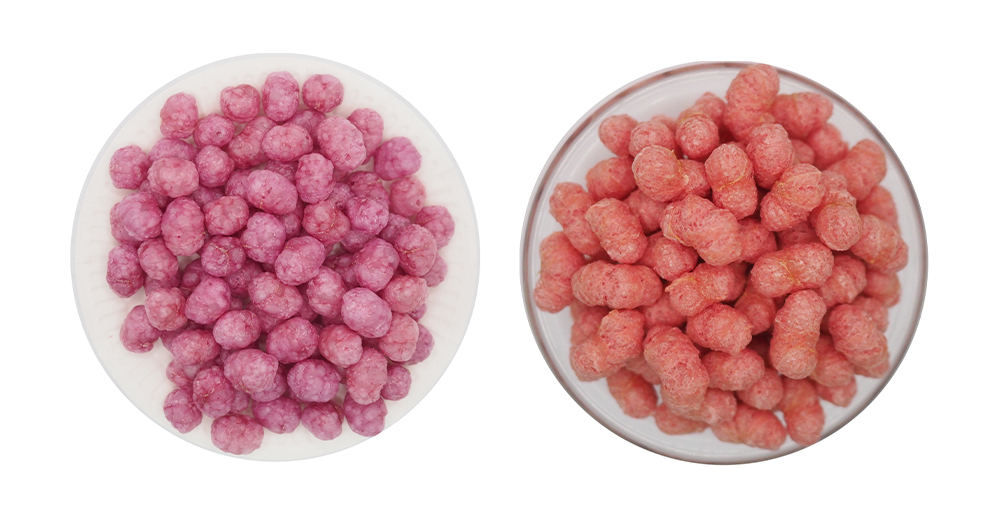
The combination of temperature, pressure, and screw speed are critical factors to consider that are unique to extrusion and can affect the color result. Typically, very heat stable natural colours like annatto, curcumin, caramel color, and copper chlorophyllin, are used. Alternatively, developers can use other less heat stable natural colours, such as beet or anthocyanins, at higher dosage rates to account for any colour loss during extrusion, while still hitting the ideal colour target.
What type of colour?
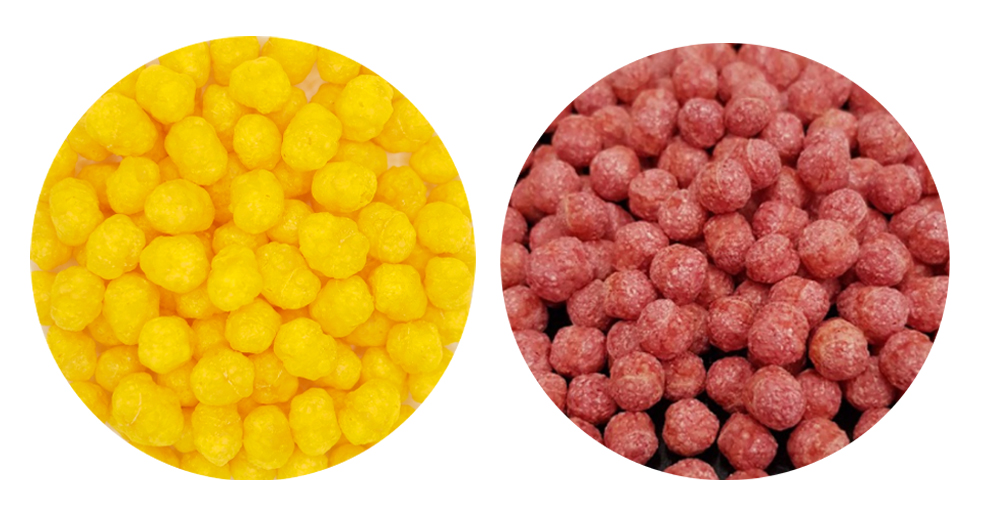
Typically, we recommend water soluble colours in extrusion processes since the water, or the steam injected into the system can quickly solubilize these for even distribution and maximum colour expression. Both liquid and powder colours can be used, depending on how the extruder is set up, the colour storage parameters, or general preference of the plant.
Interested in trying natural colours in your next extruded snack, breakfast cereal, or pet food project? Contact us for questions, technical advice, or to get started on your next project…Archimedes made extrusion possible. We at Sense Colour make it brilliant.