
All About Extrusion
Extrusion, the versatile food processing technology that mixes, cooks, shapes and texturizes food ingredients, is in principle inspired by Archimedes’ screw pump. But little would he have imagined that the fruits of his design would manifest in our breakfast bowls, the kibble our pets eat, the snacks we munch at midafternoon, or the plant-based meat substitutes on our dinner plate.
In this article we’ll explore this extraordinary food processing method along with factors to consider when using natural colours, to maximize their results and sensory enjoyment.
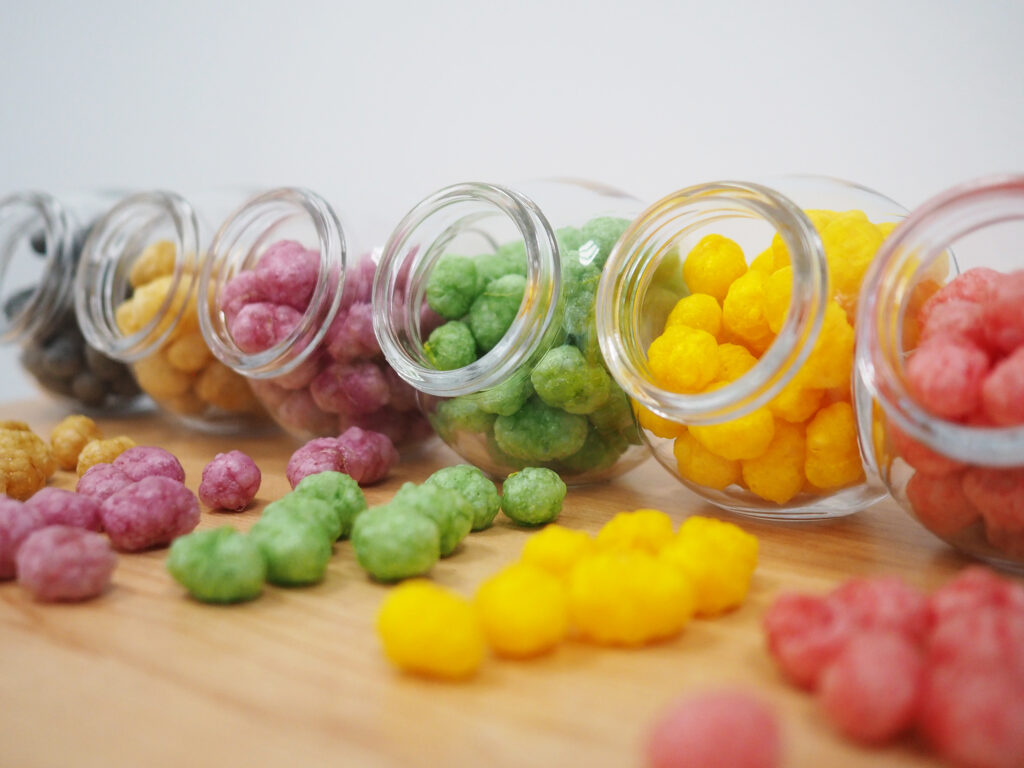
What is extrusion?
Extrusion is a food processing method that pushes or forces a food mixture through a die to create a specific shape. During extrusion, starches, proteins, and fibers, along with flavourings, functional ingredients, oils, water, and colours are minutely combined by the high shearing forces of a screw, heated by the self-generated friction or through the addition of steam, and optionally expanded and texturized when the dough is driven through a die outlet.
Extrusion is truly a science since so many variables can play into the overall appearance of the finished good. When selecting a natural colour for use in extruded goods, the main factors you’ll want to consider are inherent base colour, thermal stability, and the colour format.
All about that base
The intrinsic hue of the base ingredients can greatly impact the colour results in the final product. Lighter, refined grain based doughs usually require a lower colour dose, versus dark fibers, or coloured proteins from pea or animal sources, that need more pigment to overcome the dark hues.
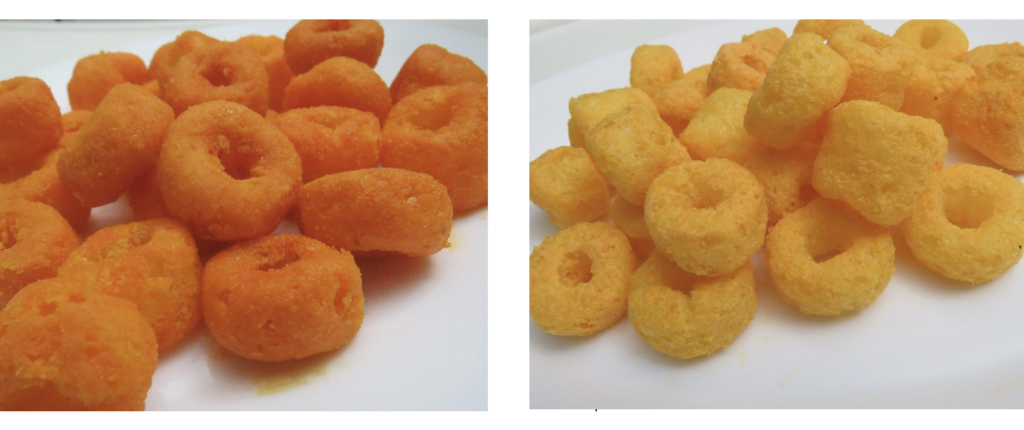
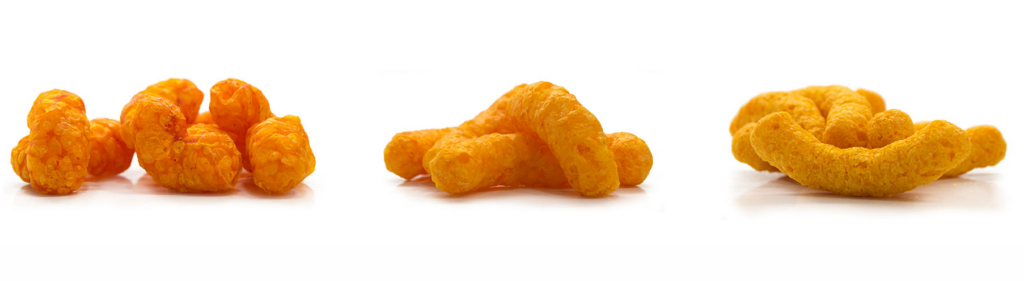
You can see in the snack images below, the same amount of annatto in a corn base appeared much brighter than the same dosage of annatto in a chickpea base.
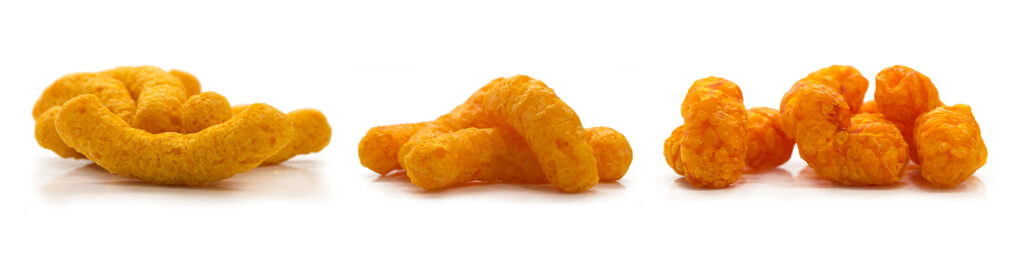
The matrix’s pH level in extruded goods is typically neutral, which narrows the selection of natural colors since options like anthocyanins typically perform better at lower pH levels; there are, however, ways to successfully use anthocyanins—for example, if you overdose the colour and/or if the dough is acidified. Be sure to assess the taste and texture to get the best sensory profile and to accurately cue for the desired flavour perception.
Hot, Hot, Hot!
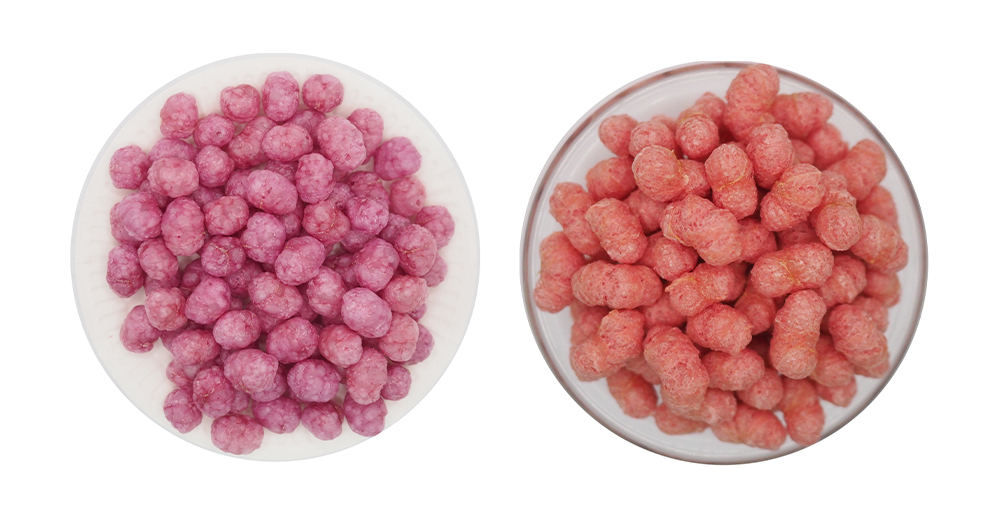
The combination of temperature, pressure, and screw speed are critical factors to consider that are unique to extrusion and can affect the color result. Typically, very heat stable natural colours like annatto, curcumin, caramel color, and copper chlorophyllin, are used. Alternatively, developers can use other less heat stable natural colours, such as beet or anthocyanins, at higher dosage rates to account for any colour loss during extrusion, while still hitting the ideal colour target.
What type of colour?
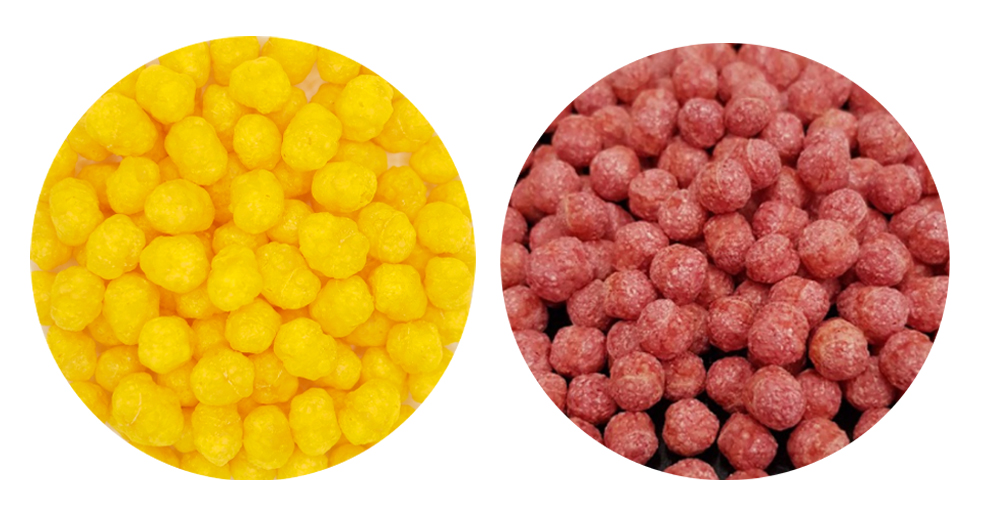
Typically, we recommend water soluble colours in extrusion processes since the water, or the steam injected into the system can quickly solubilize these for even distribution and maximum colour expression. Both liquid and powder colours can be used, depending on how the extruder is set up, the colour storage parameters, or general preference of the plant.
Interested in trying natural colours in your next extruded snack, breakfast cereal, or pet food project? Contact us for questions, technical advice, or to get started on your next project…Archimedes made extrusion possible. We at Sense Colour make it brilliant.
The Different Ways to Colour Snacks
A snack piece is such a unique, whole, and unitary element, that it takes effort to imagine it deconstructed. But it can be as simple or complex as the food designer decides it to be. In fact, as with many food products, snacks can be considered systems where numerous elements are placed together, interacting to give the consumer a holistic food experience that involves all the senses.
Since snacks are defined more by how they are consumed (a small bite between meals) rather than how they are made, the production of a snack product can involve a variety of different methods: like baking, frying, extruding, coating, and many others. They can also overlap with other food categories like confections, meats, dairy, cereals, or bakery products. And therefore, the different ways to colour to snacks products are as varied as the formats they may adopt. We’ll go through some of the options to add natural colours to your snack products below.
Sweet Bars & Bites
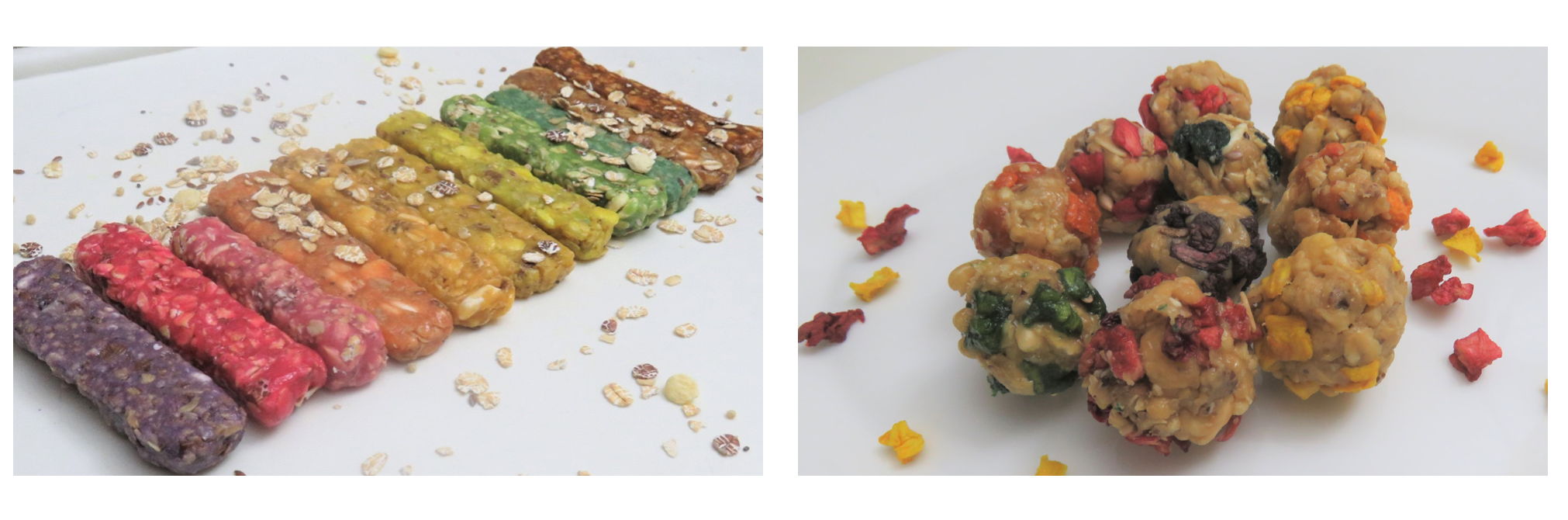
First, we’ll look at sweet snacks. Cereal bars, for example, generally consist of the amalgamation and shaping of diverse, long shelf-life ingredients, like nuts, legumes, and puffed or extruded cereals, held together with the aid of a sticky syrup. The blend may also include other ingredients like candy inclusions, or healthier options like dietary fiber, whole grains, or dehydrated fruit. Icings or chocolate coatings can also be added for decoration purposes.
With so many ingredients there are a variety of options to impart colour – But is it best to colour the extruded pieces, the syrup, the inclusions, or the chocolate or icing decorations?
The answer: it all depends on the visual effect you want to achieve, the stability of the colour you are using, and the extent of your control over the processes. Do you manufacture the extruded pieces, or do you buy them and formulate the finished bars? Is your factory better suited for handling dry blends, or can you make liquid dilutions to color the syrup, icing or fatty coatings? Do you want a subtle hint of colour but still show the wholesomeness of the cereals and grains? Or do you prefer bold and vibrant colours to stand out in your product?
The images below show a few examples of how adding natural colours to different portions of the snack affect the appearance of the overall product.
Savory Snacks
Another example is with savory snacks: chips, tortillas, puffed pieces, salted and seasoned, or even batter enrobed nuts. Again, the decision of where to add the colour will depend on both aesthetic and technical criteria.
Potato chips or crisps (depending on which the side of the pond we’re on), are generally fried, which results in what is called ‘tack’, – an inherent stickiness due to the thin layer of oil that is left in its surface. These types of snacks are better coloured with a dry seasoning blend because the powders easily stick to the surface. Low intensity plated colours, like our Vibrant™ line, give the most reliable and consistent result, as seen below.
Tortilla chips, from corn or other flour, can be coloured via the dough itself for a uniform look, or if fried, can also be coloured using the powdered seasoning method, mentioned above. If coloring the dough, it’s often best to use water soluble colours to prevent the colour from leaching into the frying oil while they cook. And be sure to choose heat stable colours for the best results.
Baked or extruded goods, like cheese puffs and crackers, do not have tack and therefore are better coloured through the oil slurry along with the salt, seasonings, then sprayed onto the surface of the snacks. While it has generally been common to use colours in the form of artificial lakes for the snack coating finishes, there are plenty of natural colours that can achieve the same look while providing cleaner labelling options.
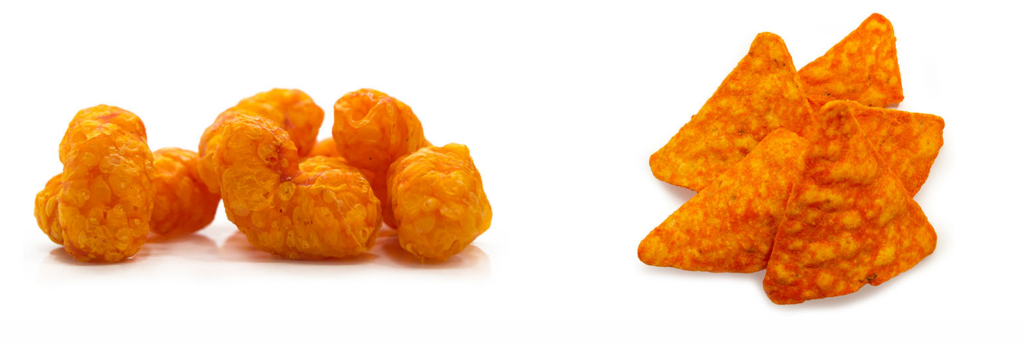
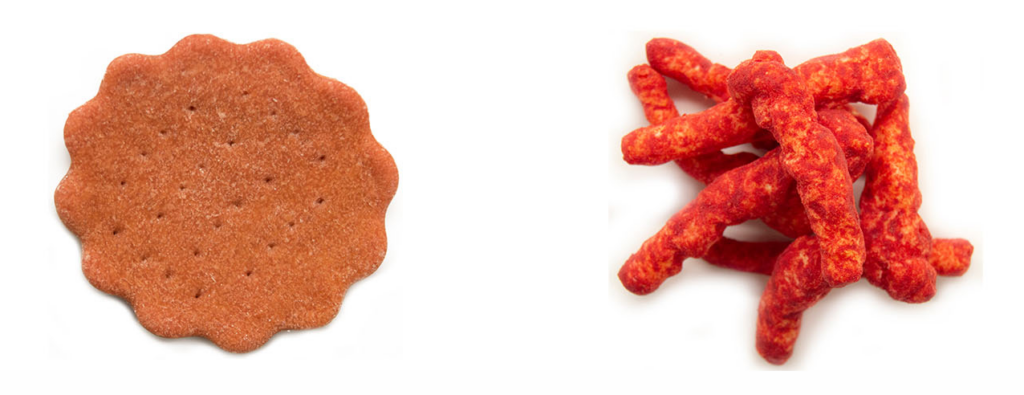
Natural oil soluble and oil dispersible colours have brilliant shades that can be customized to each unique snack, and are perfectly compatible with oil slurry formulations, providing an excellent coating effect and, better yet, a simple label with ingredients consumers know and trust like paprika, annatto, and turmeric. The images below show the vibrant shades you can achieve with oil soluble colours in these applications

While these are just a few examples of ways to add colour to snacks. These can be as creative and varied as the world of snacks, but rest assured that our team of colour scientist is prepared to help you with all the challenges your imagination can pose. Contact us with your snack questions or get started with a natural colours sample kit for snacks.
Top 5 Considerations When Coloring Snacks
With so many different types of natural colors, choosing the right one for your snack application can feel daunting. Whether you’re creating chips, crackers, popcorn, or pretzels, there are some important factors to consider when choosing a natural color. We’ve broken down the top 5 considerations when coloring snacks to help you make the best decision.
1. Delivery System
The first factor to consider is your color delivery system. When or where will the color be added? If you’re adding it directly to the base of crackers, tortilla chips, or extruded snacks, you have the option of using a powder for dry blend mixtures or liquid for a wet dough. In both cases, you’ll need heat stable colors, such as annatto, turmeric, paprika, and copper chlorophyll[in] to provide the best results after the high heat of baking, extruding, or frying. Both oil and water-soluble colors are available in a wide variety of popular snack shades to fit your formulation.
You might also want to add the color to the snack seasoning or slurry that’s sprayed or coated on the outside towards the end of the process. Heat stable powder colors can be coated on fried snacks just out of the oil, while colors with lower stability can be added to fatty slurries and then sprayed onto the snack. Knowing how you plan to deliver the color helps determine the best color form for the snack in question.
2. Processing Conditions
How a snack is processed can also make a difference when choosing a natural color. Is it going to be baked, fried, or extruded? If it’s baked, are you using a batch or a continuous oven? What does the cooling process look like? Natural colors like annatto, paprika, and beta-carotene are ideal for snack applications since they can withstand high temperatures. Other colors, such as beet, appear most vibrant when added to seasonings or coatings where they aren’t exposed to high heat conditions.
3. Flavor/Target Shade
With so many new and different flavors on the market, having a target hue in mind for your snack’s final appearance is key. This helps determine if your shade can be achieved with a single color – like annatto – or if a blend is needed to get the right hue. There may be a product already on the market with a hue you are trying to match – either naturally or synthetically colored – or maybe you’re developing a brand-new snack product, with a flexible range of acceptable hues you’ve selected from color swatches. And if you need help hitting that perfect shade, we can help you with the color matching process.
Different snack bases can also result in the appearance of the final color in the end product. Chickpea, potato, and corn flours all have different undertones that will require different dosage rates to achieve similar colors, as seen in the image below.
4. Regulatory & Commercial Limitations
Understanding where and how your snack product is going to be marketed and sold is critical when selecting natural colors. Every country has their own regulatory requirements, and that can limit which colors, and how much of them, can be used. For example, carbon black is not permitted for use in any food application in the United States but has been approved for use in other regions.
Even if a natural color is permitted for use in a certain region, there may still be limitations surrounding how it is used.In some regions, natural colors, like annatto and carmine, have maximum use limits by specific application types.Other products may require specific regulatory certifications, such as Kosher, Halal, Certified Organic, or Non-GMO Project Verified that require additional care when deciding on the right natural color.
5. Storage & Packaging
How will your snack product be packaged and stored? The type of packaging is a key factor when determining which natural colors will stay vibrant during the entirety of the snack’s shelf life. Some colors are more light-stable than others, so if the packaging is clear or has a window, be sure to select colors with good light stability, such as beta-carotene and annatto as opposed to turmeric, which performs best in opaque packaging where it’s protected from light.
It’s also important to determine your snack product’s expected shelf life and storage conditions. How long is the product expected to last once it’s packaged and at what temperature will it be stored? Knowing this information up front will help determine the best natural colors to use.
Figuring out how to choose the right natural color for your snack application can be difficult, but when you choose the right one, your scrumptious snacks will crush the competition! Need some help deciding? Contact us with your questions or get started with a sample kit.