
Natural Colours for Dairy-Free Cheese
Cheese substitutes, or plant-based cheese analogues, have been on the market since at least the 1970’s. But since 2018, dairy-free cheeses have risen in popularity with the increased consumer demand for plant-based foods.
They are achieved by substituting the dairy proteins in cheeses with plant-based ingredients like nuts, cereals, and pulses, with varied ratios of proteins, fats, and starches that provide different textural, nutritional, and cooking attributes. As with other plant based options, there are challenges in creating a product that not only looks like its traditional counterpart, but also has a similar flavor, texture, and functionality.
In this article, we’ll take you through some of the common challenges when making plant-based cheese and the colour solutions that can help you provide your consumers with an authentic dairy-free cheese experience.
A Challenging Cheese
The most common vegan cheese on the marketplace is the non-ripened processed cheese that comes in slices, grated, or block forms. These typically use a combination of water or plant milk, coconut oil, and starch, as well as salt, flavor, and color as required.
The challenge comes in when trying to mimic the way milk reacts when made into cheeses. Bases such as coconut, soy bean, or nuts that are rich in fats and protein such as cashews, almonds, or pine nuts are often used. The addition of starches provides an emulsification and stabilizing effect as well as adds a creamier mouth feel to the final vegan cheese.
Vegan cheese made from nuts typically doesn’t melt, for example. However, using a base of coconut oil will give a vegan cheese that will mimic the melting properties of cheeses, as seen in the image below.
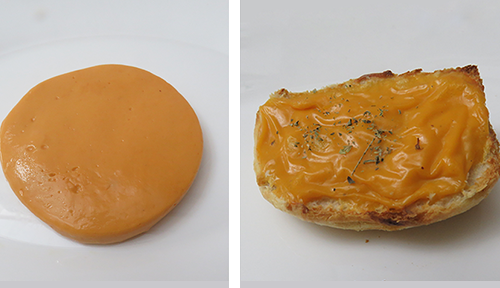
Controlling the ratio of the water, protein, starch and fat also allows for spreadable forms of cheese analogs, which can be flavored with herbs, spices, or even fruits to achieve distinctive sensory profiles.
As with parallel projects to remove sugar, salt, and fat from products there is no one ingredient that can replace milk within a cheese system to deliver an analogous effect and often a combination of ingredients is needed.
Including Color
For manufacturers producing a variety of plant-based cheese, it is often best to use to use an oil soluble color. The most commonly used option for plant-based cheese is oil soluble beta-carotene. This is because it not only has the right golden yellow cheese color, but also because of its consumer recognition as a natural colour, as well as widespread regulatory approval. It can easily be applied to the coconut oil before the addition of the water/milk and starch mix.
As seen in the image below, by adjusting the dosage of the carotene a variety of shades can be achieved – from cheddar yellows to a deeper orange similar to a Red Leicester.
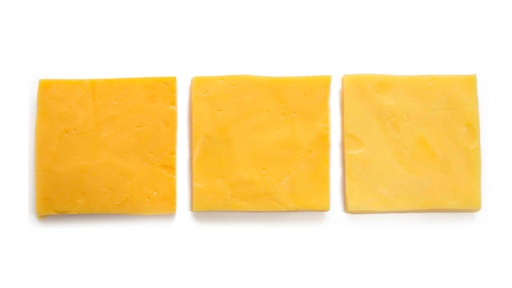
Other common color options include oil-soluble annatto, paprika, or blends with curcumin (seen below) for customised shades. These colors all have excellent heat stability for consistent processes and no risk of off flavors that could impact the consumer experience. If you do need to use water soluble colors or emulsions, you can mix these into the water or milk component prior to combining with the remaining ingredients.
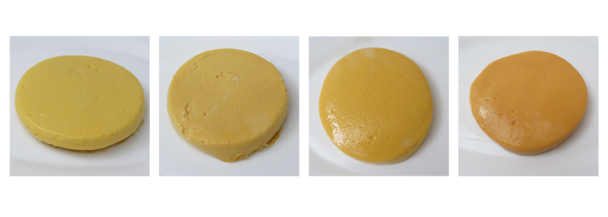
Vegetable juice colors like Vegebrite® orange carrot or golden yellow are good alternatives to get attractive labels for consumers and unique identities in cheese analogs. In this case, the dosage rate required to get the target hue may be larger when compared to beta-carotene or annatto. They would also have to be incorporated with a compatible emulsifying system since they are water dispersible formulas.
Despite what color you choose, the key to on-shelf product colour stability is the use of a synergistic cocktail of antioxidants, which will protect and retain the color through the manufacturing process and through the shelf life of the final product.
Spreadable or cream cheese analogs allow for a wider array of colors to match the flavor creation. Here imagination is the limit and the color can be incorporated as a uniform shade, as textured inclusions, or with a marbled effect: greens for herbal flavors, browns for umami profiles like mushroom or onion, bright oranges for spicy versions, and even red and purples for fruity sour-sweet spreads.
Whether your plant-based cheese is for a traditional cheese slice or block or meltable, hot preparation, natural colors play an important role adding up to the sensory experience of authenticity. Request a sample or contact us to get started on your plant-based cheese project.
Interested in natural colors for your next dairy-free cheese application? Request a sample or contact us to get started on a project.
Podcast: Rooted in Science
Rooted in Science
How Givaudan’s agronomists develop natural colouring solutions from carrots
Speakers: Nicolas Jegouic, Head of Agronomy and Fanny Fourcade, Agronomist
In this first episode of our new Colour Journey, Givaudan’s agronomists take you to one of our pilot farms in Aix-en-Provence, France. You’ll discover how Givaudan’s agronomy expertise transforms carrots into a brilliant orange coloring food.
Thirsty for more content? You can listen to our other podcast episodes here.
Bixin and Norbixin: What’s the Difference?
Annatto: Bixin and Norbixin
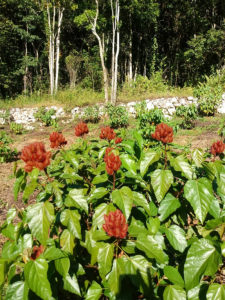
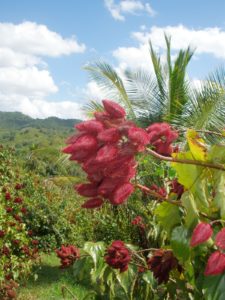
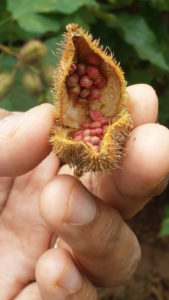
Annatto is a yellow to red-orange natural color that is extracted from the spiney seed pods of the Bixa orellana, or achiote, bush. It is native to tropical growing areas in Central and South America as well as Africa. In some countries like Brazil, the seeds are also used as a spice in cooking. In the coloring world, though, there are two different types of annatto that are used in the food industry: Bixin and Norbixin. But what’s the difference and when should you use bixin or norbixin?
In this article, we’ll take you through the differences between these two common colors.
Bixin
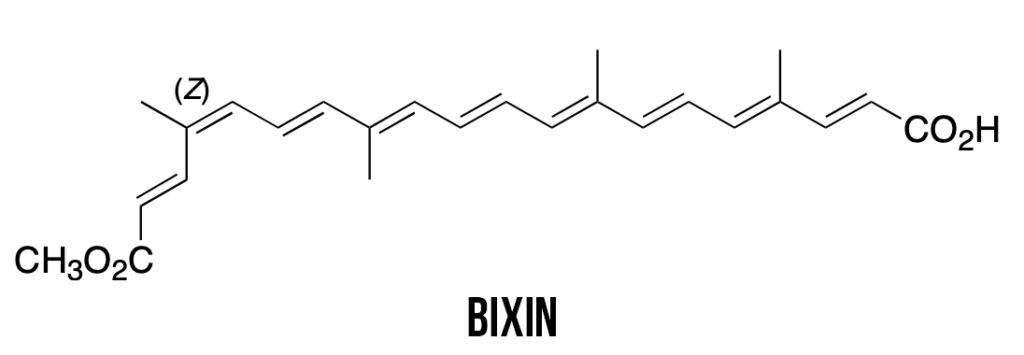
Bixin is the original form of annatto that is extracted from the seed coating and is naturally oil soluble. One method to extract bixin from the seed coat is using hot vegetable oil. However, bixin is only soluble in vegetable oil at low percentage rates. You can create stronger products by using bixin suspensions. This is done through repeat extractions of annatto seeds yielding bixin concentrations of 4% or greater. Oil soluble bixin is a yellow color, whereas suspensions of bixin are a deep, vivid red orange.
Bixin is a commonly used natural color in the food industry because it is an economical option for yellow to red-orange hues depending on the application and dosage rate. Since bixin is oil soluble, it is mostly used in oil-based food applications like process cheese, cheese sauces, and dairy spreads. It is also a popular choice in the snack food industry where it may be applied to oil-based slurries used to season extruded snacks.
Norbixin
Norbixin is the water-soluble pigment of annatto. To make it, we put bixin through a process called saponification. This cleaves the methyl ester of bixin, forming norbixin. Like bixin, norbixin varies in hue from yellow to orange depending on the usage rate and application.
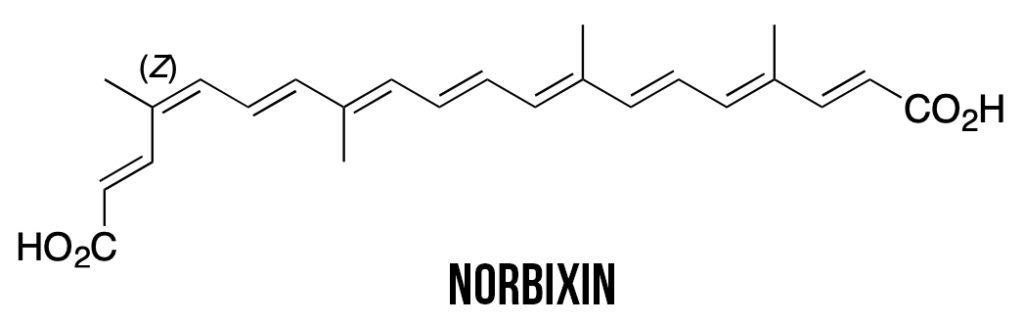
Norbixin is traditionally used to color dairy products like natural cheddar cheese, yogurt, dairy drinks, and ice cream where a water-soluble color works better. In cheese, norbixin binds to dairy proteins during cheese making, imparting excellent color and stability.
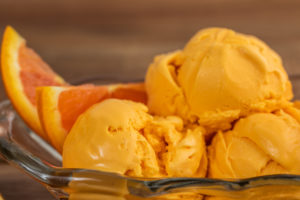
Another important food application for norbixin is ice cream where norbixin delivers the light-yellow hue of vanilla flavored ice cream at low use rates and bright orange to compliment mango or other tropical flavors at higher use rates. If you’re working with a more acidic application like beverages or low pH confections, however, you’ll want to use a norbixin product that has been protected by an emulsification system to avoid precipitation.
In summary, bixin is the oil-soluble pigment that is extracted from annatto and norbixin is the water-soluble form of the pigment. Both provide a range of yellow to red-orange colors in different applications.
Annatto is a versatile pigment since it may be used in oil or water-based foods. The range of pigment use may be expanded with the use of emulsifiers to include acidified food applications. Overall, annatto has very good stability in food applications and it’s an economical choice for a vibrant yellow to orange pigment.
If you’re in the EU, check out the expanded list of applications that can now use bixin and norbixin. Ready to get started with annatto? Request a sample here.
Alternatives to Carmine
Cochineal and carmine are natural colors extracted from the cactus-dwelling cochineal insect that is native to Latin America. Depending on the method of extraction, they can range in hue from orange to red to purple. They have excellent heat, light, and pH stability and work well in a wide range of applications.
In terms of stability and functionality, these natural colors are some of the best, but because they’re derived from an insect, carmine and cochineal are not considered vegetarian, kosher, or halal. So, for products that need natural colors that comply with these certifications, alternatives to carmine are necessary.
In this article, we’ll go through some of the best alternative options to match the different shades carmine and cochineal provide.
Orange
Annatto, and Paprika provide excellent orange to red-orange shades for many applications. Although they are naturally oil-soluble, yellow and orange emulsions like our Emulsitech® colors provide water soluble options, as well, that are great alternatives to carmine and cochineal.
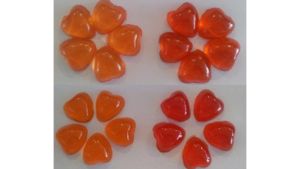
The top row in the image below shows carminic acid used at two different dose levels for light to dark orange shades. The second row shows that close matches are possible with carotenoids, in this case, our Emulsitech® Paprika. While the dosage rate requirements are slightly higher for the darker orange option, it provides heat and light similar compared to carminic acid.
Pink to Red
Beet
Beet is usually the first go-to alternative to carmine for pink to red shades. It has good light stability and an effective cost-in-use. It can also achieve close color matches to carmine in neutral pH applications like dairy beverages and yogurt.
So, why doesn’t everyone just use beet? Beet is notoriously susceptible to fading when exposed to heat. So, while it may work well for certain applications, it may not always survive the heating process associated with applications like strawberry dairy beverages or red velvet cakes.
The image below shows carmine on the left and two dosage levels of beet in cupcakes. The lower dose is not a match to the carmine cupcake and shows significant fading around the edges.
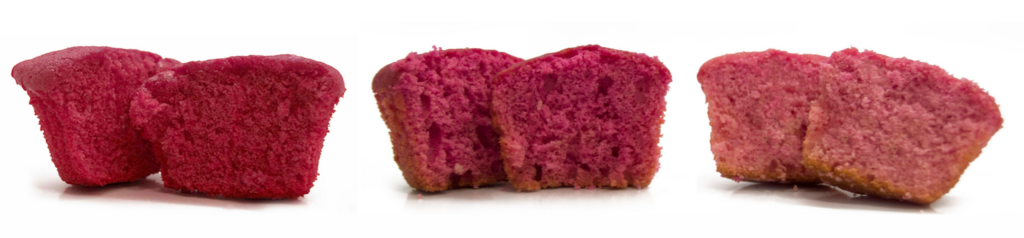
To avoid this, you can overdose a bit to compensate for some of the fading, as seen in the cupcake with the higher dose. But, while the fading is less noticeable and the color is a closer match than the one with the lower dose of beet, doing this requires a much higher dose rate that could result in flavor interference. That is why blends are often a better choice.
Beet is also not the most acid stable red color available, so lower pH applications like beverages, fruit prep, or gummies typically show better results using anthocyanins.
Anthocyanins
Anthocyanins provide bright red to pink hues in low pH applications. They are also fairly heat and light stable, making them great alternatives to carmine in products like fruit preps, fillings, and low pH beverages.
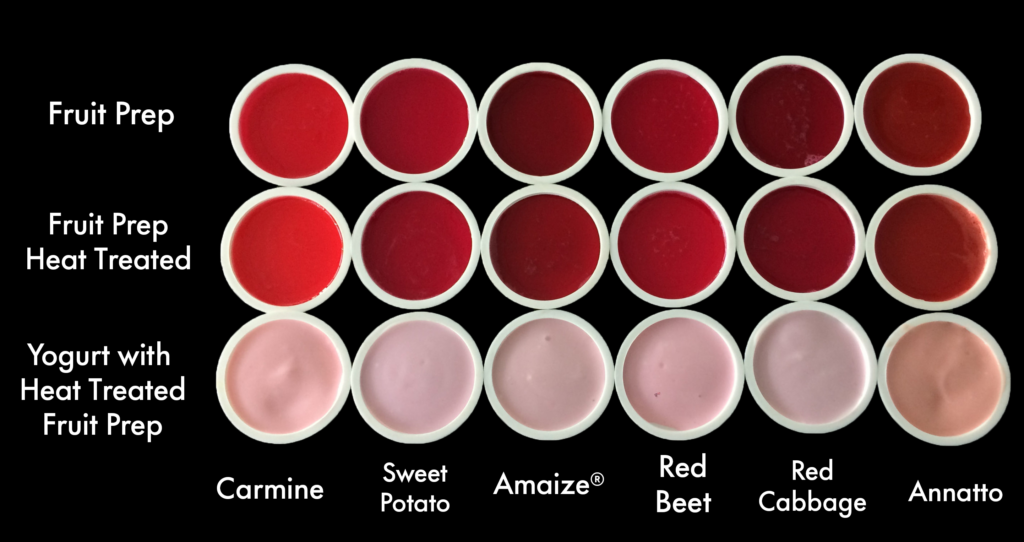
You can see here that the anthocyanins like purple sweet potato and Amaize® provide similar hues to carmine in fruit prep applications. both before and after heat treatment, the anthocyanins maintain their bright red color.
Blends
Blends will be your best option for replacing carmine when a single natural color alone doesn’t have the best stability or provide the right shade. Beet, for example, can be blended with more heat stable colors like beta-carotene or class I caramels to be used in dairy beverages or bakery applications with better results.
The image below shows carmine in yogurt in the top center row surrounded by a variety of blends using beet, anthocyanins, and beta-carotene at varying dosage levels. By varying the amount of these pigments in the blend, close color matches are possible!
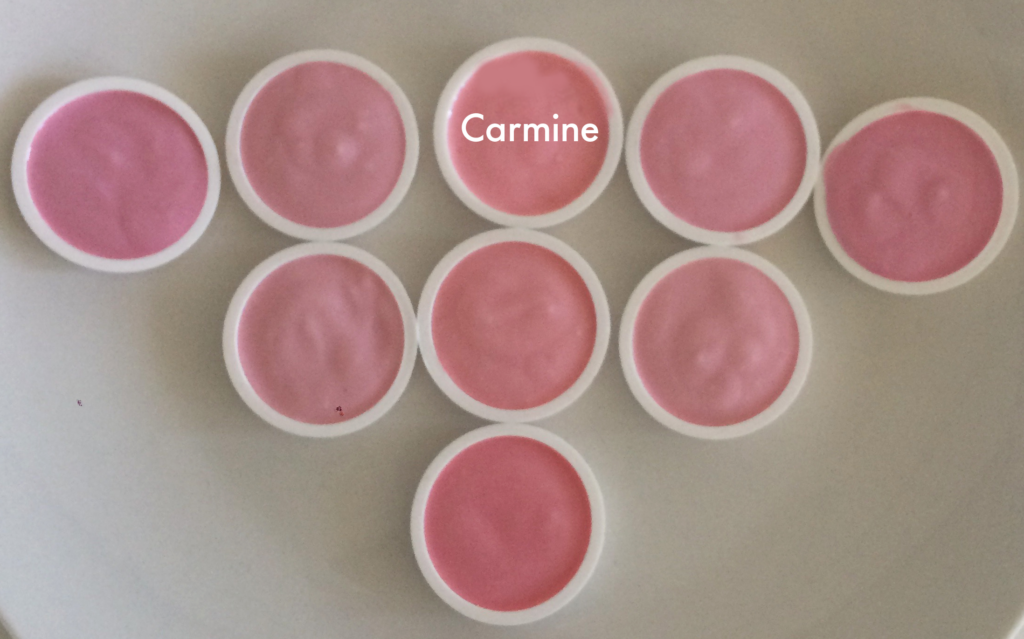
The best way to make sure you are getting the best alternative to carmine for your product is to work directly with our application scientists. By providing your base material and target color, they can try different blends that will meet the stability and color requirements of your product as closely as possible.
Want to see how they do it? Check out our color matching article for the inside scoop. Or get started with a sample.
Emulsitech® Natural Color Emulsions
How Stable Are They?
Emulsitech® provides natural and convenient colors for any project… but just how stable are these vibrant yellow & orange hues?