
Authentic Food Colour Trends
Consumers are increasingly interested in ‘authentic’ food and beverage experiences—they want food that is as close as possible to its original ingredients or source. This can include minimally processed foods, foods that taste, smell, and look traditional, or even foods resembling what can be found in nature.
But how does nature really look? What is the colour of authenticity? In this article we explore how natural colours can be used to create earthy to bold to pastel shades to achieve colours that can represent those authentic dishes.
Earthy and wholesome
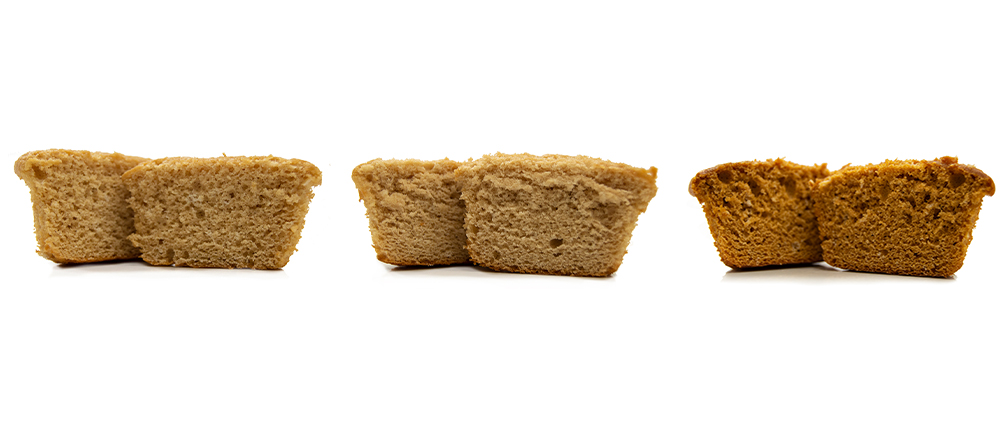
On one hand, ‘authentic’ could refer to simplicity in nature. Think whole-grain foods like cereal, nuts, and seeds, unrefined flours, brown sugar, cooked meat and poultry, etc. This beige to brown palette is made up of muted shades that hint at wholesomeness and even artisan craftsmanship. It leads the path to health and wellness food developments, but also ready meals and savoury dishes and sauces.
These earthy tones are easily achieved using tried and true caramel colours, burnt sugars, and Naturbrown® ingredients that have simple labels to match the ‘simplicity’ of the dish being created.
Vibrant kaleidoscope
On the other hand, ‘authentic’ could include the bright and bold. While some associate brightly coloured foods with synthetics, nature is full of vibrant colours that lend themselves to some of our favorite dishes!
Fruits, vegetables, and spices compete with ineffable vivacity for our attention: warm yellows and oranges, alarming reds, calming pinks and purples, and lots and lots of greenery. Even marine food sources like fish, mollusks and crustaceans enchant with their vivid oranges, reds, yellows, and purples.
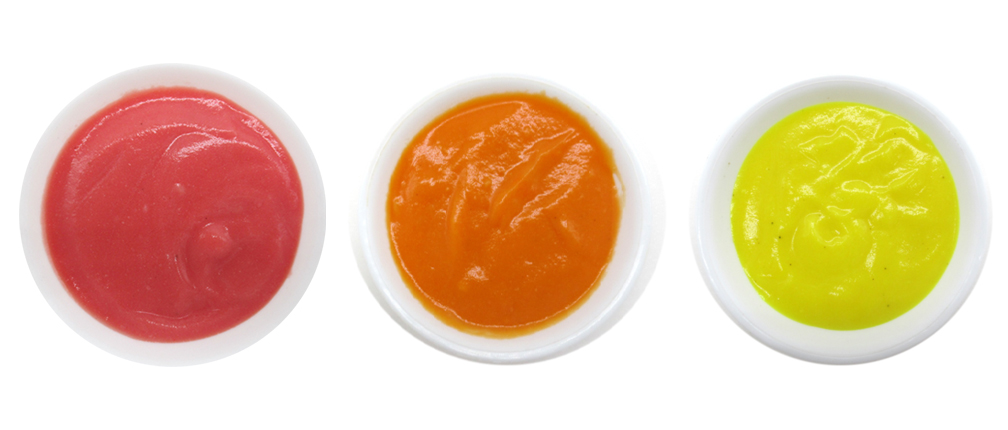
Would you want to eat a brownish strawberry jam, or curries devoid of their bright and alluring hues? In fact, there are evolutionary reasons for our liking of vividly coloured food; as hunter gatherers, our species relied heavily on vision to detect and assess nutritionally dense food sources: golden honey, ripe fruits, and fresh game meat. It’s not surprising that we’ve transferred these preferences to prepared foods as well.
This vibrancy can easily be celebrated and recreated with a range of natural pigments including anthocyanins, carotenoids, betalains and chlorophyllins.
Dreamy pastels
A third ongoing trend in ‘authentic’ food preferences are pastel colours. It is especially noticeable in sweet categories like confectionery, dairy desserts, and pastries, and has a strong positioning among children, teens and young adults.
While pastels make some consumers think of simplicity or naturalness, pastel palettes are also reminiscent of a dreamy, imaginary world and are often associated with emotions and feelings like serenity, sweetness, and nostalgia, and lend themselves well to creative fantasy flavours.
Indulge in the whimsical dreamscape of pastel fantasy colours from Everzure® Spirulina, or colouring juices like our Vegebrite® line, over your preferred white or creamy base.
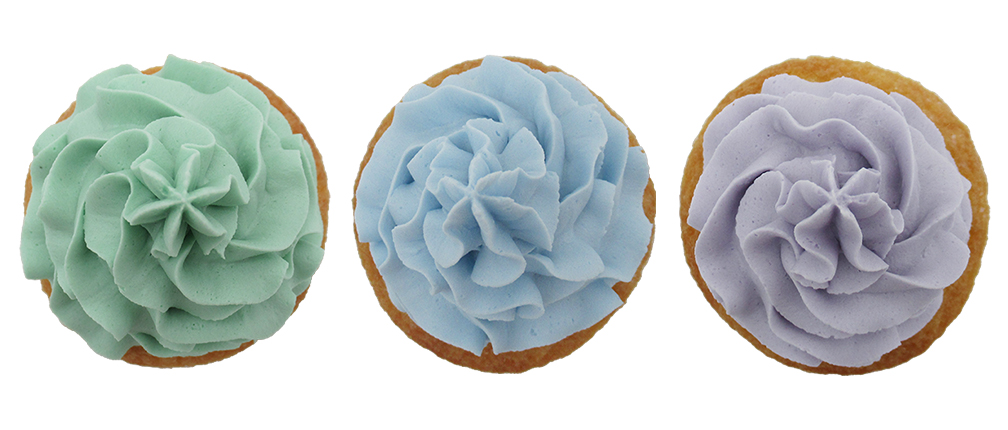
The interesting outcome is that no matter consumer preference or which food category we look at, all these colour trends can be addressed through the diverse palette of natural colours.
Contact our colour scientists to get expert guidance in choosing the best performing natural colour for your target application, and inspiration to design a consistent and appealing visual experience to delight your consumers.
Colours: See, Feel, Eat!
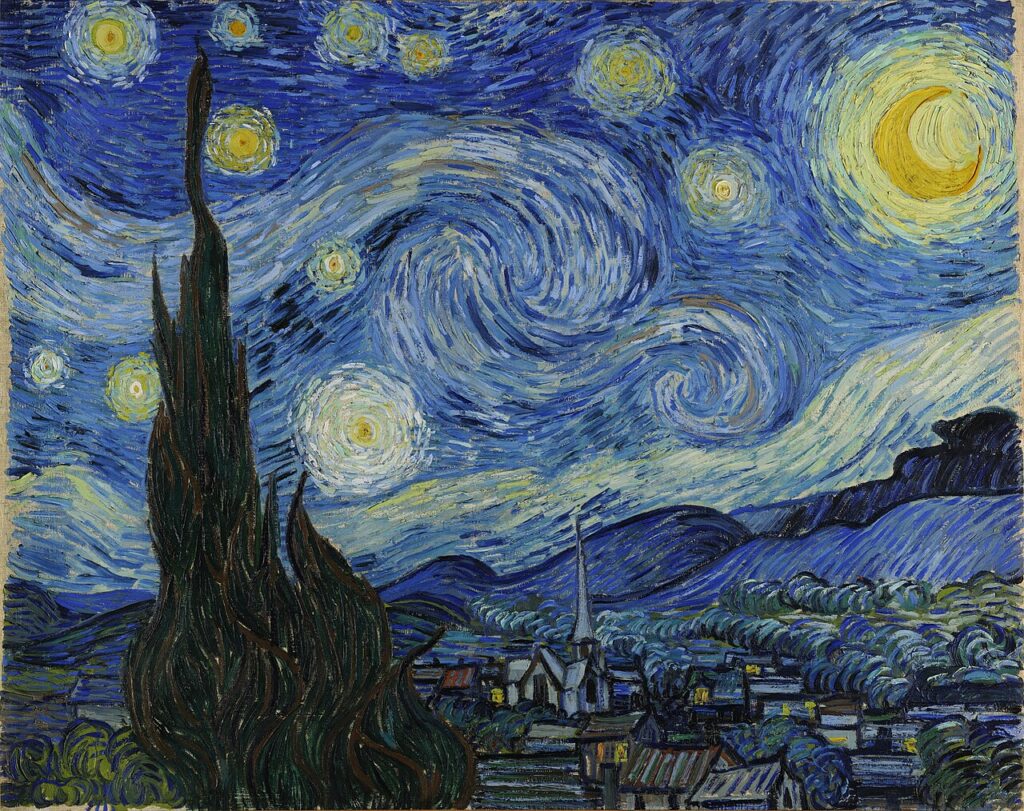
Take a look at Van Gogh’s Starry Night below. Observe it. Immerse yourself in it. How does it make you feel?
Post-impressionist artists, like Van Gogh, Matisse, or Gauguin used colour, not to show nature or reality as it is, but as they felt it. They strived to capture the emotional input from a scene, exploring its subjective reality. In other words, colour was employed as an emotional vessel of meaning, beyond the realistic depiction of perception. And this can be applied to more than just the world of art.
In this article we’ll explore the relationship between colours and emotions and how it plays an important role in food product design.
The connection between colours and emotions
Colours are strongly connected to emotions in ways that even pervade our language: we can feel ‘blue’ when sad, ‘green’ with envy, or ‘see red’ when mad. And similar metaphors are found in other languages: in Polish one gets ‘biała gorączka’, or ‘white fever’, when angry; in Swedish, someone is ‘svartsjuk’, or ‘black-sick’, when they are jealous, and in Spanish one turns ‘morado de la vergüenza’, or ‘purple with shame’.
Background influences on colours and emotions
But since colour psychology is a relatively new science, there is still debate about the universality of colour symbolism and whether emotions elicited by colours are ingrained in our biology, or if they are based instead on social and cultural constructs.
Examples of strong cultural biases include the use of white for mourning in parts of Asia, contrasting with the western association of black to funerals and death. And purple was used for millennia as the royal colour in Mediterranean and European cultures, while yellow was regarded as the regal colour in China, only used by emperors.
Widespread colour associations
However, there are some subjective associations that seem to be a bit more widespread – appearing in cross cultural contexts. In general, warm colours like red, orange, and yellow are correlated to high energy emotions, while cool colours, like blue, green or purple are perceived as more calm and subdued. And thus, some semi universal concepts linking colour and emotions are used in marketing, fashion and decoration, and more.
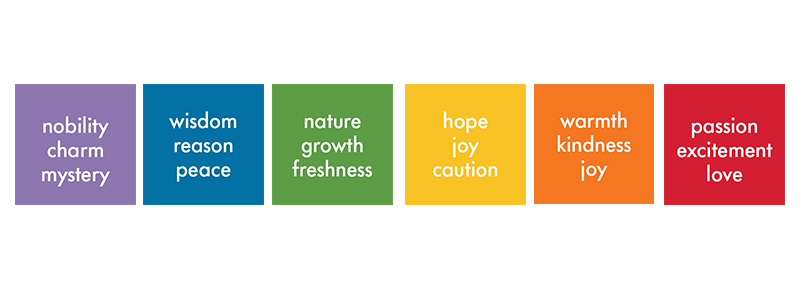
Colour and emotions in food product design
So why is this important in the context of food design? Because as colours influence moods, they also signal to action. In 90% of our buying decisions, our brains rely highly on emotions and feelings, including decisions on what to purchase and what to eat.
Colour is an important factor, not just in perceiving the flavor of a product, bur also for emotional branding – how consumers establish long term bonds with products that have a strong emotional connection with them.
Understanding moods and emotions can also help food product developers select the colour that will resonate most with their target market.
For example, in our 2023 European moods & emotions survey, we found that the colour that would maximize the association with Energizing benefit in energy drinks is vibrant orange in Italy and the UK, while a light blue shade resonates more in Germany.
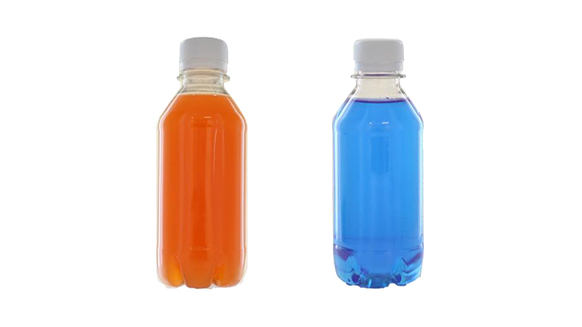
Considering age and gender is also important in the design of foods and beverages. In a similar North American study, when looking at shades of blue and purple younger adults associate darker and bluer shades with a feeling of relaxation and calm, while middle aged adults associate these feelings with more purple shades.
Conclusion
If we connect back to our original example from van Gogh, let’s say you have a Starry Night buttercream cake in front of you. What part would you decide to eat? A slice of the joyous yellow moon? The azure peaceful sky? Regardless of our background, age, and gender, it’s clear that there are strong associations between the colour of our foods and beverages and what we feel when we consume them.
Interested in learning more about how the colour of our foods and beverages can impact our moods and emotions? Download our white paper below.
Chlorophyll & Chlorophyllin: What’s the Difference?
Chlorophyll is a green pigment that is naturally found in the chloroplasts in green plants. Its abundance in nature makes it ideal for use as a natural food color.
But there are several types of chlorophyll available as a food coloring and it can get confusing to figure out which is the right one for your product. Not to worry – we will walk you through the differences so you can choose the best option for your application.
Chlorophyll & Chlorophyllin
When initially extracted, the green pigment is called chlorophyll and is naturally in an oil-soluble form. It can be used in this form for oil-soluble applications like compound coatings or fat-based frostings.
However, in this original oil-soluble format, the applications it can be used in are limited. That is why it is often converted into a water-soluble form, called ‘chlorophyllin’, expanding its use to a wider variety of food and beverage applications. Chlorophyllin is simply the water-soluble version of chlorophyll.
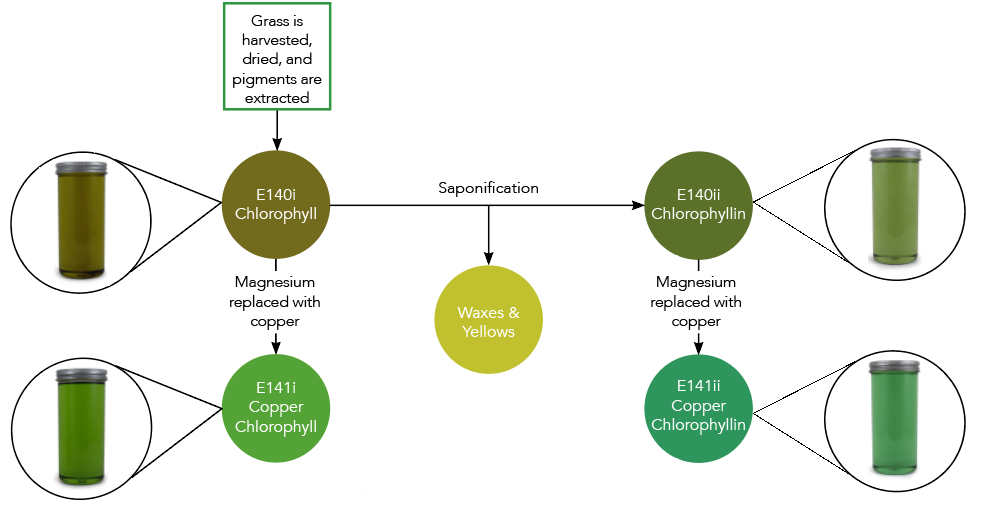
To convert chlorophyll to chlorophyllin, it is put through a process called ‘saponification’. During this process, non-water-soluble elements such as waxes and yellow pigments, like carotenes, are removed. The resulting pigment is soluble in water and appears slightly more vibrant in color than the original chlorophyll. It can be used in applications like hard candies and boiled sweets.
To sum it up: Chlorophyll is the oil-soluble form, while chlorophyllin is the water-soluble form. Both provide green colors for different types of applications.
‘Copper’ Chlorophyll & Chlorophyllin
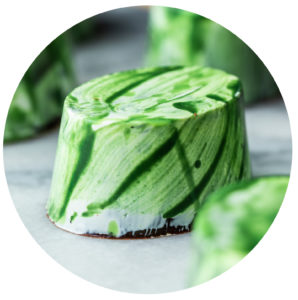
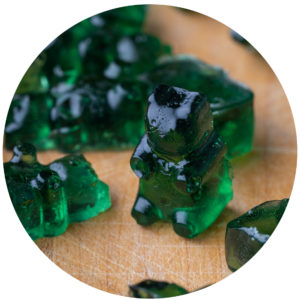
Even though Chlorophyllin is more vibrant than the original chlorophyll, both chlorophyll and chlorophyllin are relatively dull in color. They appear brownish-green and are very susceptible to fading in the presence of heat, light, and acid. To achieve more stable and vibrant shades of green, these colors are put through a process called ‘coppering’.
Chlorophyll naturally contains a magnesium ion, highlighted green in the image below. However, magnesium is a reactive metal that is easily displaced from the molecule when it comes in contact with things like hydrogen in citric acid, causing a loss of its green color. This reactivity can be seen in everyday activities such as when grass is cut and turns brown or when peas are overcooked and turn yellow.
To prevent this fade or color change from occurring, the magnesium ion can be replaced by a metal that is less reactive, like copper.
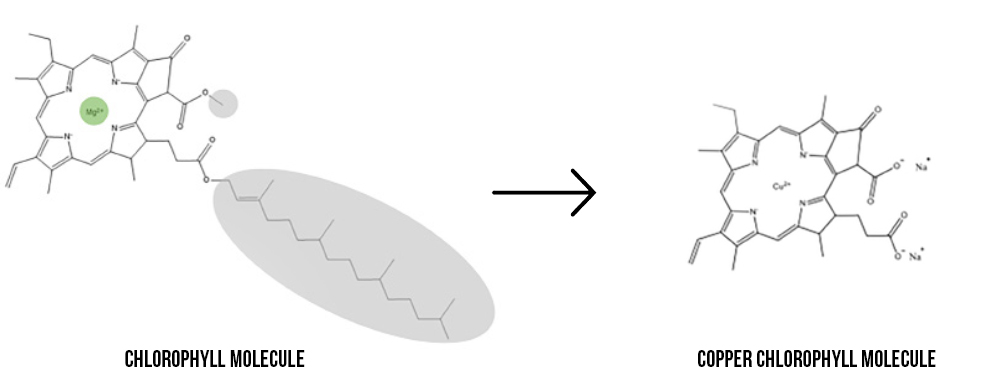
When the magnesium is replaced, the molecule is now called ‘copper chlorophyll’ (the oil soluble form) or ‘copper chlorophyllin’ (the water-soluble form). Since copper is less reactive, it will remain in the copper chlorophyll[in] molecule in acidic environments. This allows it to be used in lower pH in applications such as confections and beverages, in addition to improving heat and light stability.
Coppering also greatly improves the color. As you can see in the image below, copper chlorophyll and copper chlorophyllin are much more vibrant than their un-coppered counterparts.
Visit our Chlorophyll page to learn more! Or get started with a sample.
Color Matching
Color matching is often necessary when customers switch natural color suppliers or move from synthetic to natural colors. In both cases, we need to match the original color as closely as possible. But how do we do this? We’ll show you using the example of replacing Red #40 in confections with natural colors.
Set a target
Color matching starts by measuring the target confection color using a laboratory instrument called a colorimeter. A colorimeter reads the transmittance or reflectance of light from a color sample and produces quantitative measurements for different aspects of the target color. These data are presented as L*a*b*
L* – represents lightness/darkness, where a value of 0 would indicate black and a value of 100 would be white
a* – represents the redness (+ value) or greenness of the sample (- value)
b* – represents the yellowness (+ value) or blueness (- value) in the sample.
Once we have the target sample measured, we record this information as our benchmark.
Use Visual Cues & Quantifiable Data
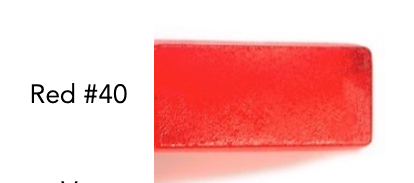
Once we have our target, benchwork can begin. First, we select a variety of natural colors at various dosage levels or create a variety of natural color blends until we have several close visual matches. We know that Red #40 is a bright red color with a hint of yellow. So, to create the blends, we use anthocyanins for the red component, and beta-carotene and turmeric for the yellow components. In order to verify which blend is actually the closest, however, we have to go back to the colorimeter to compare these samples against our benchmark.
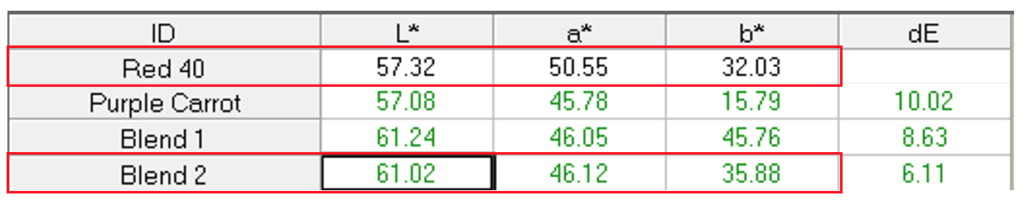
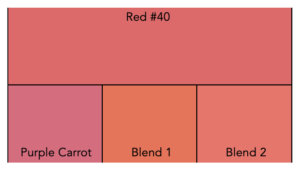
You can see the results of the colorimeter readings below. Of the samples, the L*a*b* values for Blend #2, which contains our Amaize® Red and Emulsitech® Beta-carotene, are the closest to the corresponding values of the target sample. However, it can be confusing to look at each of these values individually. So we typically look at what is called the dE CMC value, which is essentially a sum difference between two sets of L*a* b* values. Simply put, the dE CMC tells us how different two colors appear. The lower, the value the closer the two colors are.
A dE CMC value under 3 indicates that the difference in color is so small it is difficult to detect by the human eye, so a value of 3 or under is our goal for most color matching projects. Blend #2 has the lowest dE CMC with a value of 6.11, meaning it is a good match and the closest out of the three samples to the candy colored with Red #40. But it isn’t quite right yet.
Additional Methods
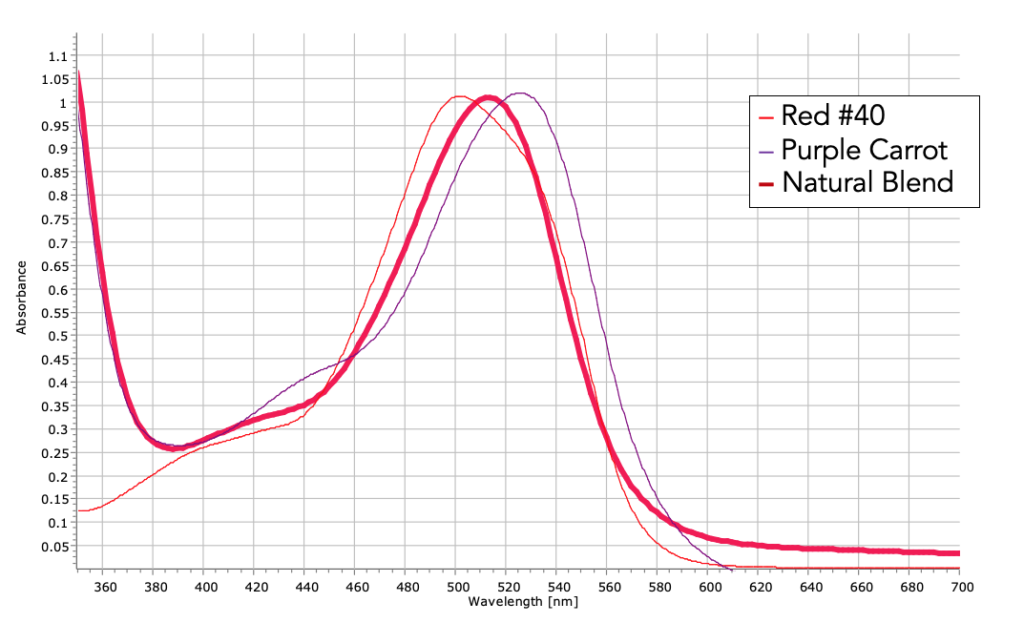
You can also use an instrument called a spectrophotometer – a device used to measure the absorbance of light – to see how close you are getting to your target sample.
The results appear as a graph with a peak. The peak indicates the presence of certain colors by measuring which light wavelengths are absorbed. In the graph below, the bold red line that represents Blend #2 is closer to the peak of the Red #40 candy sample meaning that they have similar absorbance, as opposed to the purple carrot option, who’s peak is further away.
Adjust Blend Ratios & Dosage Levels
To get a closer match, we analyze the colorimeter data to decide which color components may need to be changed in order to attain a closer color match. The a* data tells us that the Red #40 sample has more red while Blend #2 has more yellow. The L* value also tells us that blend 2 is slightly lighter than the Red #40 sample.
Knowing this, we slightly decrease the amount of beta-carotene in the blend to reduce the yellow tones. And by slightly increasing our use rate, we are able to decrease the L* value to darken our color and better align with the Red #40.
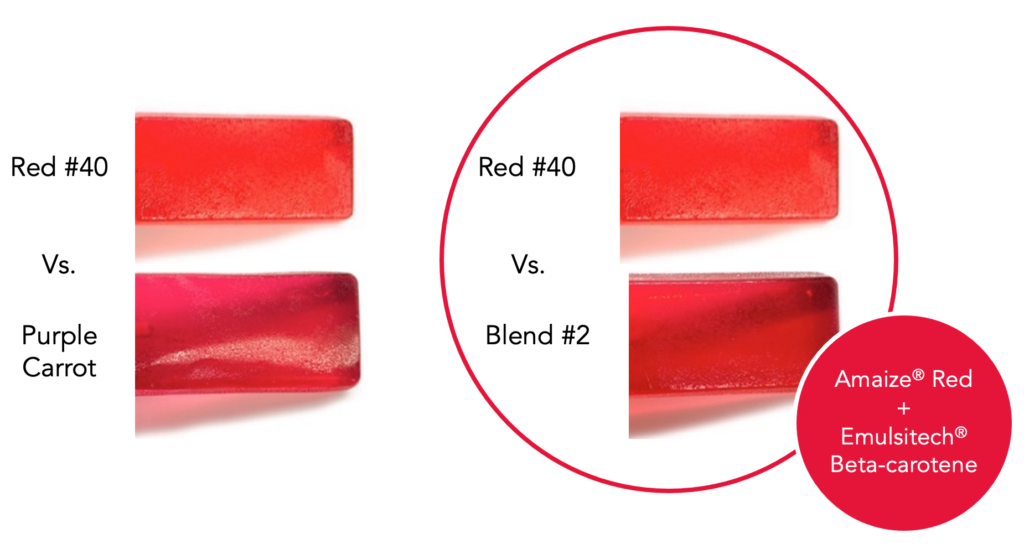
Using instrumental data, visual comparisons, and a lot of experience, we can create color blends to match just about any standard!
Want to see more? Watch the video here.
Or contact us to get started on your color matching project.
Video: How We Color Match
We often work with customers that are either switching natural color suppliers or moving from synthetic to natural colors. In both cases, we need to match the original color as closely as possible. Our Senior Applications Scientist, Katie Rountree, explains how we do it!
Want a more in-depth look? Read the full article here.
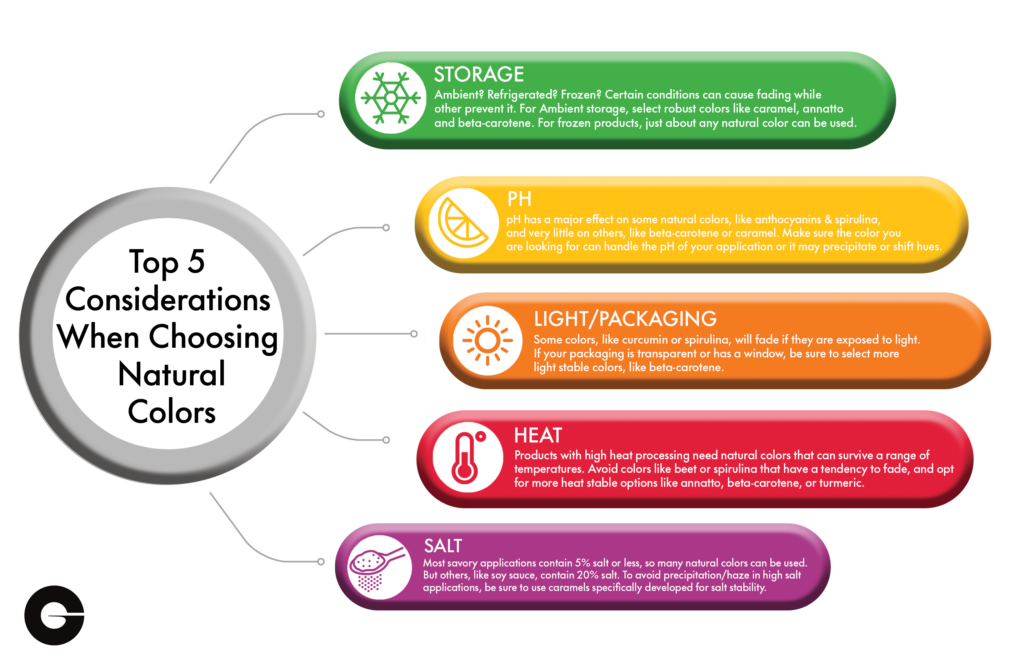
Top 5 Considerations When Choosing a Natural Color
There are hundreds of different types of natural colors from dozens of different sources and choosing the best natural color for your product can seem daunting. So, we’ve selected the top 5 key factors that influence color choice for a specific application. Want a more in-depth look at how to choose the best natural color for your application? Read the full article here.
What Are Natural Colors?
Natural colors are created or extracted from edible sources like fruits, vegetables, seeds, and minerals for the purpose of coloring food or beverage applications. However, there is no formal definition of “natural colors” by food authorities, like the Food and Drug Administration (FDA) in the United States or the European Food Safety Authority (EFSA) in Europe.
The Natural Food Colours Association (NATCOL) offers a similar definition saying they “originate from a wide range of sources like vegetables, fruits, plants, minerals and other edible natural sources.” They have been used for many years and are considered safe for use in food and beverage applications.
There are many different types, but check out some of the most used colors below, or read more about all the different types here.
Anthocyanins
from sources like:
purple corn, purple carrots, purple sweet potatoes, radishes, and elderberries
Betanins
from:
beets
Carbon Black
from:
charred vegetable matter like coconut husks
Carotenoids
from sources like:
annatto, beta-carotene, and paprika
Carmine
from:
the cochineal insect
Curcumin
from:
Turmeric root
Chlorophyll
from:
grass
Phycocyanins
from:
spirulina
Safflamins & Carthamins
from:
Safflower
Synthetic colors, on the other hand, include FD&C Red #40, Yellow #5, Blue #1, etc. (or Allura Red, Tartrazine, Brilliant Blue, etc.), and are created from non-edible sources, typically petroleum. While they are generally considered safe for food use, there have been studies linking them to hyperactive behavior in children and require special labelling in the EU.
Natural colors are made by removing the pigments from the natural sources through selective physical and/or chemical extraction methods. This means that the resulting material contains primarily pigments from the natural color source and excludes any flavors or nutritive elements.
The resulting colors are concentrated and standardized so food and beverage manufacturers receive the same color each time they place an order and can expect consistent results. See how it’s done below!
Want to try a sample? Request one here.
How is Caramel Color Made?
In simple terms, caramel color is made by cooking carbohydrates. It is similar to how you would make caramel on a stovetop – you heat sugar until the color changes from white to dark brown. But in order to create large quantities that are stable and suitable for coloring foods and beverages a few more steps are required. Watch the video below or read on for an in-depth look at how the most commonly used color in the world is made.
Need a quick overview? Check out the infographic!
1. Select your sugar
The first step in creating caramel color is to determine a carbohydrate source. There are many types of sugars that can be used to create caramel colors – sucrose, fructose, glucose, invert syrup – all derived from sources such as corn, wheat, sugar beets, and sugar cane. Some types of sugar are chosen because they work best for different classes of caramel, while other types may be chosen to meet certain certification requirements – such as non-GM or organic.
2. Determine your class of caramel
Next, the type of caramel is determined – there are four classes of caramel color, each with their own properties and requirements. Each class requires different reactants, or caramelization aides, such as food-grade acids, alkalis, and salts. Reactants help start the browning process, but also affect the stability, color intensity, and hue of the caramel color.
3. Cook the Sugar
Once the type of sugar and class of caramel is determined, the sugar is loaded into large cookers and a highly specific cooking process begins. For lower viscosity caramels, a system with high heat as well as pressure are used. These caramels are great for usability in manufacturing. For higher viscosity caramels, like class III caramels going into soy sauce, a non-pressurized system is used. While the sugars are heated, the reactants are added into the cookers at strategic times throughout the cook.
For the actual cooking process, caramel colors are created using either one or both of the following types of browning methods: 1) caramelization, or the browning of sugars, and 2) the Maillard reaction, the browning of sugars in the presence of amino acids or other ingredients with amine groups. While this may sound complex, the Maillard reaction is a normal browning process that occurs in the foods we enjoy every day – roasted coffee, seared steaks, and baked bread, for example.
Class I, or plain, caramel colors are created using solely caramelization to produce color. Class II, III, and IV caramel colors, on the other hand, use caramelization as well as Maillard browning reactions to achieve darker colors with increased stability. As the sugars brown, the reactants are cooked off and are not found in the final caramel color product.
After the sugar has finished cooking, the caramelized product is cooled and filtered to ensure product quality and uniformity. From here it can either be dried for use in powder form or moved onto packaging and shipping to customers.
Interested in learning more about caramel colors? Check out these resources:
Is Caramel Color Safe?
Is caramel color safe?
Is caramel color safe? The answer is yes – caramel colors have been deemed safe by all major global food regulatory bodies, including the US Food and Drug Administration (FDA), the Joint FAO/WHO Expert Committee for Food Additives (JECFA), Codex Alimentarius, the European Food Safety Authority (EFSA) and Health Canada. Here’s why:
Background
The question around the safety of caramel color arose when California added a chemical found in class III and IV caramel colors called 4-Methylimidizole, or 4-MEI, to their Prop-65 list. Adding it was based on a controversial study by the National Toxicology Program (NTP) from 2007. The 2-year study on mice showed an increased incidence of certain lung tumors when they consumed 4-MEI. However, the levels of 4-MEI given to the mice far exceeded the normal amount humans would be exposed to when consuming food or beverages – an amount equivalent to a human drinking thousands of cans of cola every single day throughout their life.
What is 4-MEI?
4-MEI is a chemical compound that naturally forms during the cooking of food and beverage items we consume on a regular basis: coffee, cooked meat, baked goods, etc. Since caramel colors are created by cooking sugars, 4-MEI is naturally formed during the manufacture of certain products – specifically class III and IV caramels. 4-MEI is not present in Class I and II caramels and 4-MEI itself is never added to foods or beverages.
4-MEI occurs in very low levels in caramel colors. And since caramel is often used at dosage rates of around 0.1%-2.0% in final products, the occurrence of 4-MEI from caramel color in finished goods is miniscule.
But since it was added to the Prop-65 list, in order to comply with California law, many caramel manufacturers (including us!) began to innovate new methods of cooking class III and IV caramel colors that resulted in even lower levels than already occur, called ‘low 4-MEI’ caramels, some of which have levels so low they can be difficult to detect in the caramel color, let alone the finished product.
Safety Studies
In order to ensure continued consumer safety, many studies on the safety of caramel color and the recommended daily intake levels on 4-MEI have been carried out since the controversial 2007 NTP study was published.
In a review of the scientific literature on 4-MEI, EFSA found that the highest exposure level to 4-MeI that could result from the consumption of foods containing class III and IV caramels “was not concerning.”
Interested in reading more about the safety of caramel color? Check out these resources: