
Podcast: History of Colours
Past and Present of Food Colours
You have to know the past to understand the present
Speakers: Catalina Ospina, technical marketing specialist and Katie Floyd, marketing specialist.
With all of the news about food colour, we dive into the history of both synthetic and naturally sourced pigments. We chat about the origins of synthetics, how colouring foods is interwoven in human history, and we touch on specific pigments we use today, such as carmine and spirulina.
Hungry for more knowledge? You can listen to our other podcast episodes here.
Healthy Indulgence: Colourful Goodies for Gen Alpha
The colour of healthy indulgence: BFY snacks
Gen alpha ate! Figuratively and literally! Their ever-growing influence on household purchasing decisions is driving the development of adventurous sweet treats and confections.
Digital experiences, visual appeal, interactive elements and bold flavors, are some of the factors that inspire treat cravings for this demographic.

But beyond hype, this generation is becoming increasingly health-conscious, in alignment with the influence of their Gen X and Millennial parents. What is the role that colors, and especially natural colors, play in the creation of rizz candies? In this article, we’ll look at how natural colors contribute to the health halo of these goodies and provide solutions to some challenges that can arise when designing better for you treats.
Sweet but fit
Candies and sweet goods are generally not the standard vehicle for functionality, but sugar reduction can be highlighted as one way to capture the interest of both kids and parents.

Since low water activity and high sugar content are protective factors for the light and heat stability of many natural pigments, care must be taken when creating naturally colored low or no-sugar treats.
Heat stable options like Caramel colours, annatto, carmine, and vegetable carbon black are straightforward solutions to achieve vibrancy in heat processed candies – both regular and low sugar. But other colors can also be used successfully.
Carotenoids like emSeal® Beta-carotene and Paprika emulsions are stable in confections like gummies, chews and hard candies, and that stability is improved with the addition of ascorbic acid to boost the action of the antioxidants used in the color formula.
Even heat sensitive colors like Everzure® spirulina and galdieria extracts can be used in low sugar confections if the color is added while the temperature is descending and if the cooling stage is strictly controlled. Non-caloric sweeteners like some polyols, can lower water activity, which also curbs degradative reactions.
Signaling for goodness
Other wellness traits that parents seek in BFY treats for young consumers are transparency, sustainable sourcing, and naturalness. Resorting to color options that are ‘derived from fruit and vegetable juices’ provides a health halo to such treats, because they bring up cognitive signals for balanced nutrition.
Vegebrite® juice concentrates are color options from fruits and vegetables that fit the bill perfectly. They include a variety of anthocyanin sources like black carrot, elderberry, and grape – which enjoy consumer recognition as “those famous beneficial substances” that make purple and red foods so good for everyone.
Picture a dark chocolate filled with a rich berry flavored fondant, colored with black carrot juice.

Indulgent bites, vibrant shades, and flavor congruency are tangled with concepts like wholesomeness and wellness. Natural colors are the perfect tools to help deliver a well rounded and exciting consumption experience for better for you confections that kids love, and parents embrace.


Contact us to learn more to get started with an ample portfolio of natural colors for confectionery.
Colouring Healthy Snacks
The colour of healthy indulgence: BFY snacks
What is snacking for you? Is it any food that is consumed between the main meals? Or something to deter hunger + boost stamina when energy is dwindling mid-afternoon? Or maybe even a treat to relax and celebrate with friends?
Regardless of the snacking occasion, health and wellness claims are becoming more and more attractive for consumers, along with more traditional desirable attributes like sensory enjoyment, indulgence, and convenience. In this article, we’ll share how natural colors can play an integral part in the design of healthy snacks.

Guiltless indulgence and beyond
According to a global consumer survey from Innova Market Insights, 40% (out of 14100 respondents) declared that they had increased their consumption of healthy snacks during the last 12 months.
Apart from aspects like “free from”, “less than”, or voluntary nutritional or health claims, consumers are attracted by functional features like mood, cognitive performance, or digestive health improvement; Other attractive claims include things like weight management, muscle building, and increased energy and stamina.
The concept may overlap with what are traditionally considered food supplements, but here the main purpose is still snacking rather than supplementing. This is about real, satisfying, and even indulgent food; but with wellness attributes.
Colour: a universal language for mindful snacking
But over functionality, consumers of all ages prioritize sensory attributes. Snacks must be tasty, have great texture, and a tempting appearance, which often requires the use of inviting and rich colors. And what is better to signal health and wellness than natural sources of color?!
Besides providing attractiveness, and congruent flavor cues (e.g. red for red berries, yellow for pineapples), natural colors play other roles in healthy snacks’ design. They can also signal for function like vibrant oranges for muscle building!

Some botanical ingredients used in these functional snacks may impart off-tones that distort the desired look or intended flavor. Lavender extracts, for instance, typically have a yellowish-brown color.
But when you think of a relaxing lavender infused treat, you instantly picture the pastel purple color of fresh flowers. Fortunately, that color can be obtained with the use of a natural source of red like beets and a natural blue color like Everzure®spirulina, to fit with the consumer’s expectation.
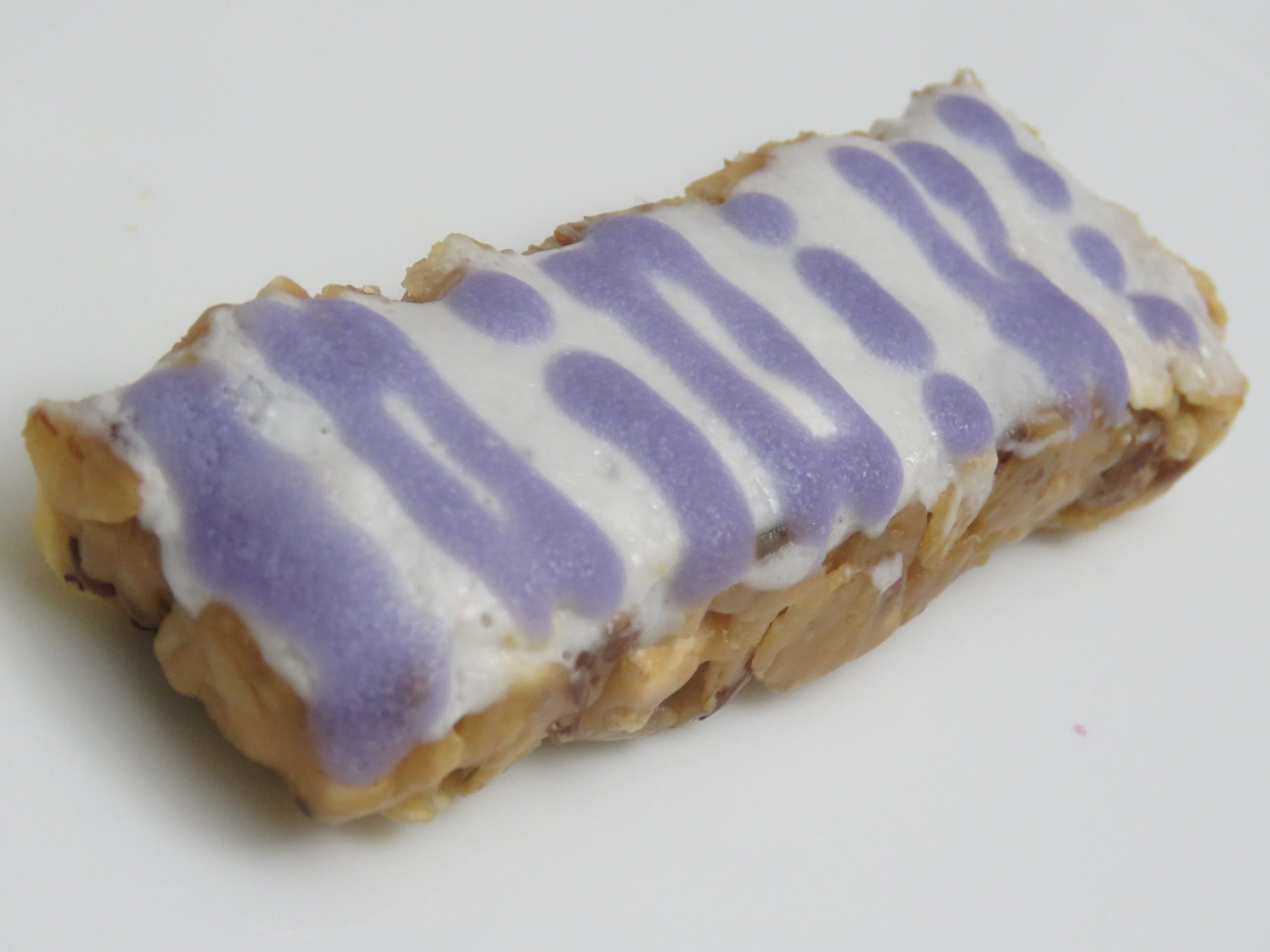
Other ingredients, like cranberry juice, may have an intrinsic color consistent with the intended sensory input. But crop seasonality and variability may cause batch to batch inconsistencies. Anthocyanin pigments from vegetable or fruit juices like our Vegebrite™ black carrot or Amaize Red, would be an excellent resource to standardize the color hue and intensity.

Natural colors can also establish identity for ingredients that don’t have a pleasant—or any—associated color. Think chamomile or guarana enriched snacks…Can you imagine their color? We could create a novel and unique sensory colors input for these, utilizing the language of natural colors to transmit emotions and concepts, like stress relief for chamomile, or stamina and energy for guarana.
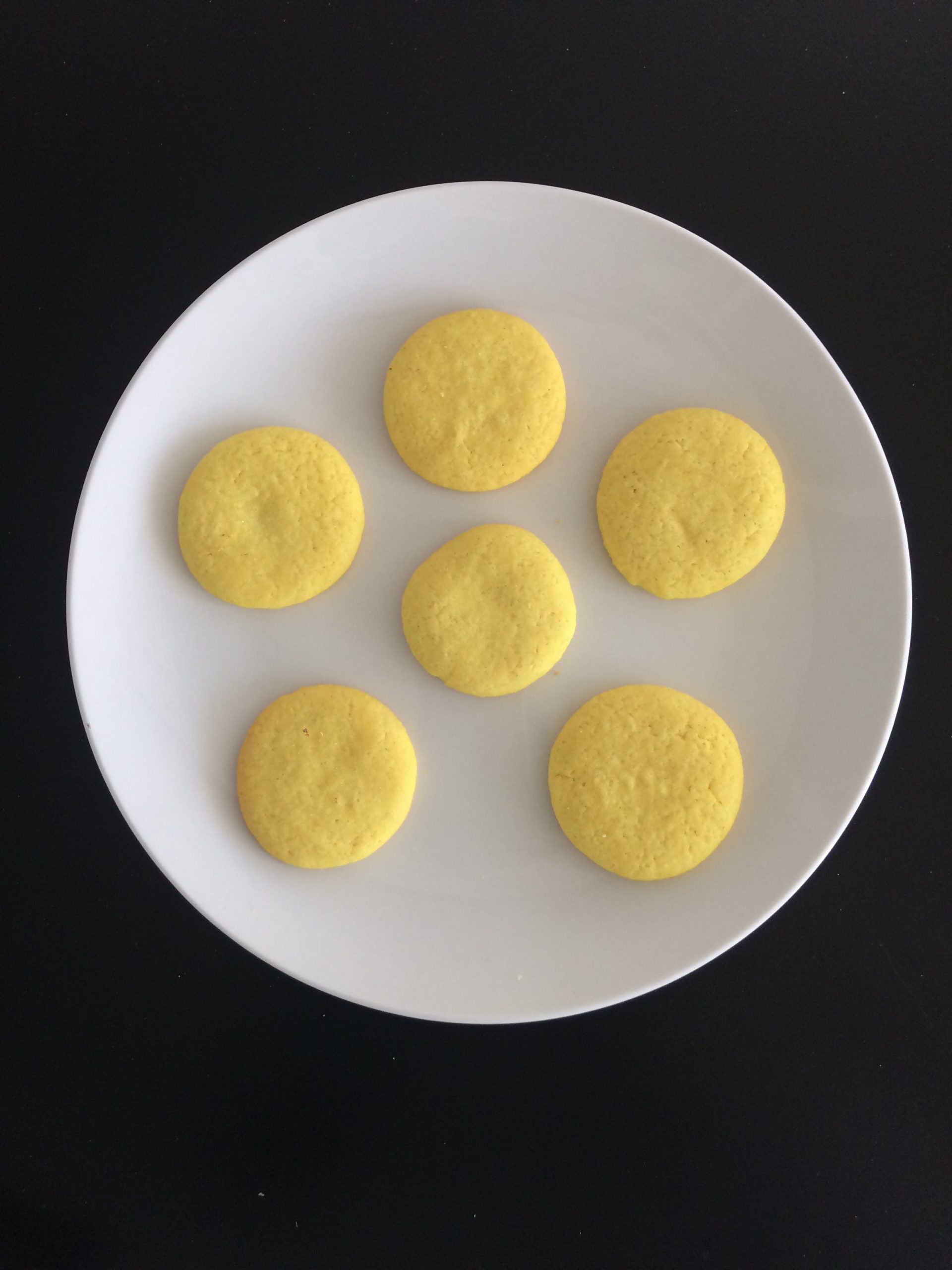
Selecting the right natural source for your functional snack with the optimal usage rate will require a minded consideration of flavor, function, matrix and processing conditions.
That is why our expert color scientists are eager to work with you, and cocreate alluring healthy snacks. Contact us to get started on a project that will elevate your consumer’s snacking experience.
Snack Trends of 2025
Colorful snacking trends to watch and enjoy
Snacking is a universal habit, and yet, we all snack differently according to our demography, age, and cultural context. Terms like “empty calories” or “ultra processed foods” didn’t exist in the mainstream, but many people were of the opinion that snacks were just “not real food”.
Nowadays snacks offer a contrasting mixture of a feel-good escapism, mindful nutrition, and sensory enjoyment, where health, aesthetics and indulgence can meet and have civilized conversations. In this article we will have a panoramic view of how some snacking trends are catering to the tastes and consumption occasions of consumers of all generations, and how color plays an important role in communicating the targeted value of snacks.

Bold and Colorful
Younger consumers, like Gen Alpha, are driven by playfulness and fun. Although their consumption still mostly depends on what their parents choose, their preferences revolve around stimulant visual inputs and interactive features. Digital media and popular cultural characters are common inspirations for color design in snacks aimed at this generation.
Add to that Gen Z, driven also by social media, digitalization, AI, and gaming, where eye-catching colors, and maximalist intensities, transmit a sense of trepidation, excitement and even humor. Bold, primary colors, contrasting color patterns, or surprising features like color changing foods, or the use of fluorescent pigments are some of the attractors used for this demographic.
Also widespread, are congruent reds, yellows, and oranges which are an innuendo for one of the trendiest waves: complex tastes, which includes scwicy (sweet and spicy), tangy-spicy, and sweet and savory. And the fun continues, with creative and daring combinations of different store-bought products, for a “Do Your Own Snack” experimental adventure, to show, share, and enjoy.
Health fueled snacks
With the lines continuing to blur between traditional snacks and main meals, the frequency of snacking is increasing among both young and mature adults, demanding fulfillment of their daily nutritional and functional needs. Protein supercharged snacks are transversal among the generations that seek muscle building or preservation, and satiety.
Fiber also plays a role in hunger stilling, as well as in gut health support, along with prebiotic and probiotic ingredients, going in line with the increased prescription of GLP-1 agonist drugs. As Gen X navigates the physiological changes of aging, they are interested in snacks that preserve their wellbeing. Baby Boomers may also recur to snacking for health and wellness purposes, prioritizing foods that are low in salt and sugar, yet indulgent.
Millennials and Gen Z also want to support their demanding commitments with friends, study, work and family, with nutrients and energy rich snacks. Health-laced snacks tend to display either earthy tones reflecting wholesomeness and naturalness (like brown, warm yellows, sepia or greens), or vibrant and energy loaded colors that communicate stamina, like bold pinks and reds, or fluorescent yellows and greens
So pretty, I want to eat it!
We know that social media platforms are segmented by age. Gen Z and Millennials are the main users of image-rich apps, like TikTok and Instagram.
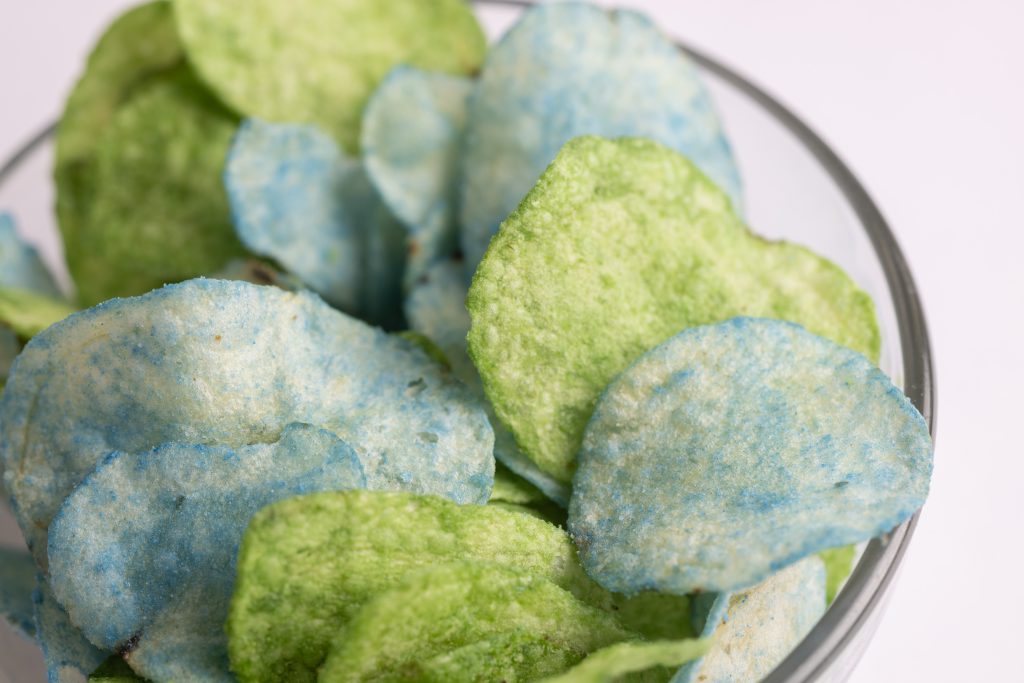
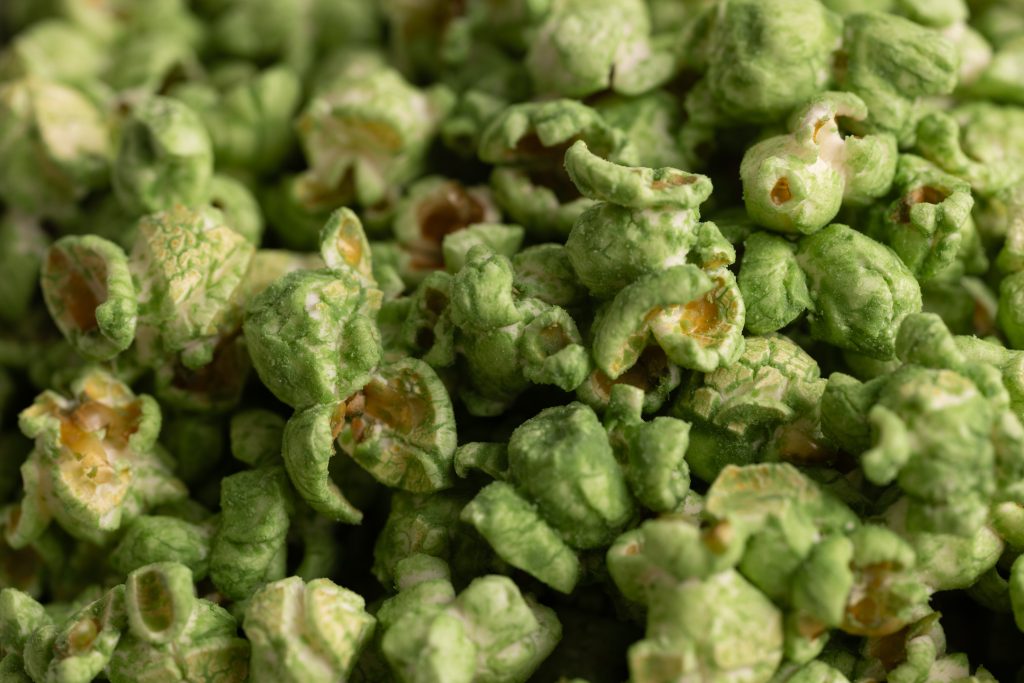
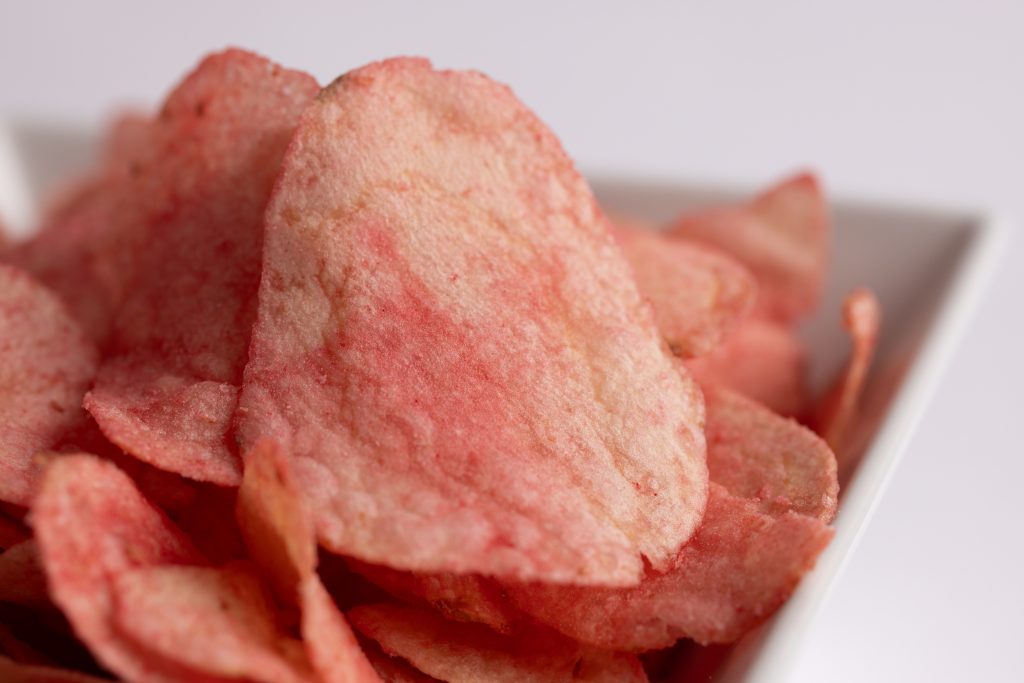
Sensory stimulation navigates in consonance with pastel tones, sophisticated and even artistic palettes, with elevated photographic value. Pink, peach, purple, blue and green, but also subdued neutral colors like beige, are associated with sophisticated indulgence and aesthetic delight. Snacks are both for enjoying, and for showing off.



Meal or a snack?
We already mentioned that snacks with increased nutritional value are being used as meal replacements. But there’s something else…nowadays more and more snacks taste like authentic meals!
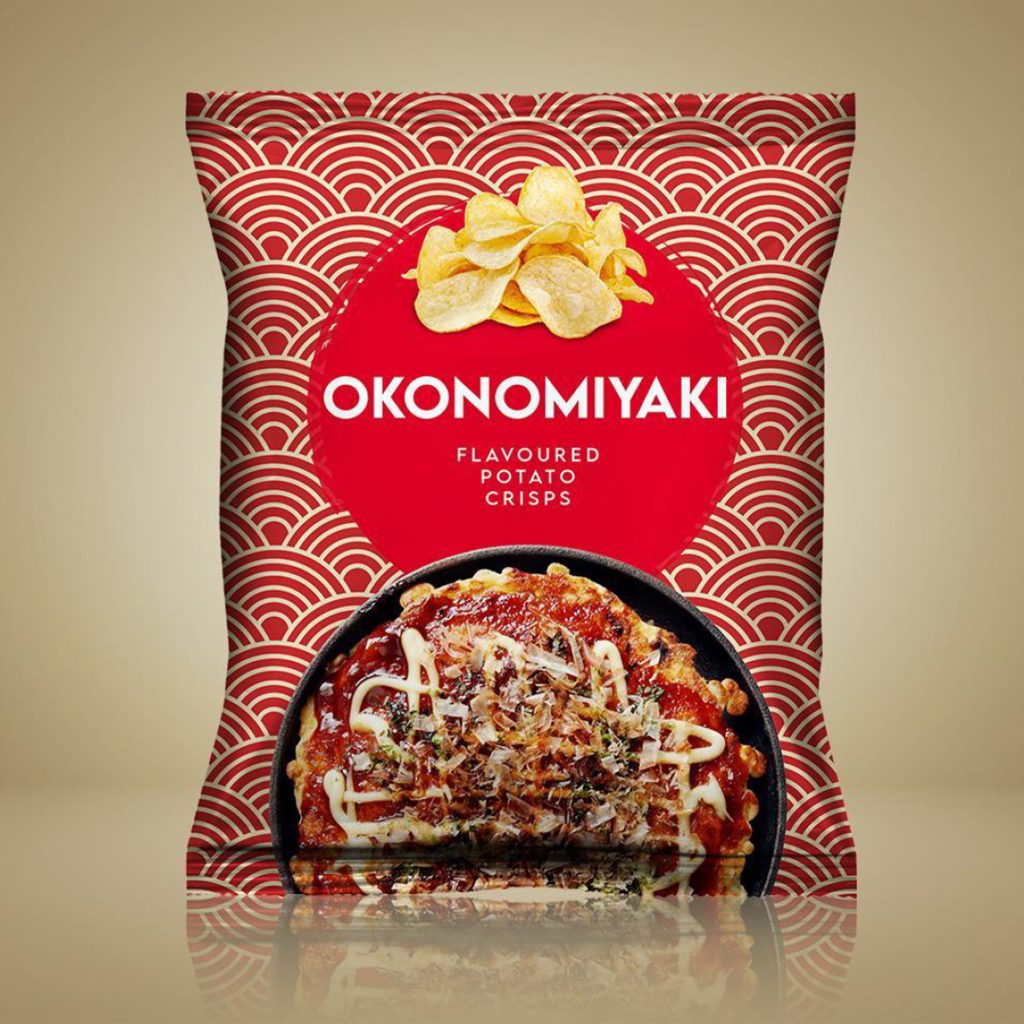
Be it familiar or exotic flavors, based on local tradition, or inspired by international cuisines and street foods, check any grocery and you’ll find the same old chips, peanuts, and puffs, but with a hearty and delicious flavor twist: street tacos, Thai tom yum, wagyu steak, meaty chorizo, bunny chow, Korean Smoked Galbi, coconut milk and peanut satay, Bolognese, honey roasted chicken wings, spicy ramen, beer chicken…these meal-flavored snacks are both satisfying and convenient, hinting savory profiles with colors like ocher, warm brown, or terracotta.


Wrapping it up... like a to-go snack!
The quality and value perception of snacks has shifted with time and is also different for each age, gender and social group. Convenience, indulgence, nutritional benefits, and social connectivity can be identified as deep catalysts for snacking behaviors. Related to all these primary motivation forces, we encounter the semiotic visual input and sensory stimulation of color, that sets the table for the holistic enjoyment of snacks!
If you want to learn how to best reflect the value of your snack products with the use of natural colors, contact our commercial and technical teams!
Understanding ADI
Natural colours are considered food additives in the food and beverage world and are strictly regulated in terms of their identity, purity, the food categories in which they are allowed, and their usage rate. A recent example is the 2020 EFSA review of permitted max limits for Annatto across various food categories. It was also linked to the safety evaluation of the different types of annatto and their definition in the EU regulation of Annatto Bixin E160b(i) and Annatto Norbixin E160b(ii).
But how did they come to this decision? How are the uses and usage rates defined, and above all, how can we know that a food additive is safe for human consumption?
The answer is the ADI, or Acceptable Daily Intake, and its continuous monitoring versus dietary exposure to the additive. In this article we’ll show you how it’s calculated and how that applies to natural colours.

What is ADI?
ADI is the estimation of the amount of an additive that can be ingested daily throughout a human’s lifetime without presenting an appreciable risk to health. It’s used as a reference for consumer protection and to harmonize regulatory controls, facilitating international food trade and is expressed in mg/kg body weight per day.
The Starting Point
So how is it calculated? The risk assessment of any chemical substance, including natural colour additives, begins by considering all existing scientific evidence on how the substance behaves in biological systems. Currently, the most reliable and commonly used way to gather safety information on new food additives is through in vivo tests on animal models, although other methods are being developed for future use.
These tests involve administering incremental doses of the additive orally to selected animals, allowing for the determination of a safe starting point or reference. The NOAEL (No Observed Adverse Effect Level) is typically used as that starting point, representing the highest dose of the additive that does not cause significant adverse effects compared to a control. The most sensitive species is chosen to determine the NOAEL*.
Uncertainty Factor
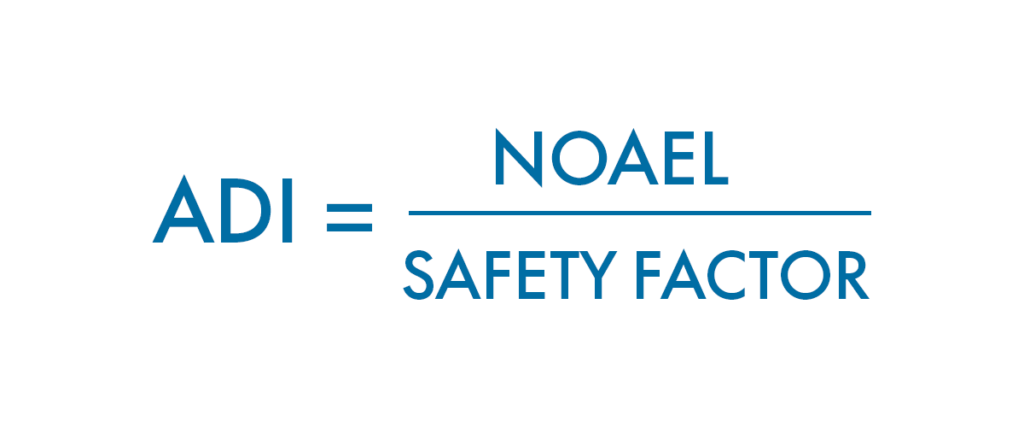
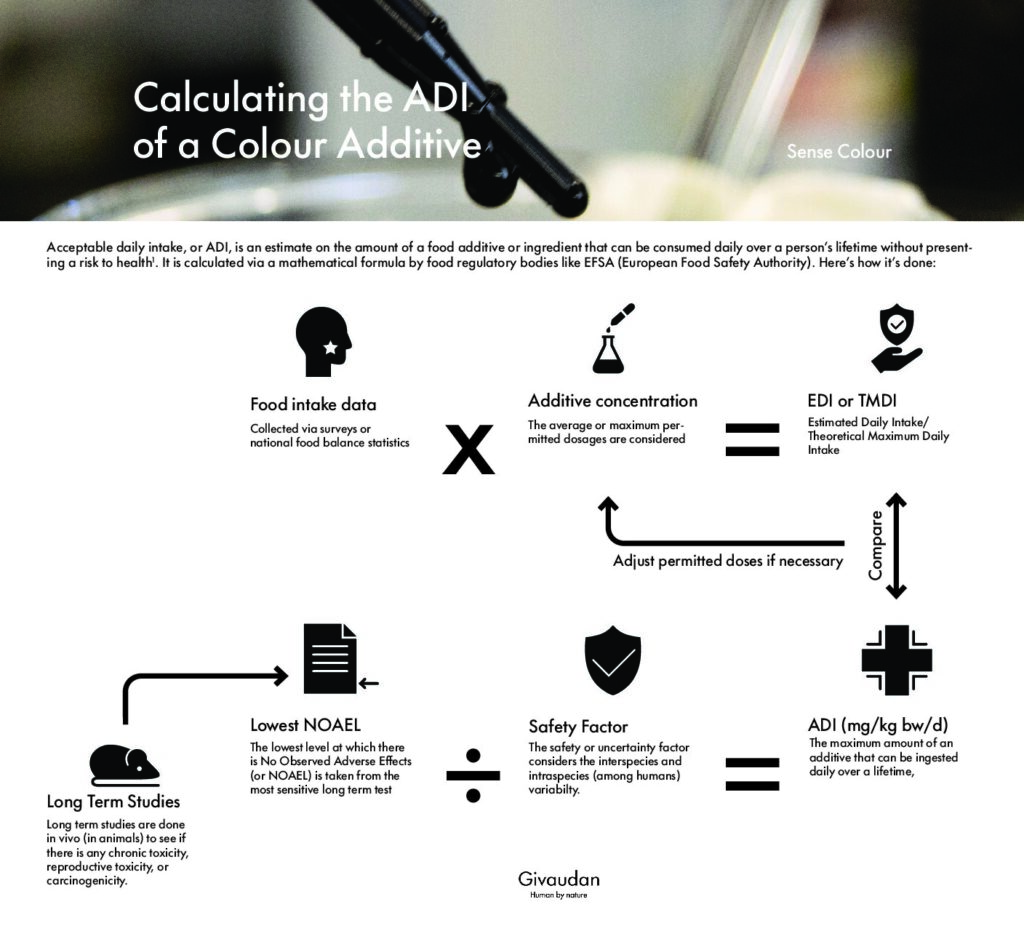
To extrapolate the results of animal studies to humans, and to consider the large variability in responses among individuals (e.g., children, the elderly, immunodeficient individuals), a safety or uncertainty factor is chosen. In many cases, this safety factor is 100, but it can vary depending on the availability and quality of the data obtained from in vivo tests. This safety factor divides the NOAEL to obtain the ADI:
Real Intake and Exposure
The ADI is then compared to the actual intake of the additive. This is done using estimates of average or maximum consumption of food groups containing the additive for the population or a subgroup of interest (e.g., children).
This information is collected using consumption surveys or food balance statistics. This estimate is then multiplied by the industry recommended usage rates or the current allowance. If the estimated intake is higher than the ADI for any subgroup of the population, regulatory authorities modify the permitted usage rates for the most impacting food categories.
Is NOAEL the best reference point?
The use of NOAEL as a starting point for determining the ADI has been questioned in recent years. This is because the robustness of the NOAEL depends on factors such as experimental design, dose range selection, and statistical power.
As an alternative, the concept of Benchmark Dose (BMD) has been proposed. The BMD is the concentration of the additive that produces a predetermined change in the adverse effect response (benchmark response or BMR, which is usually set at 5% (or 10%). Mathematical modeling is used to consider the dose dependency of observed effects, resulting in a confidence interval rather than a singular value. The lower limit (BMDL : Benchmark Dose Lower bound) of the confidence interval is taken as the new reference value, which is then divided by the uncertainty factor to calculate ADI.
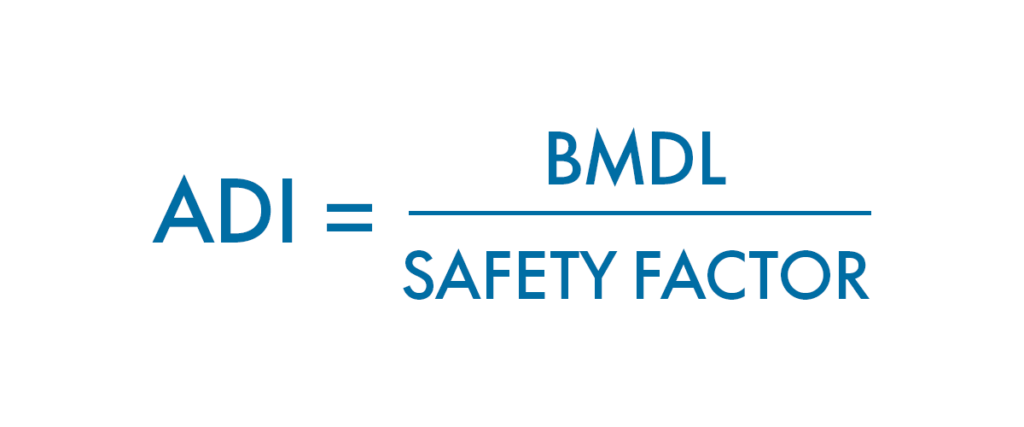
BMDL may be slightly higher or slightly lower than NOAEL, depending on the actual experimental data, but is considered a more accurate, evidence based reference point. Although not widely used yet, BMD may become more common in ADI assessment in the future.
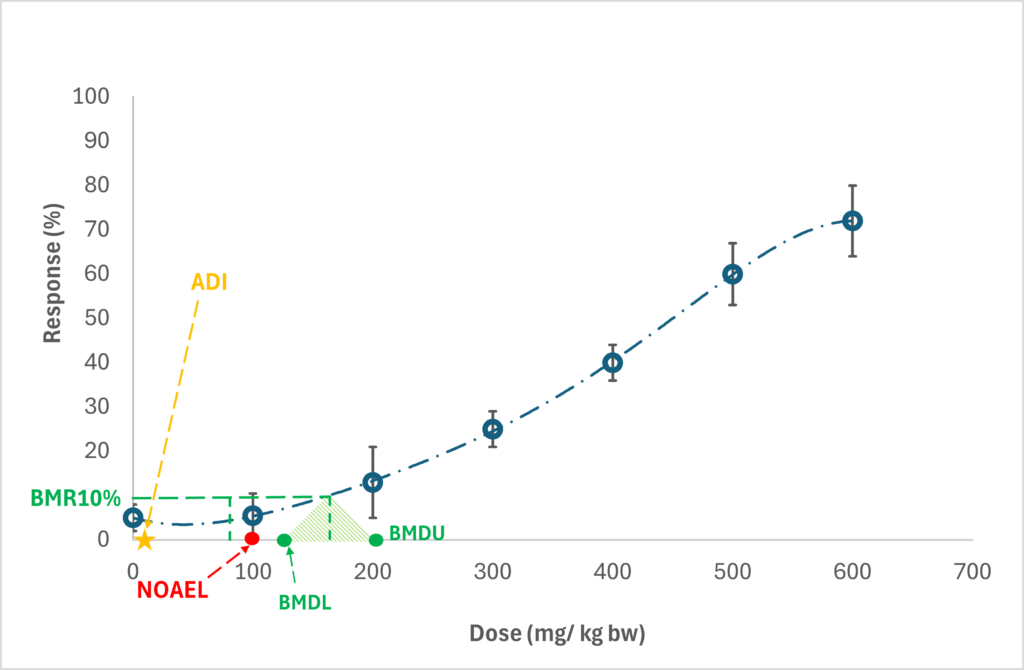
As you can see, ADI is by far a sufficiently conservative estimate of the safe levels of intake of a food additive.
Natural colour additives are carefully assessed and monitored by expert scientific committees that advise regulatory agencies all over the world to guarantee consumer protection and guide their safe and fair technological use.
*It is important to note that Givaudan Sense Colour does not conduct animal testing unless requested by a regulatory authority.
How and Why We See Colour
Color gives us loads of information about nature, beauty, other people, and even perils that surround us. We often take color for granted and we don’t imagine the immense amount of evolutionary effort involved in that capacity. But have you ever wondered, what is color, and why do we see in color? In this article, we’ll talk about some of the science behind how and why we see in color.
What is color?
Color is not an objective characteristic of the objects we see but is a combination of a perception and interpretation of the light that they reflect.
Light is the visible portion of the electromagnetic spectrum, and it sometimes acts as a wave and sometimes as a particle. Here we will explain color using the classic color theory that involves light behaving like a wave.
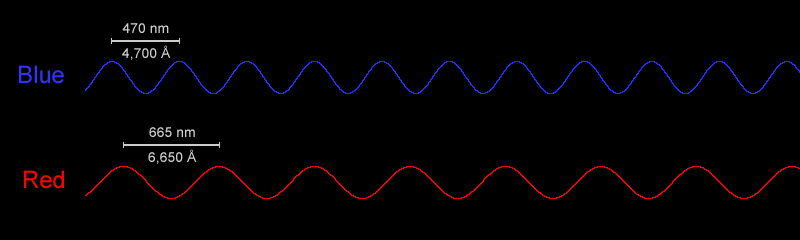
Think of light as a wave – as if it was a guitar string vibrating when it is strummed. The faster it vibrates, the shorter the waves. The distance from a crest of the wave to the next is what we call a wavelength. Visible light ranges from 400 to 700 nm (that is tiny!) and the brain interprets these different wavelengths as colors.
Now, let’s imagine the light is bumping into an object, like a lemon-yellow cupcake. There are molecules in the cake that absorb light selectively: meaning they only catch the light of certain wavelengths (we call them pigments, like beta-carotene) and they also reflect back a combination of unabsorbed wavelengths. That portion of light that is reflected is what we perceive as color.
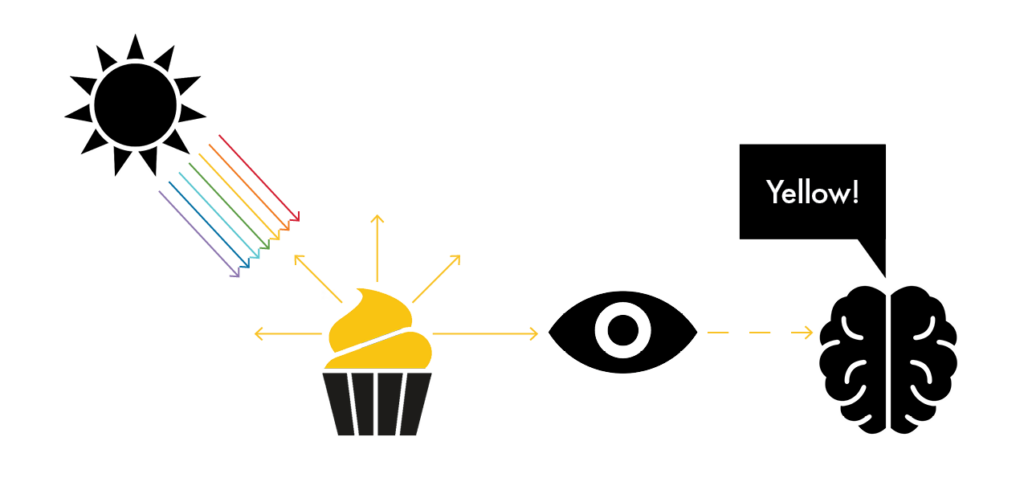
Certain wavelengths of light are preferentially absorbed by pigments, while some others are reflected. The light that is reflected is perceived by our eyes and interpreted by our brain as color.
Our sensors and processing center
So how do we perceive these colors? We have specialized cells in our retinas called rods and cones. The rods are capable of sensing light even when there is very little, like when we see an object’s shape in the dusk in shades of gray. Cones, on the other hand, have pigments that – like all pigments – have a preferential absorption of certain wavelengths. Humans have three types of cones specialized in a segment of the light spectrum. That is why it is said that we have a trichromatic vision. The S cones detect short wavelengths (violet to blue light), the M cones detect medium wavelengths (green light) and the L cones are in charge of long wavelengths (yellow to red light), with some significant overlapping between them as you can see in the diagram below.
The signals from these three receptors are compared with each other in a process called ‘cone opponency’ and then processed and interpreted by our visual cortex as color! As an analogy, think how screen monitors work with red, green and blue lights (RGB), or the way that printers can give you any color with combinations of magenta, cyan and yellow inks.

But why do we see in color?
However, not all animals see colors in the same way humans do. Most terrestrial mammals like dogs and cats are dichromatic. This means that they have only two types of cones and can’t see parts of the spectrum that we are able to see. Some species of birds, fishes or reptiles, on the other hand, have four types of cones: they are tetrachromatic. Some animals are even able to see in the ultraviolet range or the near infrared. How cool is that?!
Humans share trichromacy with other primates, which suggests an evolutionary process where our ability to distinguish colors allowed us to succeed as a species. One theory indicates that trichromacy is good for social interactions, because it permits us to properly distinguish our peer’s face features and how these express emotions and ideas, ultimately leading us to collaborate.
Another theory explains that color vision facilitates the optimal discrimination of our food sources: intensely colored fruits are a sign of maturity and energy density, while bright green young leaves are fresh, edible and good for us. It also permits us detect food that is potentially poisonous, especially if we have prior personal or cultural information about it, or reject rotten or contaminated food, that is often moldy green, blue, or black.
In that sense, color has become an essential part of the communication of quality and the appeal of foods of all sorts. Color information also leads the way for other sensory perceptions like flavor identity, flavor identification, aroma, and of course deliciousness!
Let’s take a look around us and appreciate our colorful world, and that awesome evolutionary ability that allows to enjoy – with our eyes first – that lemon-yellow cupcake that has been in your mind since we first mentioned it!
Podcast: Finding Colour Inspiration
Finding Colour Inspiration
A newly expanded team shares where they find inspiration for working with natural colors
Speakers: Brian Avilés – Category Technical Lead, Parker Cox – Americas Sales Director, and Catalina Ospina – Technical Marketing Specialist
A new episode of our “Colour Journey” podcast series done by our team of colour experts from Givaudan’s Sense Colour division. In this podcast, Brian Avilés – Category Technical Lead, Parker Cox – Americas Sales Director and Catalina Ospina – Technical Marketing Specialist, reveal how we use natural colours to produce vibrant food experiences, where we source inspiration, and what’s next in the world of natural colours.
Thirsty for more content? You can listen to our other podcast episodes here.
Top 5 Considerations When Colouring Confections
With so many different types of natural colours, choosing the right one for your confection application can feel overwhelming. Whether you’re creating a boiled sweet, gummy, panned candy, marshmallow, or chocolate, there are some important factors to consider when choosing a natural colour. We’ve broken down the top 5 considerations when colouring confections to make your colour selection process easier.
1. Processing Conditions
The first thing you’ll need to consider is your product’s processing conditions. Will high heat be involved in the process? When will the colour be added? If your product undergoes a high heat treatment, it’s important to choose a heat stable natural colour. High temperatures during processing can cause certain colours, like spirulina and red beet, to fade. For example, hard candies and lollies are boiled to high temperatures for a long period of time, so make sure to use colours that have high heat stability, such as anthocyanins, beta-carotene, annatto, turmeric, and copper chlorophyll[in].
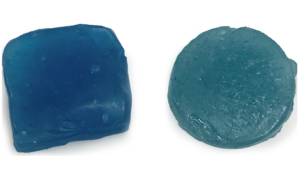
If you need to use colours with lower heat stability, like spirulina or beet, another solution is to add the colour later in the process. For gummies and boiled sweets, adding the colour during the cooling or forming stage helps reduce the chance of colour degradation, as can be seen with the Spirulina in the hard candies below. In general, the later the colour is added to the formulation the better, as it reduces heat exposure to the colour. And be sure to keep in mind that thermal conditions can vary from the lab to production scale.
2. Product Type
Natural colours will behave differently based on the type of confection you’re working with. In a foam product or pulled hard candy, air is incorporated during the process which will reduce the impact of the colour making it appear lighter and less intense. In this case, you’ll need to overdose the colour (or add more colour than you need up front) to compensate for this.
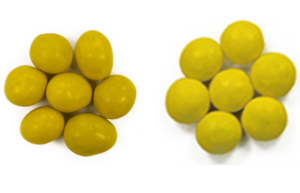
If you’re working with a panned candy, the colour vibrancy of the final product will appear different depending on the base colour. If you pan the colour directly onto a chocolate base, the final colour will appear muted or dull, like in the image below. Panning on a white base layer, though, will allow for the colour to appear more vibrant since the base colour isn’t adding any dark undertones.
When making boiled sweets, the final clarity could be impacted by both the natural color you choose, and the other ingredients present in the mix. Sometimes you might want the boiled sweet to be clear, whereas others may need to have more of an opaque look. If clarity is an important factor to the final look, then choosing the correct natural color is an important consideration.
3. Regional Limitations
Every country has their own regulatory requirements, so it’s important to know where you’ll be selling your confection product as this can impact natural color selection. There may be different requirements depending on the region. For example, safflower is a great bright yellow option for confections in the EU, but it is not permitted as a color in the US. You’ll have to opt for a color like turmeric instead.
Even if a natural color is permitted for use in a certain region, there may still be limitations surrounding how it is used. Chlorophylls are widely used in the EU and Latin America for multiple applications, including confections, but are not permitted in the US outside of dry mix beverages. Other natural colors, such as annatto and carmine, have maximum use limits by specific application types.
4. Product Formulation
The product formulation for your confection will also be important to consider when choosing a color since certain ingredients, like gelling agents, can impact natural colors in different ways. For example, different gelling agents for gummies will result in different base colors and clarity. In the case of copper chlorophyllin, a gelatin-based gummy will appear a dull, cloudy lime shade while a carrageenan-based gummy will be a clear, blue-green shade.
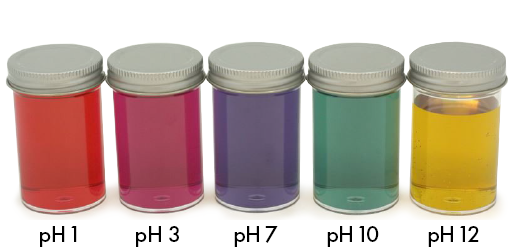
The pH of the system can also affect color. Anthocyanins, like Amaize® red, purple carrot, and elderberry, are pH sensitive colors. This means the hue will shift depending on the pH of the application. If you’re working with a confection at a low pH, such as a gummy or boiled sweet, anthocyanins will appear red. But if you try to use them at a higher pH, like in a marshmallow, the color will turn purple or start to fade.
5. Storage and Packaging
How will your confection be packaged and stored? Packaging and storage conditions will differ based on the kind of confection you’re working with. If your packaging is transparent, it’s best to use more light stable colors, such as carotenes, paprika, luteins, carbon black or anthocyanins. In the case of beta-carotene, the inclusion of ascorbic acid will help to improve its storage conditions.
Lastly, the label claims and positioning of the final product are an important part of color selection. These on-pack claims could require Kosher, Halal, Certified Organic, or non-GM colors and are often region specific. Early planning with these considerations will lead to the correct selection of appropriate colors earlier on in the development process.
Figuring out how to choose the right natural color for your confection application can be difficult, but when you choose the right one, your eye-catching confection will win out above the rest! Need some help deciding? Contact us with your questions.
Webinar: Natural Colours for Petfood
Clean Label Kibble: Formulating Pet Food With Natural Colours
Pet owners want the best diet possible for their furry friends – and that means using ingredients that they recognize and understand. Formulating pet food with natural colours is a great way to simplify labels for dry kibbles, gravies, and baked treats so consumers can feel good about what they’re feeding their pets! In this presentation, we’ll take you through the ins and outs of using natural colours and simple label browns that’ll help make your pet food worth drooling over.
To view the webinar, please fill out the form below.
About the Presenter:
Katie Rountree
Senior Application Scientist for Givaudan Sense Colour in Louisville, KY. Mixing up naturally colourful solutions with a technical twist for over 8 years. BS in Food Science and Human Nutrition, MS in Food, Nutrition, and Culinary Sciences, both from Clemson University. Proud dog mom who loves spoiling her Havanese, Parker.