
Colour and Flavour Trends in Drinks
When analyzing the expanding market of energy drinks, enhanced waters, and sports drinks you’ll find that colour is no longer a mere indicator of flavour identity. There is a growing trend towards using colour to hint at a refreshing and invigorating experience, becoming a primary language for functional claims.
In this article you’ll see some of the predominant trends in flavour and colour use for the category and understand some practical tips to get the best technical performance from the refreshing palette of natural colours.
The colour of your fantasy
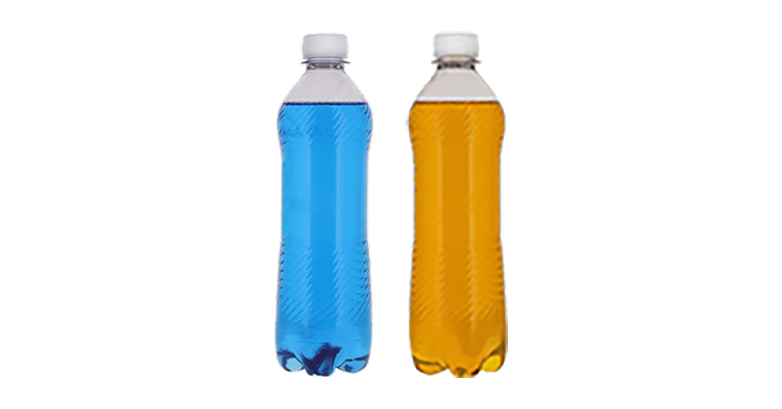
Close your eyes: you’re given a drink flavoured ‘Caribbean Breeze’. What does it taste like? Chances are it tastes like a piña colada, or perhaps an invigorating citrus-mango blend. What does it look like? Is it turquoise blue like tropical waters washing golden sands? Or is it bright yellow-orange like a warm sunset on the beach?
This is where the artistry comes in—with the increasing trend of using fantasy flavours, food and beverage colours are chosen to evoke emotions rather than simply representing the flavour used. The colour may not inform the intellect about the flavour identity but will work as an innuendo for the foreseen experience.
Conventional with a twist
Non-fantasy flavours and colours used in functional drinks are more predictable: citrus flavoured drinks that are still the default option are mostly orange or yellow. Berries and summer fruits tend to be red or pink, while orchard fruits like apple and pear drinks are often coloured light brown.
But at the same time these familiar and nostalgic flavours are increasingly mingled in novel and attractive combinations. Sometimes adjacent colours in the spectrum are selected: like in a tropical mango–passion fruit blend, but sometimes very dissimilar colours are blended, like in strawberry-kiwi mix. What would the colour of a kiwi and strawberry juice be? A very dirty brownish pink, one would think! So, again a decision has to be made on which colour to select, taking into consideration the expected sensory input, the predominant flavour and the preference of the target consumer—in the case of our strawberry-kiwi, would it be green or red?
Form follows function
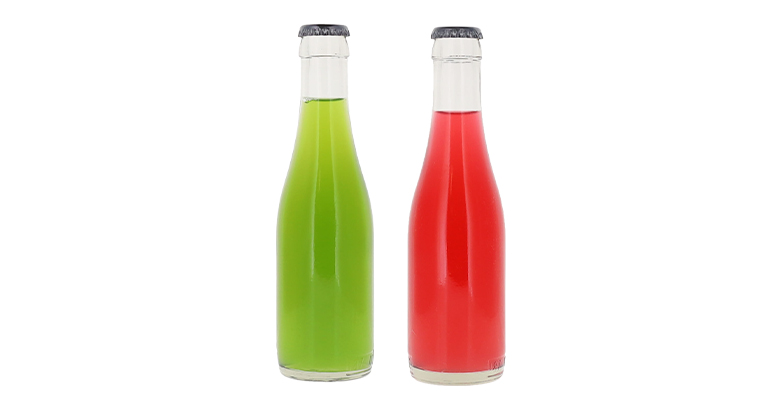
In a similar stance, in sports drinks form follows function, or in this case: colour follows function. Hydration products are often coloured blue, purple or green, because these cool colours remind us of large water bodies or the freshness of nature.
On the other hand, pre-workout beverages may want to give us the idea of energy and stamina, boosting our inner power and prepping our muscles for the best performance possible. In this case bright and bold yellow, orange, and red colours may be the best option.
Flower power
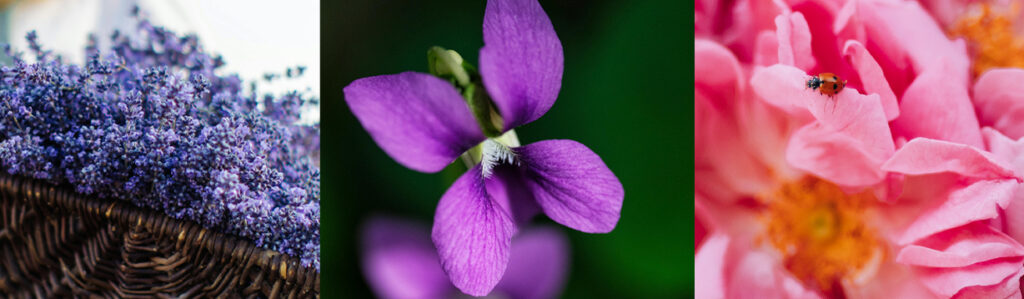
One of the fastest growing trends in new product launches is the use of botanicals like floral, herbal, and spice-based flavors in functional waters and drinks. Most of the time, these are chosen as secondary notes to more traditional fruit flavors like strawberry or lemon.
Floral flavors like lavender, violet, rose and elderflower are used because of their ties with soothing and stress reducing properties, and the palette of colours reminds us of enticing bouquets with lots of purples, pinks or peaches. “Beauty from within” drinks also leverage from botanicals and the colour range appeal their target demographics with soft, nuanced hues, that may include also greens and pastel blues.
Technically speaking
Wondering how to take advantage of the large palette of natural colours for a perfect hydration experience? Let’s review some expert tips:
Packaging
Cans and opaque packaging are often used in energy drinks and functional waters because light affects some of the botanical and nutritional ingredients used. In this case, the colours are not openly displayed but a congruency with the selected flavours or with the experience expectation is due. Light sensitive pigments, low doses and soft colours are permissible in this case, which provides a wider palette to choose from than when using transparent packaging.
However, bottles and clear packaging are still prominent in hydration beverages and other subcategories adjacent to the conventional soft drink market. Here light stability of the color chosen is a must, and shelf-life evaluations must be made to ensure colour performance.
Ingredients
Compatibility and stability of natural colours in presence of botanicals, amino acids, electrolytes and vitamins has to be assessed in a case-by-case scenario. For example: there are known interactions between natural colours and vitamin C, which enhances the stability of carotenoids but can be detrimental to anthocyanins. And the addition of botanicals like polyphenols and tannins can favor the formation of pigment complexes with completely unexpected behavior during the shelf life of the beverage. We recommend working directly with our colour experts to establish safe protocols of development to ensure the best outcome for the overall recipe.
Differentiation
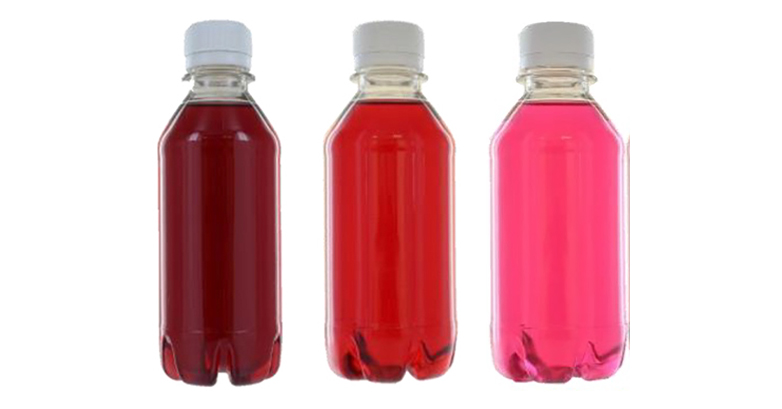
Differentiation in this market is a priority: you don’t want your strawberry-watermelon drink to look exactly the same as your competitor’s red generic drink! Fortunately, anthocyanin sources allow for both subtle or dramatic variation in both hue and intensity, be it for passionate reds or delicate pinks.
Interested in working on a functional or enhanced beverage project? Contact us to turn your thirst-quenching product into a colorful escapade. Or request a sample here.
3 Natural Replacements for Red No. 3
California has recently passed a bill that will ban the use of Erythrosine, or FD&C Red No. 3 in foods and beverages. In this article we’ll discuss why the ban matters, and review some of the best natural replacement options for Red No. 3.
How the Ban Affects the Industry
With things like the incoming Barbie® live action movie, we have seen an explosion of pinks and fuchsias all over in fashion, visual design, and, of course, the food and beverage industry.
One of the traditional options for achieving these shades is a synthetic dye called Erythrosine, also known as FD&C Red No. 3. However, the California Assembly’s Committee on Environmental Safety and Toxic Materials very recently passed and referred to the State Senate the bill AB418 that would prohibit its use in food products sold in that state, from January 2025.
Similar bills were also introduced by the state of New York (S6055A and A06424), and the dye is already banned or has very limited allowances in food applications in other regions, like in Europe, where it is only permitted to dye processed cherries.
So, what are some natural options for Red No. 3 replacement? How can we achieve such vibrant pink shades with natural colors? In this article, we’ll take you through some of the best natural color options to create these shocking pinks in foods and beverages.
What is Erythrosine?
Erythrosine, or Red No. 3, is petroleum derived dye that gives a perfect Barbie®-like pink shade. Like other synthetic colors, it is heat-stable color, soluble only above pH 4.5 and has poor light stability. Its applications are therefore technically limited to neutral pH and light protected foods.
It creates shades of red that lean to the bluish/violet side of the spectrum. They are super energetic, fresh, and dynamic, and tend to appeal young consumers. That is why they are popular color choices for confections, baked goods, cereals, and other indulgent foods targeted at that demographic. But there are a few natural options that can create an awesome shade of pink, allowing for manufacturers to replace erythrosine using natural color sources.
Natural Replacement Options
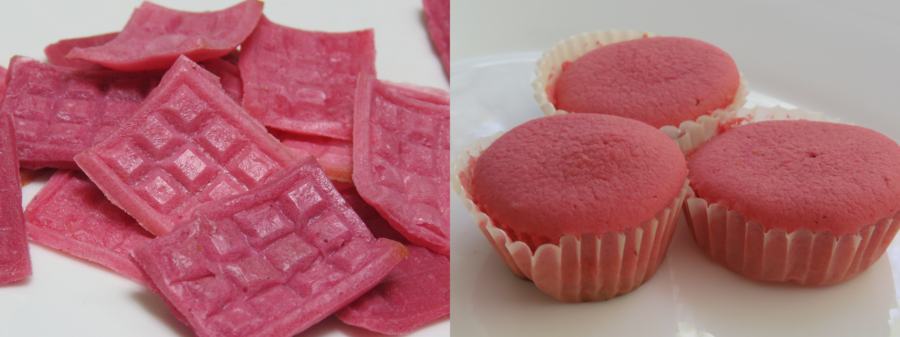
1. Carmine
Our first Red No. 3 replacement option is Carmine. Carmine offers a precise combination of neutral pH solubility and heat stability. This nature-derived pigment has a maximum absorption peak at about 520 nm, very close to that of erythrosine (ca. 526 nm in water at pH 7), giving it a similar vibrant shade and excellent heat stability and light stability. Baked goods and neutral sugar pH confections will shine in all splendor with this color choice.
2. Betacyanins
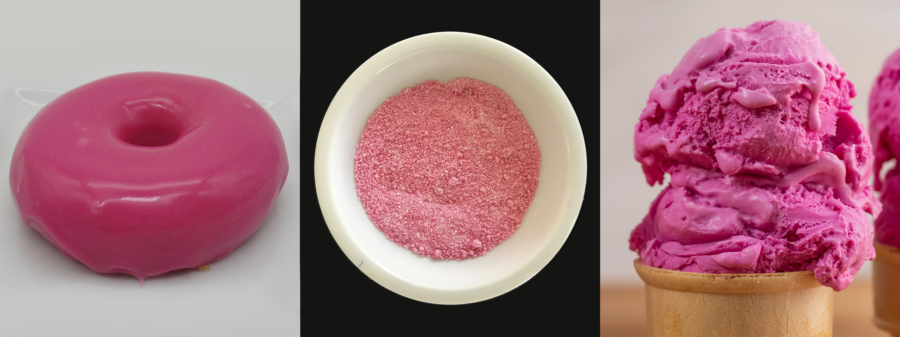
Another excellent option for Red No. 3 replacement are Betacyanins. Betacyanins are a plant-based color solution for manufacturers needing an color that complies with vegan or Kosher claims.
Beet roots are rich in a pigment called betacyanin, a bluish pink color that is also very similar to that coveted Barbie®-like pink. While normally red beet is not recommended for heat processed foods, they present improved stability in systems with very low water activity like the case of sugar confections.
If the food product is inherently subjected to intense heating processes like baking or extruding, there are other options for color application. Alternative options include staining the surface, using glazes, or using a colored syrup to coat the final piece. Beet root juice is also an awesome option for dry mixes of instant beverages and protein shakes, and for ice creams and water ices.
3. Anthocyanins
The last Red No. 3 replacement option that we’ll review are anthocyanins. The anthocyanins family are a brilliant source for pink/fuchsia shades in several applications. This group of pigments is sourced from a variety of fruits and vegetables.
Anthocyanins can give an ample range of red and pink colors in the low pH of the spectrum, and has excellent consumer recognition. Therefore, they widen the possibilities of getting the trendy color in acidic foods and drinks, with the additional advantage of being heat and light stable.
Anthocyanins vary in shade and performance depending on the source, with some of them leaning towards the pinkish/bluish side of the red spectrum like purple sweet potato and red cabbage. Playing with the pH of the matrix and blending sources can help to achieve the exact hue you require in your particular application.
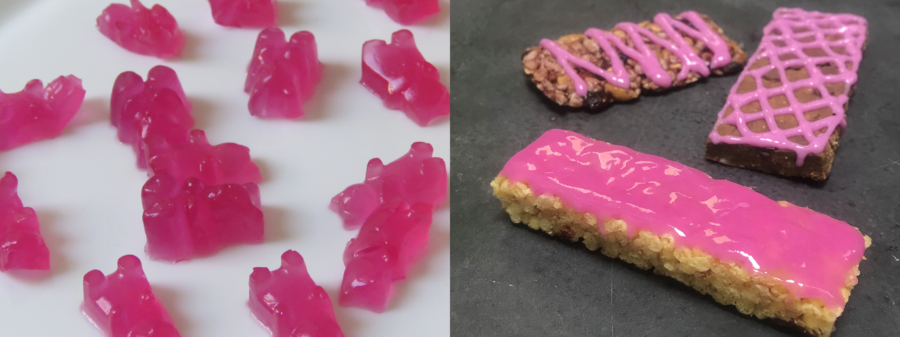
Looking to add create bright pink to magenta shades to your next application? Whether you’re looking to replace erythrosine or just create an on trend application, you can request a sample or contact us to get started on a project.
Alternatives to Carmine
Cochineal and carmine are natural colors extracted from the cactus-dwelling cochineal insect that is native to Latin America. Depending on the method of extraction, they can range in hue from orange to red to purple. They have excellent heat, light, and pH stability and work well in a wide range of applications.
In terms of stability and functionality, these natural colors are some of the best, but because they’re derived from an insect, carmine and cochineal are not considered vegetarian, kosher, or halal. So, for products that need natural colors that comply with these certifications, alternatives to carmine are necessary.
In this article, we’ll go through some of the best alternative options to match the different shades carmine and cochineal provide.
Orange
Annatto, and Paprika provide excellent orange to red-orange shades for many applications. Although they are naturally oil-soluble, yellow and orange emulsions like our Emulsitech® colors provide water soluble options, as well, that are great alternatives to carmine and cochineal.
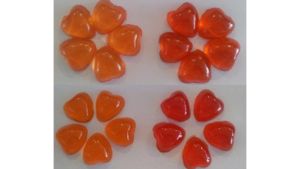
The top row in the image below shows carminic acid used at two different dose levels for light to dark orange shades. The second row shows that close matches are possible with carotenoids, in this case, our Emulsitech® Paprika. While the dosage rate requirements are slightly higher for the darker orange option, it provides heat and light similar compared to carminic acid.
Pink to Red
Beet
Beet is usually the first go-to alternative to carmine for pink to red shades. It has good light stability and an effective cost-in-use. It can also achieve close color matches to carmine in neutral pH applications like dairy beverages and yogurt.
So, why doesn’t everyone just use beet? Beet is notoriously susceptible to fading when exposed to heat. So, while it may work well for certain applications, it may not always survive the heating process associated with applications like strawberry dairy beverages or red velvet cakes.
The image below shows carmine on the left and two dosage levels of beet in cupcakes. The lower dose is not a match to the carmine cupcake and shows significant fading around the edges.
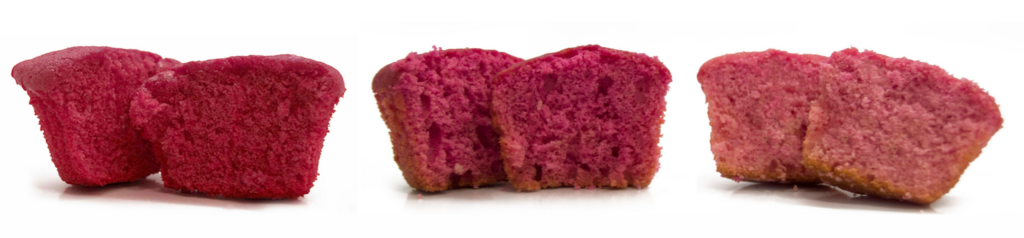
To avoid this, you can overdose a bit to compensate for some of the fading, as seen in the cupcake with the higher dose. But, while the fading is less noticeable and the color is a closer match than the one with the lower dose of beet, doing this requires a much higher dose rate that could result in flavor interference. That is why blends are often a better choice.
Beet is also not the most acid stable red color available, so lower pH applications like beverages, fruit prep, or gummies typically show better results using anthocyanins.
Anthocyanins
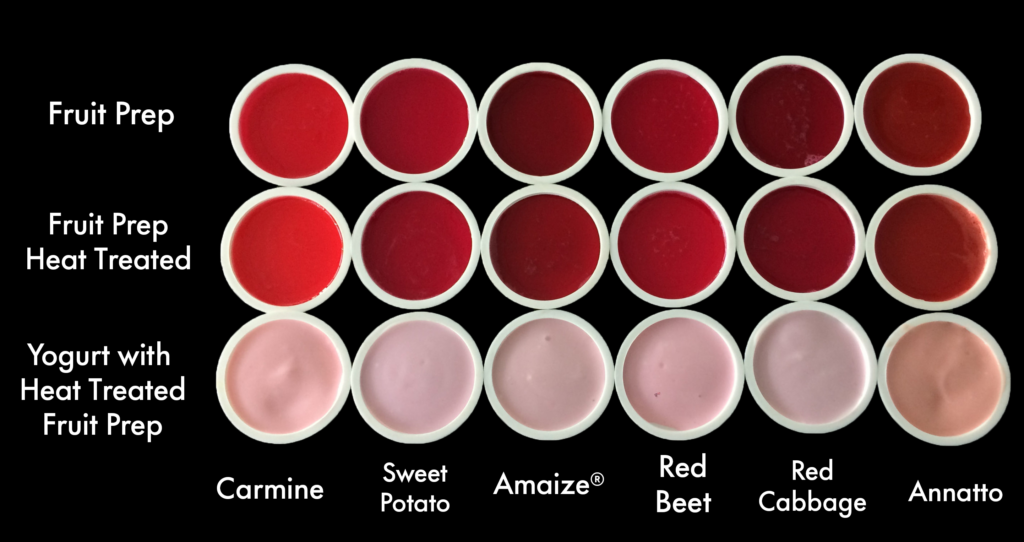
Anthocyanins provide bright red to pink hues in low pH applications. They are also fairly heat and light stable, making them great alternatives to carmine in products like fruit preps, fillings, and low pH beverages.
You can see here that the anthocyanins like purple sweet potato and Amaize® provide similar hues to carmine in fruit prep applications. both before and after heat treatment, the anthocyanins maintain their bright red color.
Blends
Blends will be your best option for replacing carmine when a single natural color alone doesn’t have the best stability or provide the right shade. Beet, for example, can be blended with more heat stable colors like beta-carotene or class I caramels to be used in dairy beverages or bakery applications with better results.
The image below shows carmine in yogurt in the top center row surrounded by a variety of blends using beet, anthocyanins, and beta-carotene at varying dosage levels. By varying the amount of these pigments in the blend, close color matches are possible!
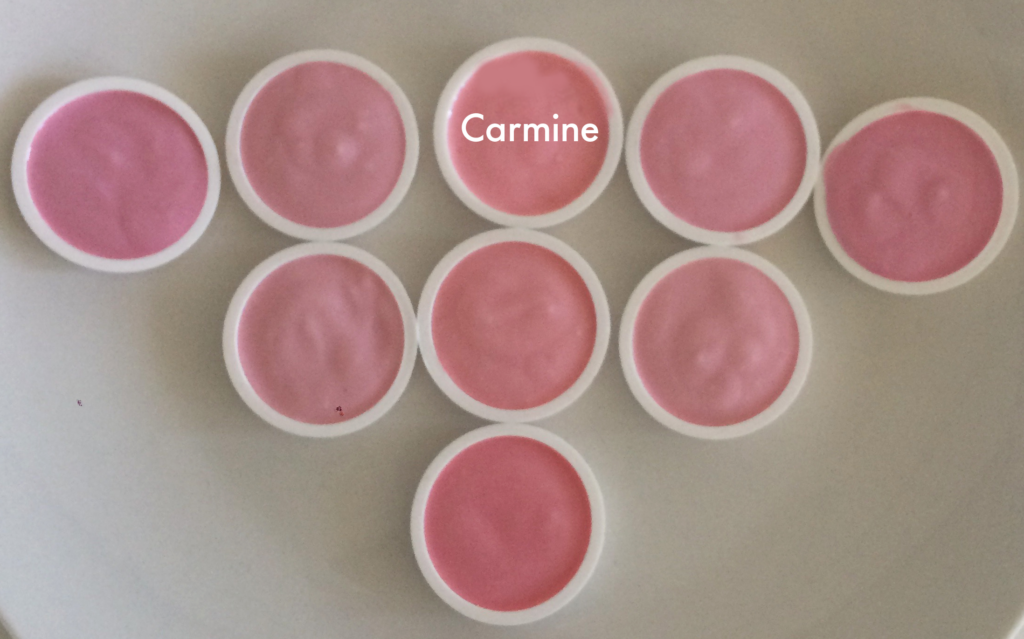
The best way to make sure you are getting the best alternative to carmine for your product is to work directly with our application scientists. By providing your base material and target color, they can try different blends that will meet the stability and color requirements of your product as closely as possible.
Want to see how they do it? Check out our color matching article for the inside scoop. Or get started with a sample.
Amaize® Red:
A New Anthocyanin Source
Red from Purple Corn
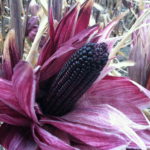
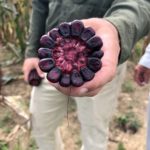
Introducing a simple label red color from anthocyanins that has a completely transparent supply chain from seed to sale: Amaize® red from purple corn!
Why Do Anthocyanins
Change Color
What are anthocyanins?
Before we dive into why anthocyanins change color, it’s important to know what they are. Anthocyanins are natural, water soluble pigments responsible for the blue, purple, pink, and red colors in many fruit and vegetable sources. In the food coloring industry, they are typically extracted from sources such as purple corn, purple carrots, radishes, elderberries, and other fruits and vegetables that are bred specifically for their high pigment concentrations.
When used in an application with a lower pH, like confections or beverages, anthocyanins will appear bright red to pink. But when that same anthocyanin is put in an application that has a higher pH, such as a cupcake or its frosting, the anthocyanin will appear bluish-purple. But what is causing this color shift? Why can’t the anthocyanin color work the same in every application?
It all has to do with the natural reaction the molecule has to the pH of its surrounding environment.
So why do Anthocyanins Change Colors?
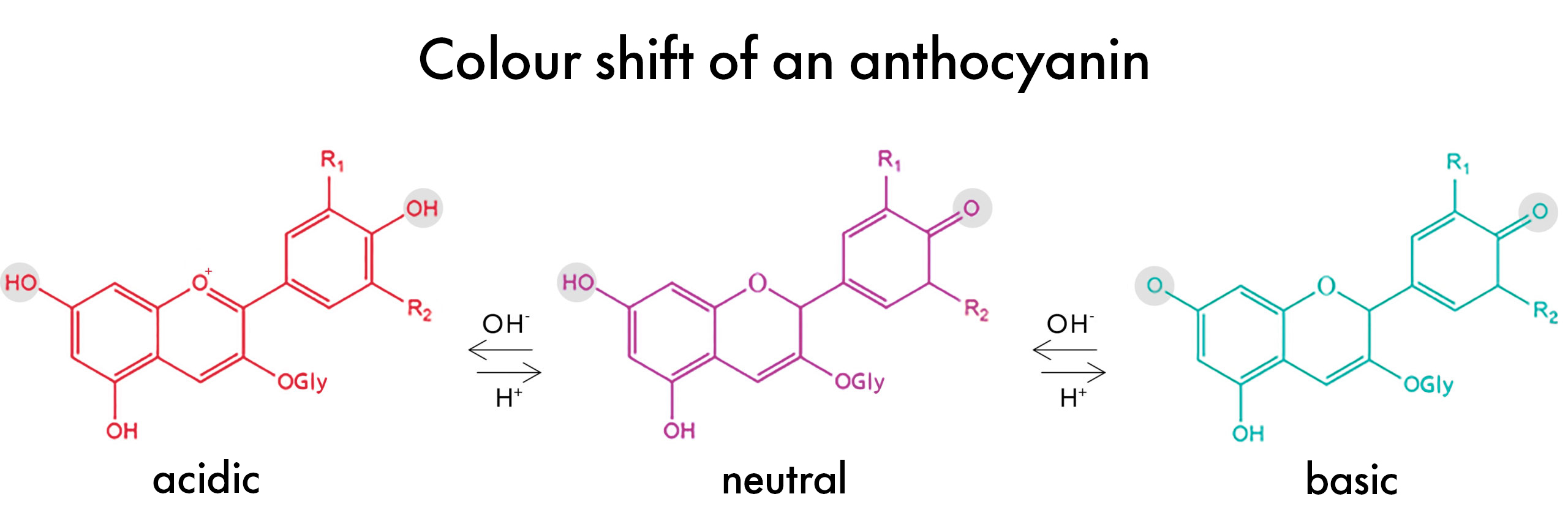
Anthocyanins change color in different pH levels because their molecular structure actually shifts as the pH of the solution they are in changes from acidic to basic and vice versa. This makes these pigments unique compared to other natural colors.
At a low pH of around 3, the anthocyanin molecule is ‘protonated’. This means the phenolic -OH groups (highlighted grey in the figure above) have hydrogens. In this environment, the anthocyanin is a positive ion, or cation. It absorbs light in the blue-green spectrum (approx. 450-560nm) and appears red to the human eye.
As the pH of the environment increases, however, the anthocyanin molecules become ‘deprotonated’ –protons are removed from the phenol groups – and the light absorption of the molecule shifts, now absorbing light in the yellow-orange spectrum (approx. 570-620nm) giving it a blue-ish purple appearance to the human eye.
Decrease the pH again, and the protons re-bond to the molecule therefore changing the light absorbance once again and reverting the color back to the original red to pink. And that’s how Anthocyanins change color…Pretty cool, right?
Want to get started with a sample? Click here.
Transparent Supply Chain: Amaize® Red
Colors are essential in product development and choosing the right one is critical. Historically red has been achieved with FD&C colors like Red #40 and Red #3, however, with increasing consumer demand for clean label foods, the product development trend has clearly tipped toward colors derived from fruits and vegetables. That’s why we developed Amaize® red, a natural color from Purple Corn.
Anthocyanins are widely used because they are the most stable natural reds – surviving sugar boils and pasteurization. But the supply chain for sources such as elderberry and black carrot is limited to a few EU countries. And as more food companies switch to natural sources a much greater supply of plant-based colors will be necessary.
So, if you are looking for a natural red source that comes with a transparent supply chain, diverse growing regions for contingency planning, and scalability to meet demand, black carrot and elderberry may not be ideal. We’ve addressed these challenges by partnering with leading agronomists and responsible local farmers to bring to market a new red color that checks all the right boxes as the ideal natural red color.
Farmers First
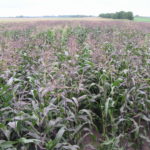
Amaize® red could not be what it is without the farmers – quality control and sustainability begin with them. We work with our partners to select the farmers committed to best management practices. They have the means to limit their use of non-renewable resources, make less impact on the environment, and grow a healthy and profitable crop.
Traditional Breeding Practices
We purposely partner with those committed to traditional agricultural knowledge and breeding practices to improve crop productivity and increase color yield.
The work is largely done by hand in its natural growing season. And, while this takes longer, the time and effort are worth it to achieve a climate hardy hybrid that is non-GM and can be grown organically.
Practical, Economical, Beneficial
Highly efficient processes exist for growing, harvesting, transporting, & storing corn. Unlike other crops used to produce color, corn can be dried in a cost-efficient manner and stored in bulk to preserve quality. This allows for flexible planning & response to changes in demand. Better yet, our manufacturing model allows us to use 100% of our spent corn. It is sold to local farmers to use as feed for their cattle, reducing waste and helping local farms maintain costs.
Why does transparency matter?
Food quality and transparency have become increasingly important as consumers seek to better understand the food they buy. A fully transparent supply chain extends visibility and enables a true farm to fork view of the path that products take to the consumer.
Want to know more about this amaize-ing color? Learn more here.